

The most expensive painting in the world is Salvator Mundi attributed to Leonardo da Vinci, sold for 450.3 million dollars, including fees, at Christie’s in New York on 15 November 2017. Nine years later, no work has come close to it. Behind it come two private sales, Interchange by Willem de Kooning, sold for approximately 300 million dollars in 2015, and The Card Players by Cézanne, acquired by Qatar for more than 250 million dollars in 2011. At auction, two recent records reshuffled the deck: the Portrait of Elisabeth Lederer by Klimt, 236.4 million dollars at Sotheby’s in November 2025, and Number 7A, 1948 by Jackson Pollock, 181.2 million dollars at Christie’s in May 2026.
In brief
- Absolute record: Salvator Mundi attributed to Leonardo da Vinci, 450.3 million dollars at Christie’s New York in 2017.
- Recent auction records: Klimt at 236.4 million dollars (Sotheby’s, November 2025), Pollock at 181.2 million dollars (Christie’s, May 2026).
- Major private sales (De Kooning, Cézanne, Gauguin) reportedly exceeded 200 million dollars, without official confirmation from the parties.
- Salvator Mundi has not been shown to the public since 2017, and its attribution to Leonardo remains debated.
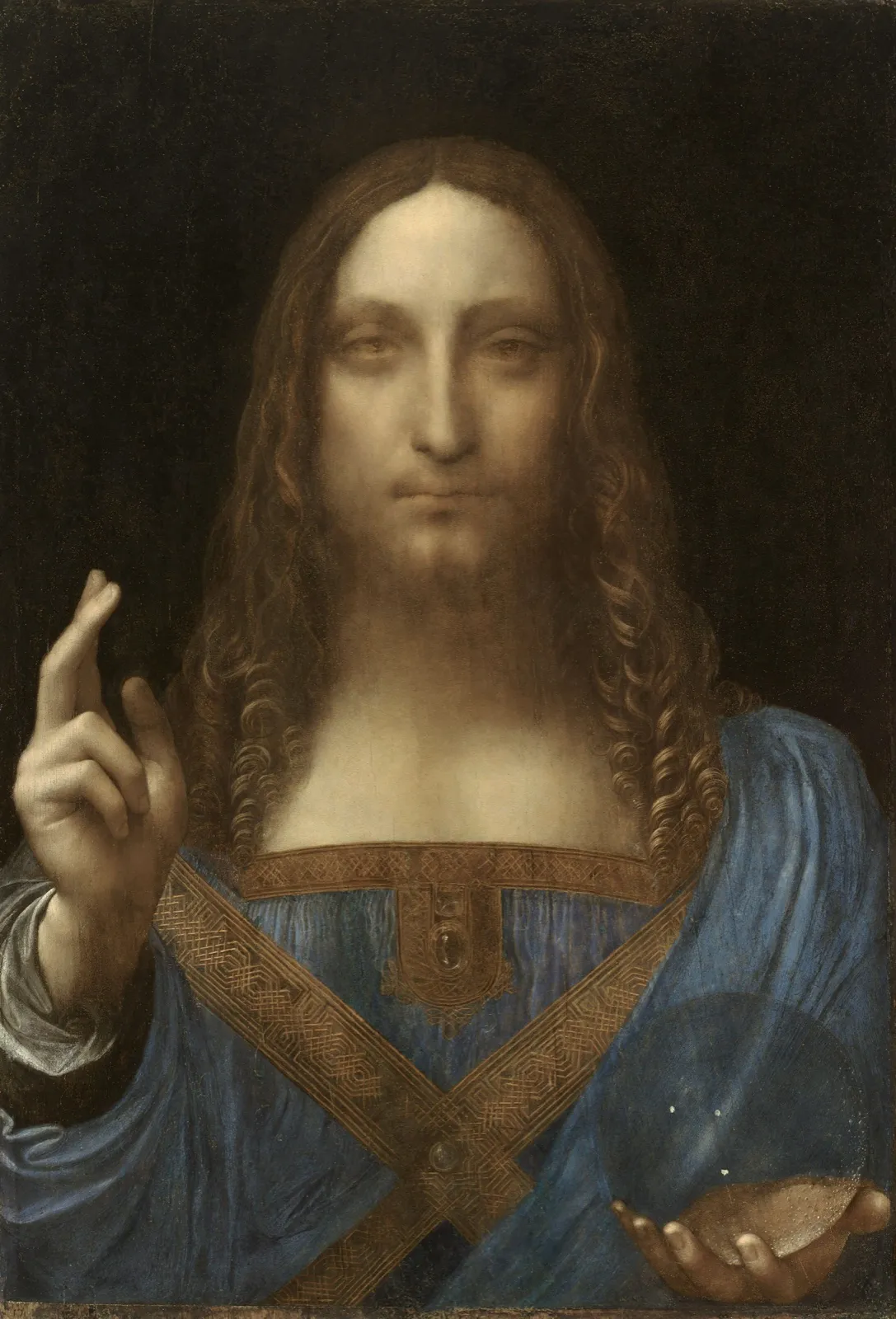
1 · Salvator Mundi, Leonardo da Vinci: $450.3M
Public sale · Christie’s New York, 15 November 2017 · 450,312,500 dollars including fees, or approximately 397 million euros · seller: Dmitry Rybolovlev · declared buyer: Saudi Prince Badr bin Abdullah Al Saud.
Painted around 1500, this blessing Christ holding a crystal globe was long thought to be a copy. In 1958, it was sold for 45 pounds sterling as a work by Boltraffio, a pupil of Leonardo. In 2005, two dealers bought it for 1,175 dollars at a sale in New Orleans, under the title “after Leonardo da Vinci”.
Restored and exhibited as a Leonardo at the National Gallery in London in 2011, it was acquired in 2013 by Russian billionaire Dmitry Rybolovlev for 127.5 million dollars. Four years later, at Christie’s, it shattered all records. The declared buyer reportedly acted on behalf of Saudi Crown Prince Mohammed bin Salman.
2 · Interchange, Willem de Kooning: $300M
Private sale · September 2015 · approximately 300 million dollars (approximately 264 million euros), reported amount but never officially confirmed · seller: the David Geffen Foundation · buyer: financier Kenneth C. Griffin.
A fleshy pink mass at the heart of a fragmented urban landscape: with Interchange, painted in 1955, De Kooning left his famous Women for abstraction. That same year, he sold the canvas for 4,000 dollars to architect Edgar Kaufmann Jr.
In 1989, amidst the Japanese bubble, it reached 20.7 million dollars at Sotheby’s, then a record for a living artist. Producer David Geffen bought it back a few years later. In 2015, Kenneth Griffin reportedly spent around 500 million dollars for two paintings from his collection: this one and Pollock’s Number 17A.
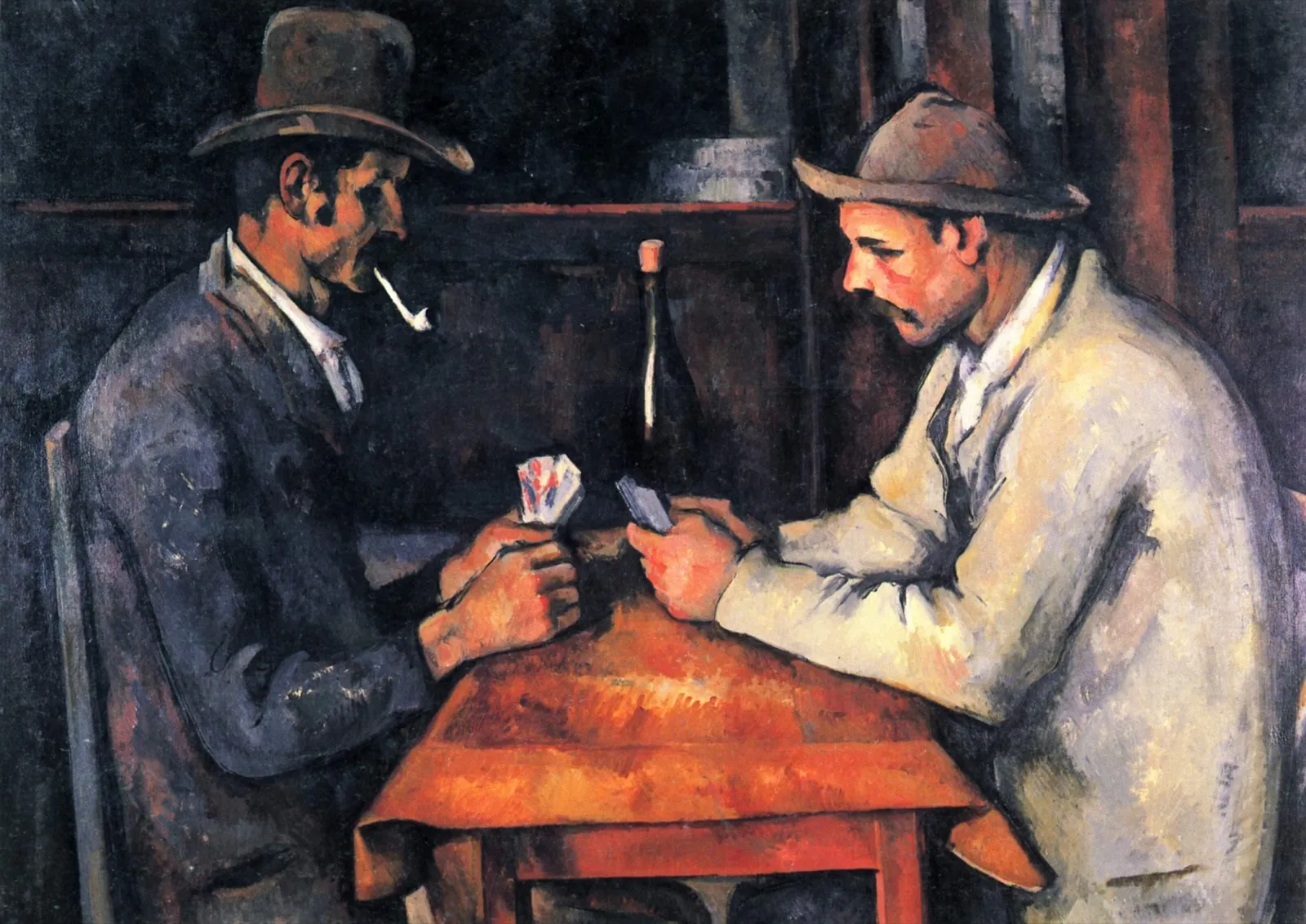
3 · The Card Players, Cézanne: $250M
Private sale · 2011 · over 250 million dollars according to published estimates (approximately 220 million euros), some mentioning up to 320 million · seller: the collection of Greek shipping magnate George Embiricos · buyer: the royal family of Qatar.
In the early 1890s, Cézanne painted five Card Players. Provence peasants, eyes lowered onto their game, without a word or gesture too many. Four versions are now at the Musée d’Orsay, the Courtauld Gallery in London, the Metropolitan Museum in New York and the Barnes Foundation in Philadelphia.
The fifth, which remained in private hands, joined Qatar in 2011. At the time, no painting had ever achieved such a price.
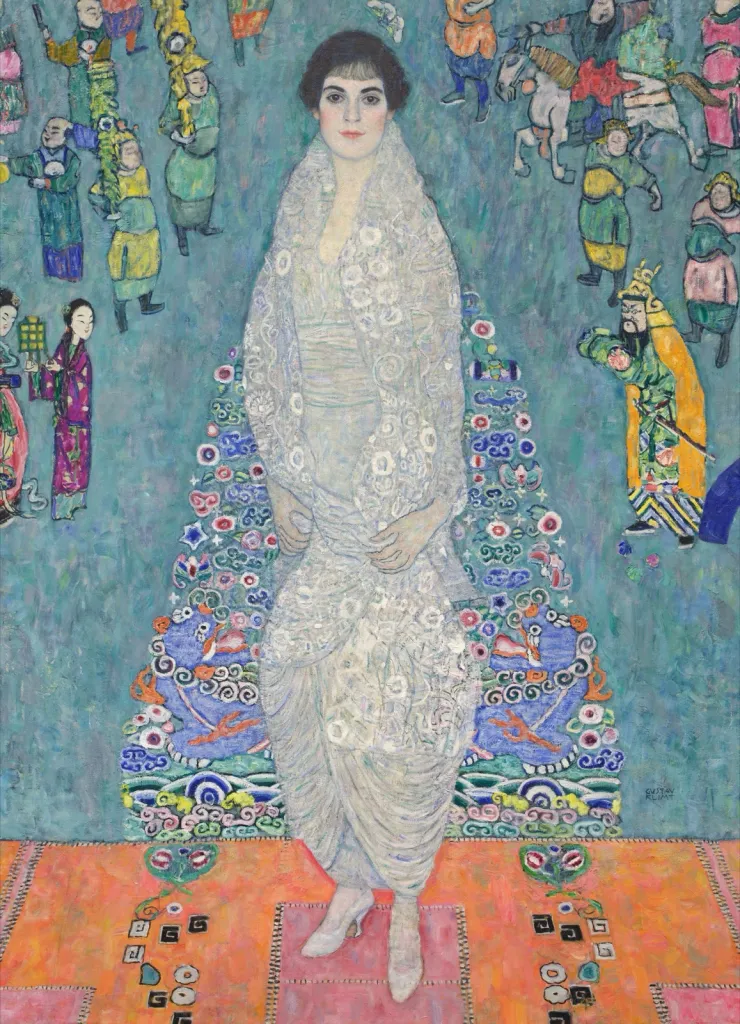
4 · Elisabeth Lederer, Gustav Klimt: $236.4M
Public sale · Sotheby’s New York, 18 November 2025 · 236.4 million dollars including fees (approximately 208 million euros) · seller: the estate of Leonard A. Lauder · anonymous buyer, represented on the phone by Sotheby’s specialist Julian Dawes.
Elisabeth is the daughter of August and Serena Lederer, Klimt’s greatest patrons. He painted her full-length from 1914 to 1916, against a background populated by Chinese figures. In 1938, the Nazis seized the family collection. To escape persecution, Elisabeth obtained a document asserting that Klimt was her father.
The portrait was not sent to Schloss Immendorf, where fifteen Klimts would disappear in the 1945 fire. Restitution was made in 1948 to her brother Erich, and it was bought in 1985 by Leonard Lauder, who hung it above his dining room table. Put up for auction at 130 million dollars, it sold after twenty minutes of bidding: it is the most expensive modern work ever sold at auction, and Sotheby’s record.
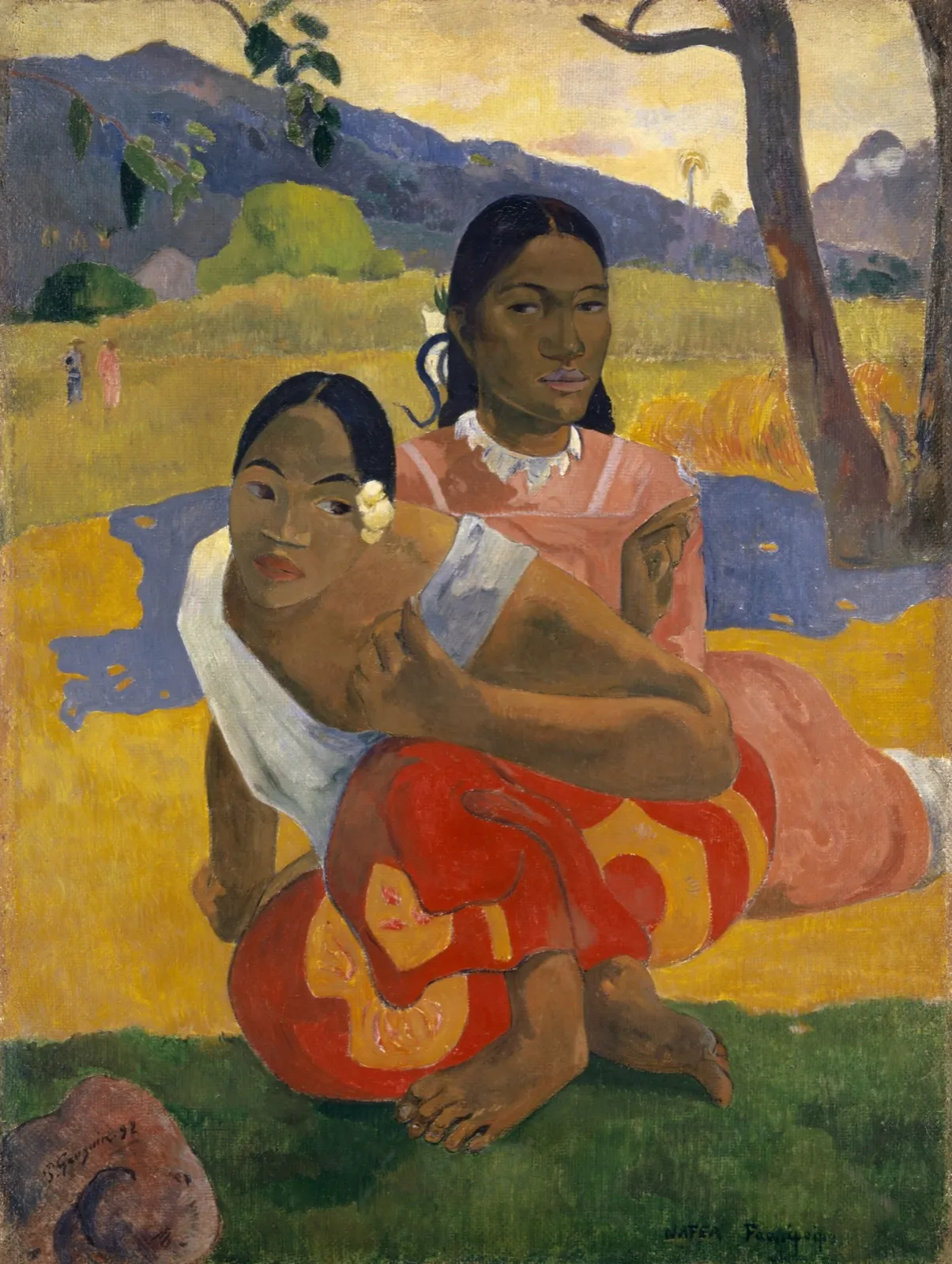
5 · Nafea Faa Ipoipo, Paul Gauguin: $210M
Private sale · revealed in February 2015 · close to 210 million dollars according to reported amounts (approximately 185 million euros) · seller: the family of Basel collector Rudolf Staechelin · presumed buyer: Qatar.
Gauguin painted the canvas in 1892, during his first stay in Tahiti. Two young women sitting in the grass; one wears a tiara flower behind her ear, a sign, according to some historians, that she is seeking a husband. The Tahitian title translates to “When Will You Marry?”.
In 1893, in Paris, Gauguin asked 1,500 francs for it. Nobody wanted it. Rudolf Staechelin bought it in 1917; the canvas then remained on deposit at the Kunstmuseum Basel for nearly half a century, until its sale.
6 · Number 17A, Jackson Pollock: $200M
Private sale · September 2015 · approximately 200 million dollars (approximately 176 million euros), reported amount · seller: the David Geffen Foundation · buyer: Kenneth C. Griffin.
Pollock placed his support flat and let the paint drip. Number 17A, oil on fibreboard, dates from 1948, one year after his first drippings. In the summer of 1949, a major American magazine devoted a report to him that turned him into a star: the work was featured in it.
Bought at the same time as Interchange, the canvas was later on loan to the Art Institute of Chicago. Two sales, a single buyer, and two spots in this ranking.
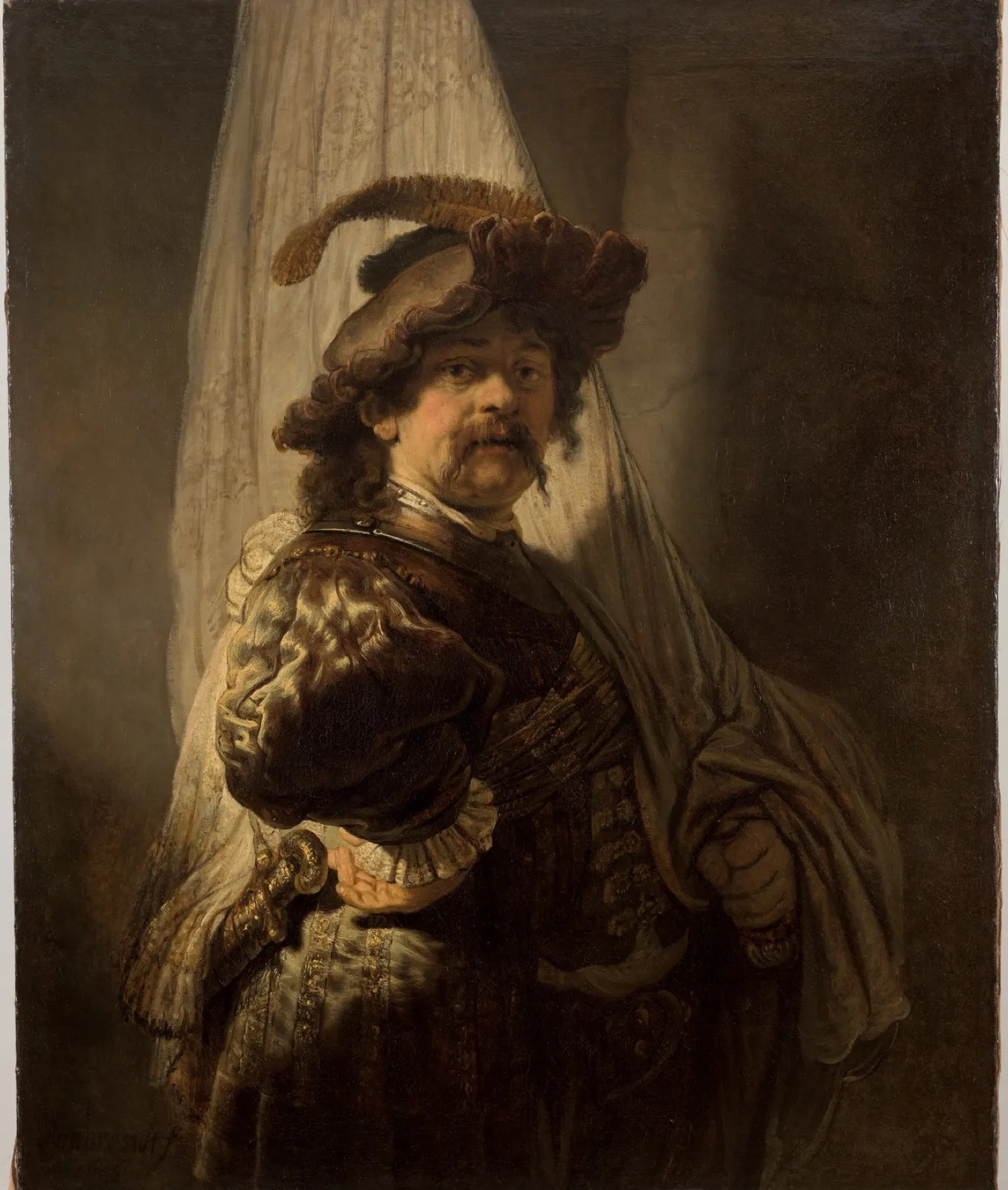
7 · The Standard Bearer, Rembrandt: €175M
Private agreement purchase · 2022 · 175 million euros (approximately 198 million dollars at the time) · seller: the Rothschild family · buyer: the Dutch State (150 million euros), alongside the Rembrandt Association and the Rijksmuseum (25 million euros).
In 1636, Rembrandt lent his features to a standard bearer: feather in his hat, hand on his hip, banner over his shoulder. A way of showing that he could paint the militia portraits of Amsterdam, the most prestigious commissions of his time.
Property of the Rothschilds since the 19th century, the canvas was classified as a national treasure in France in 2019. Lacking funds, the Louvre declined to purchase it. The Netherlands then acquired it, sending it on a tour of every Dutch province before hanging it in the gallery of honour at the Rijksmuseum.
8 · Shot Sage Blue Marilyn, Warhol: $195M
Public sale · Christie’s New York, 9 May 2022 · 195.04 million dollars including fees (approximately 172 million euros) · seller: the Thomas and Doris Ammann Foundation of Zurich · buyer: gallerist Larry Gagosian.
In 1964, two years after Marilyn Monroe’s death, Warhol screen-printed her face based on a publicity photo for the film Niagara. Five square canvases, five background colours. In the autumn, performance artist Dorothy Podber, visiting The Factory, asked if she could “shoot” the canvases, then fired a revolver into the stack. Four were hit: they became the Shot Marilyns.
Repaired, the Marilyn with the sage blue background remains the most expensive work by an American artist ever auctioned. The net proceeds of the sale went to the Ammann Foundation, dedicated to children’s health and education.
9 · No. 6, Mark Rothko: €140M
Private sale · 2014 · 140 million euros (approximately 186 million dollars at the time), amount reported in connection with the Bouvier affair · seller: Swiss dealer Yves Bouvier · buyer: Dmitry Rybolovlev.
Three fields of colour, violet, green and red, with soft edges. Painted in 1951, No. 6 (Violet, Green and Red) encapsulates Rothko’s art: a painting that represents nothing, yet holds the gaze.
The canvas was at the heart of the Bouvier affair. Rybolovlev would discover that the dealer had himself bought it for around 80 million euros before reselling it to him for 140 million. In 2024, it changed hands again in a private sale organized by Christie’s, for over 100 million dollars according to published information.
10 · Wasserschlangen II, Gustav Klimt: $184M
Private sale · 2013 · approximately 183.8 million dollars (approximately 162 million euros), reported amount · seller: Yves Bouvier · buyer: Dmitry Rybolovlev.
Four entwined nymphs, hair untied, painted by Klimt between 1904 and 1907. The painting belonged to Jenny Steiner, a Viennese Jewish collector forced into exile in 1938. The Nazis confiscated it; it fell to filmmaker Gustav Ucicky, rumoured to be Klimt’s natural son.
In 2012, an agreement split the proceeds of the sale between Ucicky’s widow and the Steiner heirs. Bouvier bought it for 112 million dollars and resold it a year later to Rybolovlev, who reportedly sold it in 2015 to an buyer who remained anonymous. The public was able to see it again at the Van Gogh Museum in Amsterdam in 2022, then at the Belvedere in Vienna in 2023.
11 · Number 7A, 1948, Pollock: $181.2M
Public sale · Christie’s New York, 18 May 2026 · 181.2 million dollars including fees (approximately 160 million euros) · seller: the S.I. Newhouse collection · undisclosed buyer.
Over three metres long and under a metre high: 88.9 × 334 cm of oil and enamel. Pollock painted Number 7A at age 36, in the barn of his Long Island home, near East Hampton, which served as his studio. It is the artist’s most monumental work ever presented at auction.
Estimated at around 100 million dollars, it sold after seven minutes of bidding, in the room and on the phone. Pollock’s previous record, 61.2 million dollars, was almost tripled. That same evening, the collection of media mogul S.I. Newhouse totaled 631 million dollars.
12 · Les Femmes d’Alger, Picasso: $179.4M
Public sale · Christie’s New York, 11 May 2015 · 179.4 million dollars including fees (approximately 158 million euros) · buyer, according to published information: former Qatari Prime Minister Hamad bin Jassim Al Thani.
At the turn of 1954 and 1955, Picasso painted fifteen variations on Delacroix’s Les Femmes d’Alger, designated by the letters A to O. “Version O” is the last in the series.
In 1956, New York collectors Victor and Sally Ganz bought the set for 212,500 dollars. In 1997, version O reached 31.9 million dollars. In 2015, it became the most expensive painting ever sold at auction, a record it held until Salvator Mundi.
How to read this ranking
Works are ranked according to their price in dollars at the date of sale, without adjustment for inflation. For public sales, it is the price announced by the auction house, buyer’s premium included. For private sales, amounts have been reported without confirmation from the parties: they are given as reported.
Euro equivalents are calculated at the European Central Bank reference rate of 29 September 2026 (1 euro = 1.1355 dollars). Transactions concluded in euros are given in their original currency.
Outside the ranking, the pendant portraits of Maerten Soolmans and Oopjen Coppit, two Rembrandts from 1634, were bought together for 160 million euros in 2016 by the Louvre and the Rijksmuseum, in equal shares. As it is a pair, they do not appear in this top 12.
Auction-only leaderboard
If we look only at public sales, where the price is known to the dollar, the podium changes face.
1. Salvator Mundi, Leonardo da Vinci: 450.3 million dollars, Christie’s New York, November 2017. 2. Portrait of Elisabeth Lederer, Gustav Klimt: 236.4 million dollars, Sotheby’s New York, November 2025. 3. Shot Sage Blue Marilyn, Andy Warhol: 195 million dollars, Christie’s New York, May 2022. 4. Number 7A, 1948, Jackson Pollock: 181.2 million dollars, Christie’s New York, May 2026. 5. Les Femmes d’Alger (version O), Pablo Picasso: 179.4 million dollars, Christie’s New York, May 2015. 6. Nu couché, Amedeo Modigliani: 170.4 million dollars, Christie’s New York, November 2015, bought by Chinese collector Liu Yiqian. 7. Nu couché (sur le côté gauche), Amedeo Modigliani: 157.2 million dollars, Sotheby’s New York, May 2018.
Two of the top four prices have been achieved since November 2025. The top end of the market has returned to its heights, driven by legendary collections put up for sale following the death of their owners.
Why such prices
Rarity, first. The vast majority of Old Master masterpieces rest in museums, which do not sell. The Mona Lisa has never been put up for sale: in 1962, it was valued at 100 million dollars for insurance purposes. When a Leonardo, a Cézanne or a great Klimt leaves a private collection, it likely will not re-emerge for decades.
History, next. A painting that passed through the collection of King Charles I of England, like Salvator Mundi, or looted by the Nazis then restituted, like the portrait of Elisabeth Lederer, carries a story that buyers also pay for. Provenance is part of the work.
Buyers, finally. At the top, the market plays out between a handful of private fortunes, ruling families and States. Qatar, Saudi Arabia or the Netherlands are not just buying a painting: they are offering themselves a symbol, a magnet for visitors, a piece of cultural influence.
The mechanics of auctions also play a role. Announced prices include the buyer’s premium: the portrait of Elisabeth Lederer was taken on a bid of 205 million dollars, which became 236.4 million with fees. Major collections sold as a single lot create an event: at Christie’s, the S.I. Newhouse collection reached 1.05 billion dollars cumulatively, behind that of Paul Allen, the only other to surpass one billion.
Salvator Mundi: where is it today?
Since its sale, the painting has never been shown to the public. Christie’s announced a presentation at the Louvre Abu Dhabi; in September 2018, it was postponed without a date. That same year, the work was sent to Paris and studied by the Centre Research and Restoration Complex of the Museums of France (C2RMF), ahead of the Louvre’s major 2019 Leonardo exhibition. It did not feature: its owners allegedly demanded it be hung next to the Mona Lisa.
It was then reportedly kept aboard Saudi Crown Prince’s yacht Serene until late 2020. In 2024, Bernard Haykel, a Princeton professor familiar with Riyadh, stated that it was in a Geneva warehouse, awaiting a major museum in Saudi Arabia. None of this information has been officially confirmed. As of late September 2026, the most expensive painting in the world remains unseen.
A Leonardo still disputed
Christie’s sold Salvator Mundi as a Leonardo, asserting that most major specialists considered it authentic. The National Gallery in London had exhibited it as such in 2011, and a volume prepared by the Louvre in 2019, briefly sold in its bookshop, confirmed the attribution following scientific analysis.
Other experts remain sceptical. Carmen Bambach, an Italian Renaissance specialist at the Metropolitan Museum, attributes most of the painting to Boltraffio, with passages by the master’s hand. Matthew Landrus, an art historian at Oxford, sees it as a Bernardino Luini to which Leonardo contributed 5 to 20%. Specialist Jacques Franck speaks of a good workshop effort.
In 2021, the Prado Museum categorized it among works “attributed, from workshop, or authorized and supervised by Leonardo”. The debate is not settled. It adds to the mystery of a painting bought for 45 pounds in 1958 and paid 450 million dollars sixty years later.
- 🏎️ The most expensive cars in the world
- ⌚ The most expensive watches in the world
- 👜 The most expensive bags in the world
- 💎 The most expensive diamonds in the world
- 🛥️ The most expensive yachts in the world
- 🍷 The most expensive wines and spirits
- 🏨 The most expensive hotel suites
- 🏰 The most expensive properties in the world
- ✈️ The most expensive private jets in the world
- 🌸 The most expensive perfumes in the world
- 🍾 The most expensive champagnes in the world
- 👟 The most expensive trainers in the world
Cover photo: Gustav Klimt, photo Sotheby's / Wikimedia Commons, public domain