

In brief
- The Koh-i-Noor has no price tag: neither the British Crown nor the Royal Collection Trust has ever published a valuation, and the stone has never been put up for sale since it was presented to Queen Victoria in 1850.
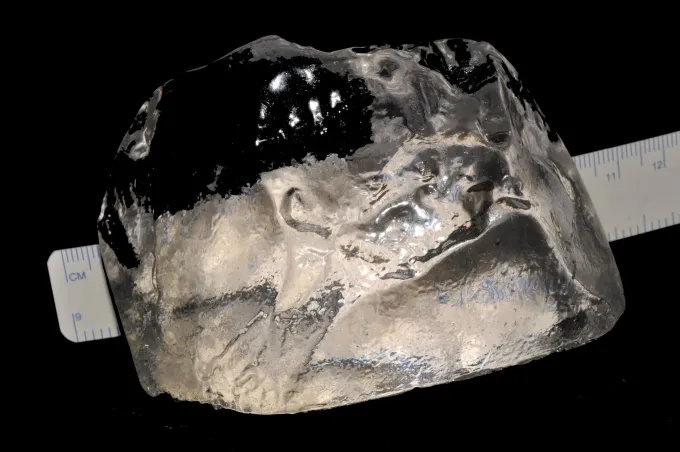
- It has weighed 105.6 carats since it was recut by Crown Jeweller Garrard in 1852; it weighed approximately 186 carats upon its arrival in London.
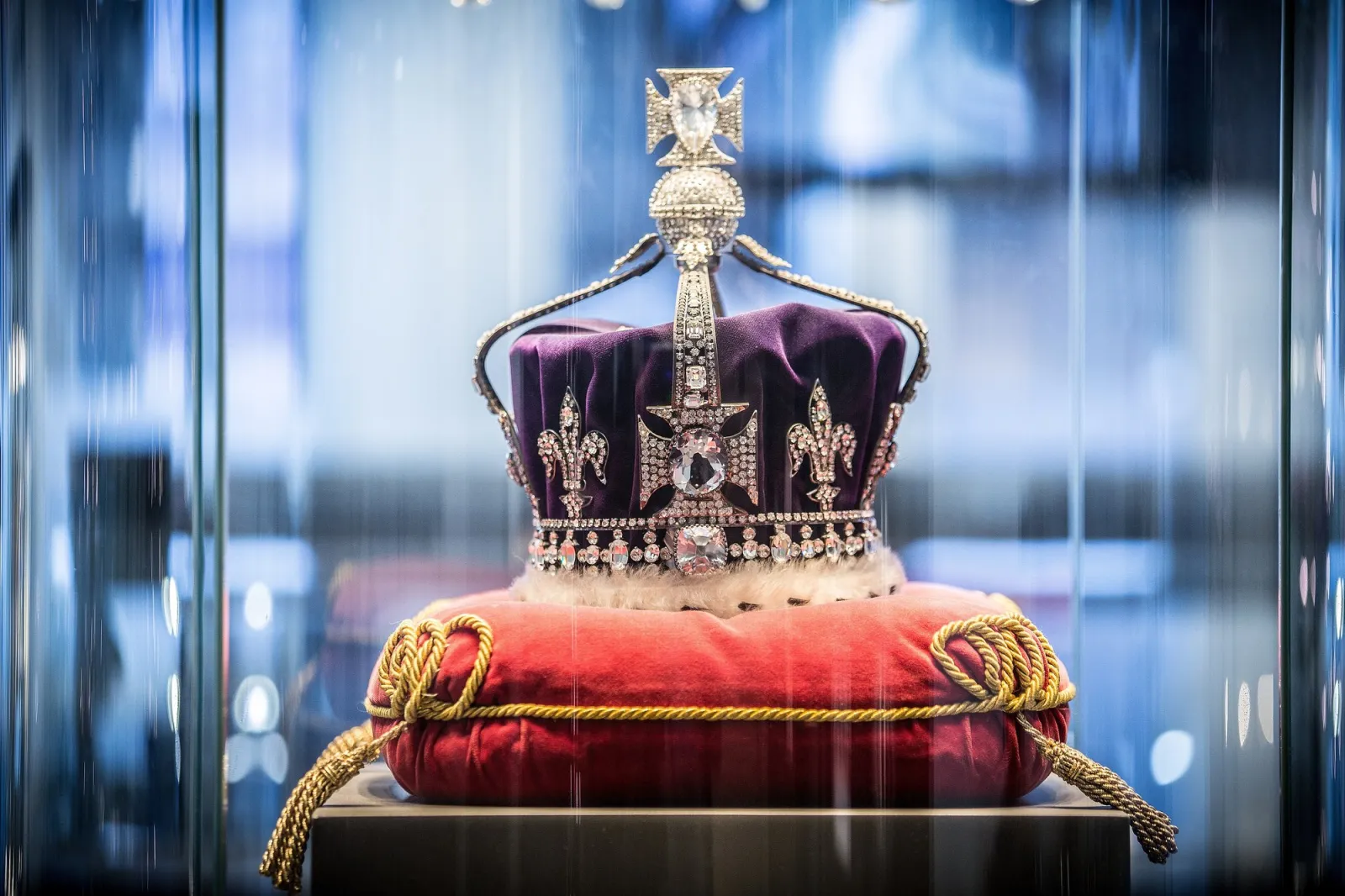
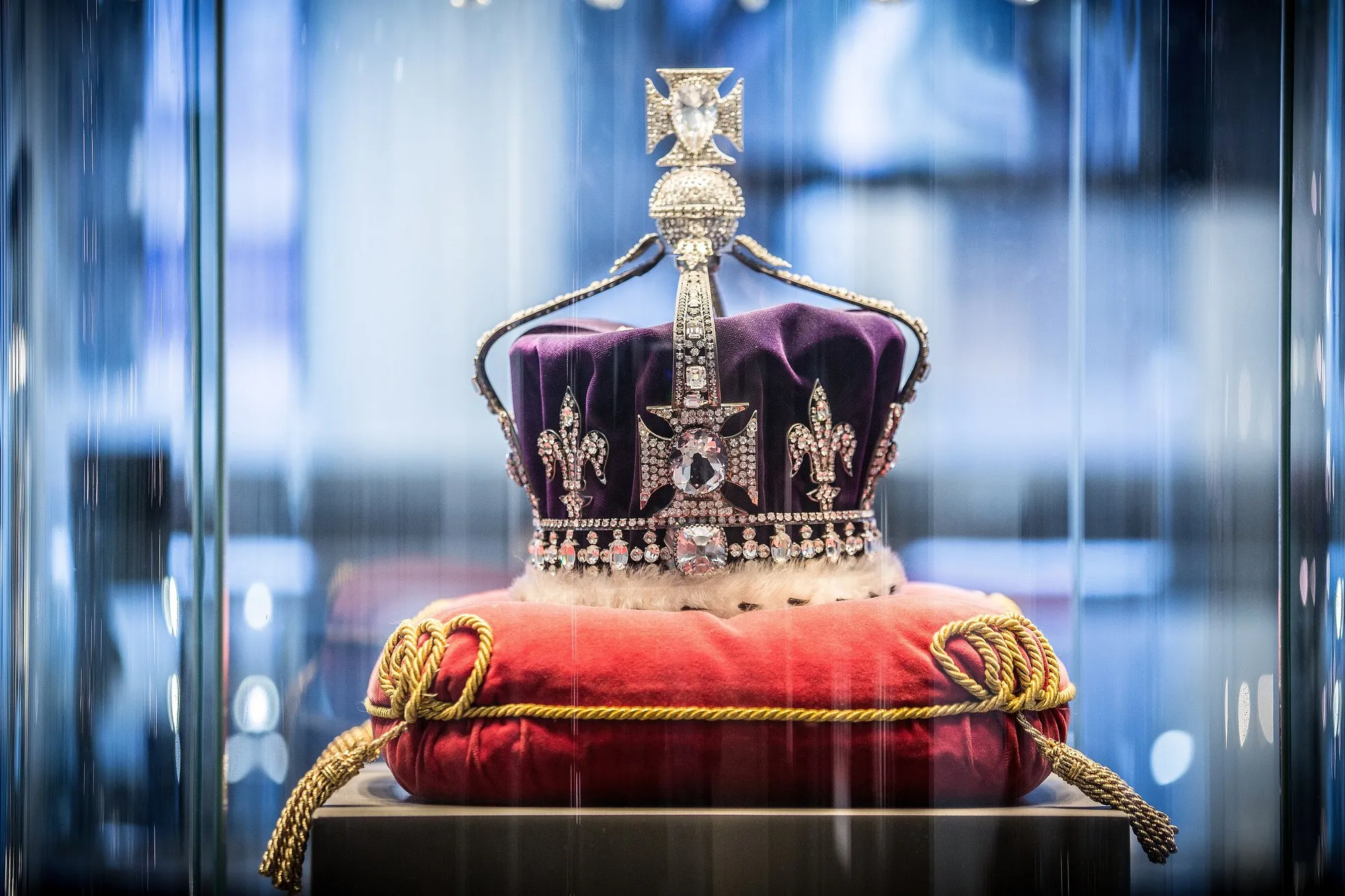
- It adorns the front cross of Queen Elizabeth The Queen Mother’s Crown (1937), on display in the Jewel House at the Tower of London.
- India, Pakistan, Afghanistan and Iran all claim ownership, in the name of the rulers who possessed it prior to the British conquest of Punjab in 1849.
- The figures circulating online, ranging from a few hundred million to several billion dollars, are not based on any published expert appraisal.
How much is the Koh-i-Noor worth? The question is constantly asked, and the honest answer can be summed up in one sentence: nobody knows, because nobody has ever had to put a figure on it. The most historically charged diamond among the British Crown Jewels has neither an auction price nor a published insurance value. Here is what is established, and what belongs to myth.
How much does the Koh-i-Noor cost?
No auction house, museum or government has ever published a value for the Koh-i-Noor. According to the Royal Collection Trust, which manages the Royal Collection, the stone passed for centuries between Persian shahs, Afghan kings and Indian emperors, through forced exchanges and wars, never via a public sale. Since 1850, it has belonged to the Crown: passed down from monarch to monarch alongside the other regalia, it cannot be sold.
There is therefore no benchmark price in the market sense: no auction, no known private transaction, and no publicly disclosed expert appraisal. Rankings that display a figure for the Koh-i-Noor rely on unverifiable estimates. This is why our ranking of the world’s most expensive diamonds places it among the “priceless” stones, alongside the Hope and the Cullinan.
The Koh-i-Noor in figures
| Feature | Detail |
|---|---|
| Name | Koh-i-Noor, “Mountain of Light” in Persian |
| Current weight | 105.6 carats |
| Weight before recutting | Approximately 186 old carats, upon its arrival in England in 1850 |
| Recutting | By Garrard, Crown Jeweller, in 1852 |
| Probable origin | India, likely discovered in the 15th century |
| Entry into the Royal Collection | 1850, following the Treaty of Lahore in 1849 |
| Current setting | Front cross of Queen Elizabeth The Queen Mother’s Crown, 1937 (platinum, 2,800 diamonds) |
| Location | Jewel House, Tower of London |
| Owner | The British Crown |
| Price | None: never publicly valued, not for sale |
| Source | Royal Collection Trust (RCIN 31703), Historic Royal Palaces, GIA |
From Golconda to the Tower of London
The Royal Collection Trust dates its probable discovery in India to the 15th century. The first undisputed account places it on the Peacock Throne of Mughal Emperor Shah Jahan, builder of the Taj Mahal. Persian ruler Nader Shah seized it during the sack of Delhi in 1739. By 1813, it was part of the treasure of Sikh Maharaja Ranjit Singh in Punjab.
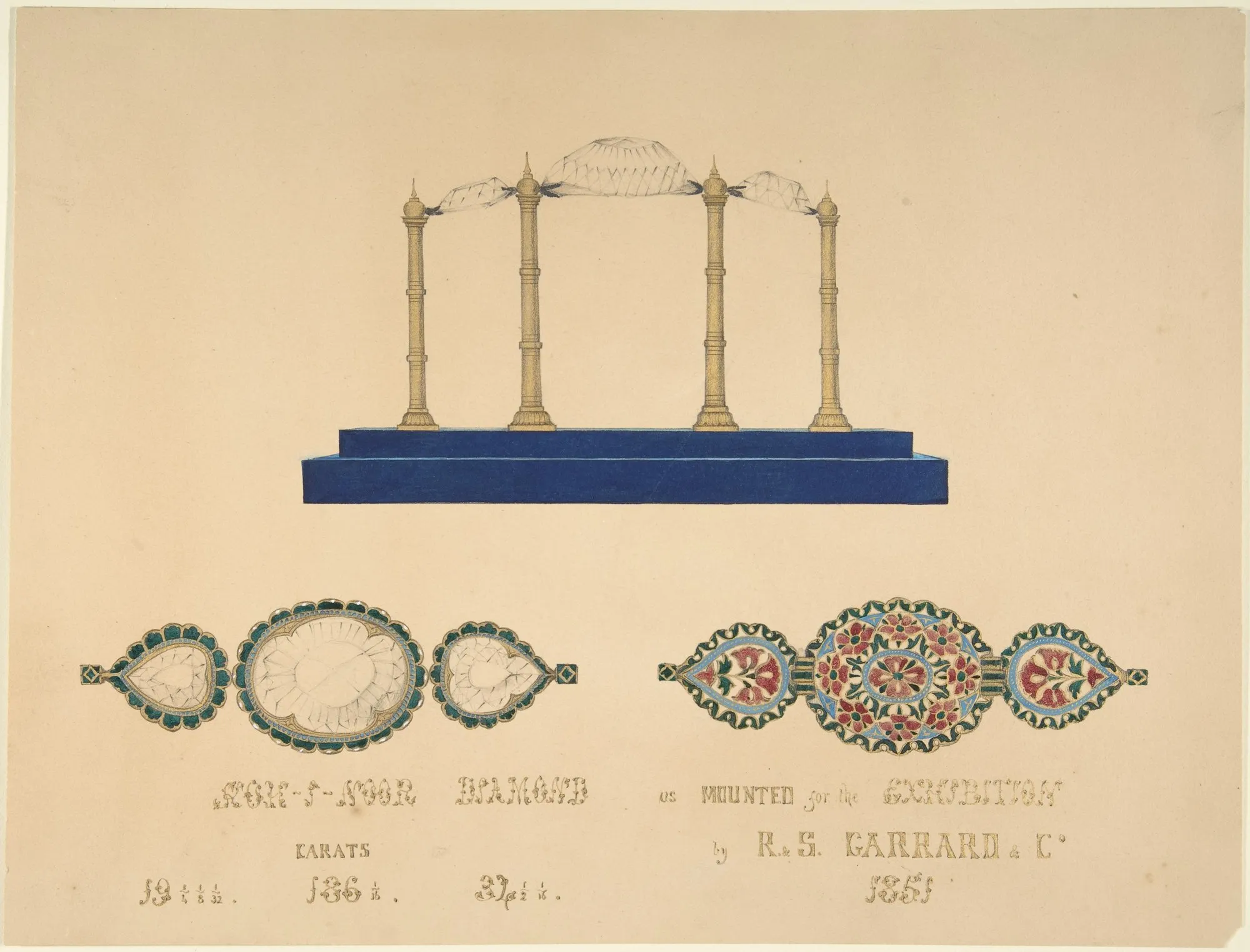
In 1849, the British annexed the region and compelled the young Maharaja Duleep Singh, then around ten years old, to sign a treaty surrendering his sovereignty. The diamond was explicitly reserved for Queen Victoria, who received it at Buckingham Palace in 1850. Displayed at the Great Exhibition of 1851, it disappointed visitors due to its lack of brilliance: the Queen had it recut by Garrard, causing it to lose nearly half its weight.
Victoria wore it as a brooch, and later Queen Alexandra and Queen Mary had it set into their crowns. Since 1937, it has adorned the crown of Queen Elizabeth, wife of George VI, who wore it to the coronation of her daughter Elizabeth II in 1953. According to the Royal Collection Trust, it has only ever been worn by women in the United Kingdom, owing to its reputation for bringing bad luck to men.
Why India still claims it
As the Royal Collection Trust itself acknowledges: the Koh-i-Noor is one of the most contested stones in history. India has demanded its return since gaining independence in 1947, citing the circumstances of its surrender by a child under British guardianship. Pakistan, Afghanistan and Iran have also argued that it belonged to rulers of their respective territories. None of these requests has succeeded, and the stone remains within the Royal Collection.
The subject remains sensitive even in matters of protocol. For the May 2023 coronation, Queen Camilla wore Queen Mary’s Crown, set for the occasion with the Cullinan III, IV and V diamonds, rather than the crown containing the Koh-i-Noor.
What belongs to myth
Three narratives obscure the question of its value. The first is financial: the multi-billion-dollar figures found online are not backed by any appraisal, insurance valuation or purchase offer. The second is historical: the memoirs of Emperor Babur mention a diamond valued at “two and a half days’ food for the whole world”, but historians continue to debate whether this stone was indeed the Koh-i-Noor. The third is the curse, a legend that British custom has helped perpetuate by reserving the stone exclusively for female royals.
What can actually be measured comes down to a few facts: 105.6 carats, roughly 186 carats before 1852, a 510-gram crown set with some 2,800 diamonds, and not a single penny of recorded transaction.
Compared to diamonds with a price tag
To gauge what the Koh-i-Noor would represent on the market, one must look at stones that have actually been sold. The world record belongs to the CTF Pink Star, a 59.60-carat pink diamond sold for 71.2 million dollars at Sotheby’s in Hong Kong in April 2017, taking top spot in our ranking. The Oppenheimer Blue, weighing 14.62 carats, fetched around 57.5 million dollars at Christie’s in 2016. None of these stones possesses the history of the Koh-i-Noor, and that is precisely what makes any comparison speculative: its significance is political and symbolic before it is gemmological.
The Koh-i-Noor, however, can be seen without paying anything more than an admission ticket: it is on display at the Tower of London alongside the other Crown Jewels. For other legendary stones, see also the world’s most famous and beautiful diamonds.
Prices verified and updated on 13 October 2026. Sources: Royal Collection Trust (record RCIN 31703, Queen Elizabeth The Queen Mother’s Crown), Historic Royal Palaces, Gemological Institute of America, Sotheby’s (CTF Pink Star auction result).
← Back to the ranking: The world’s most expensive diamondsAll luxury records, gathered on one page →