

In brief
- The Lyon Metropolis is redirecting its strategy under the leadership of Christophe Marguin to target high-spending international clientele.
- The return of a direct air link between Shanghai and Lyon is scheduled by the end of 2026.
- The city aims to open its first palace hotel and see the return of major high jewellery maisons.
- The 2030 Winter Olympic Games are identified as the major catalyst for this new high-end positioning.
At the dawn of autumn 2026, the governance of the Lyon Metropolis is initiating a radical transformation of its luxury tourism model, moving away from a train-only focus to attract high-net-worth international visitors. Under the impetus of the new majority, the Capital of the Gauls is changing course to establish itself as a destination for the most discerning travellers.
This major strategic reorientation comes after several years of positioning focused on eco-responsibility and local travel. Although these choices enhanced the city’s green image, economic stakeholders noted a stagnation in spending per visitor. By targeting more distant, high-spending markets, the metropolis hopes to breathe new commercial dynamism into the area. This approach showcases local heritage and cultural assets to an audience appreciative of the French art de vivre.
The return of air travel to boost luxury tourism
The transition to a more selective approach marks the end of an era that almost exclusively favoured local visitors travelling by train or bicycle. Christophe Marguin, a figure of local gastronomy now at the helm of the metropolis’s tourism machinery, fully embraces this paradigm shift designed to attract particularly wealthy visitors. The focus is once again on developing international connections via Lyon-Saint Exupéry Airport.
The appointment of a professional from the prestigious restaurant sector to the metropolitan tourist office illustrates the desire to integrate standards of excellence into territorial promotion. To capture high-end travellers, direct air connectivity is essential. The airport infrastructure thus plays a decisive role in connecting Lyon to major global flows, complementing the European rail offering to attract travellers from other continents.
Restored international connectivity with Asia
The reopening of a direct air route between Shanghai and Lyon by the end of 2026 materialises this desire to attract Asian clientele once again. Beyond Asia, existing direct links with the Middle East and transatlantic connection projects to New York demonstrate a global ambition to revitalise a 2026 summer season deemed disappointing by industry professionals.
The resumption of this direct air route is eagerly awaited by Lyon’s retailers, museums and restaurateurs. Chinese travellers, lovers of history and gastronomy, represent a valuable asset. At the same time, links to major Middle Eastern hubs make it possible to welcome visitors accustomed to exceptional services. As for the hoped-for transatlantic links, they meet the economic sector’s need to diversify its clientele in the face of a mature European market.
The ambition of a palace hotel and ultra-luxury
To meet the expectations of this demanding clientele, the city’s accommodation and retail offerings must elevate. Lyon suffers from a historical deficit in the ultra-luxury hotel segment: despite the presence of excellent five-star establishments, the city does not yet have any establishment distinguished by the official ‘Palace’ label. A gathering of local hospitality stakeholders is already being considered to lay the foundations for a major project capable of rivalling the prestigious addresses of the Alps or the Riviera.
Obtaining the official ‘Palace’ label is a crucial image objective. This title of national excellence requires strict criteria: an exceptional setting, ultra-personalised service, refined cuisine and a high staff-to-guest ratio. While Lyon boasts excellent five-star addresses, the absence of this key credential hinders its integration into the circuits of travel agencies specialising in ultra-luxury, which guide the wealthiest travellers.
The challenge of opening a first palace hotel
The creation of a true palace hotel stands as the missing link to permanently anchor the metropolis on the global travel map. At the same time, the commercial attractiveness of the Presqu’île is receiving critical attention. The departure of major jewellery and fashion houses such as Cartier and Dior in favour of more mainstream brands is a source of regret, even though Lyon is home to prestigious manufacturing workshops working behind the scenes for French high jewellery.
The discrepancy between Lyon’s artisanal vitality and its high street commercial offering is particularly evident in jewellery. The region produces numerous exceptional pieces crafted for renowned Parisian houses. The lack of physical boutiques for these brands on the Presqu’île deprives the city of a natural showcase to promote this local excellence, an issue that public stakeholders are now striving to resolve by improving the quality of the urban environment.
Restoring splendour to the architectural heritage
Commercial restructuring also involves upgrading the city’s real estate assets. The installation of low-cost mass-retail brands in buildings steeped in history, such as the former headquarters of the Banque de France on Rue de la République, is perceived as a major aesthetic setback for the city’s image. Proponents of this new policy advocate for a return to prestigious artisanal craftsmanship and fine dining, calling for the return of a three-starred Michelin Guide restaurant to cement Lyon’s culinary identity.
The preservation of historic architecture must be accompanied by a rigorous selection of commercial brands to preserve the city’s elegance.
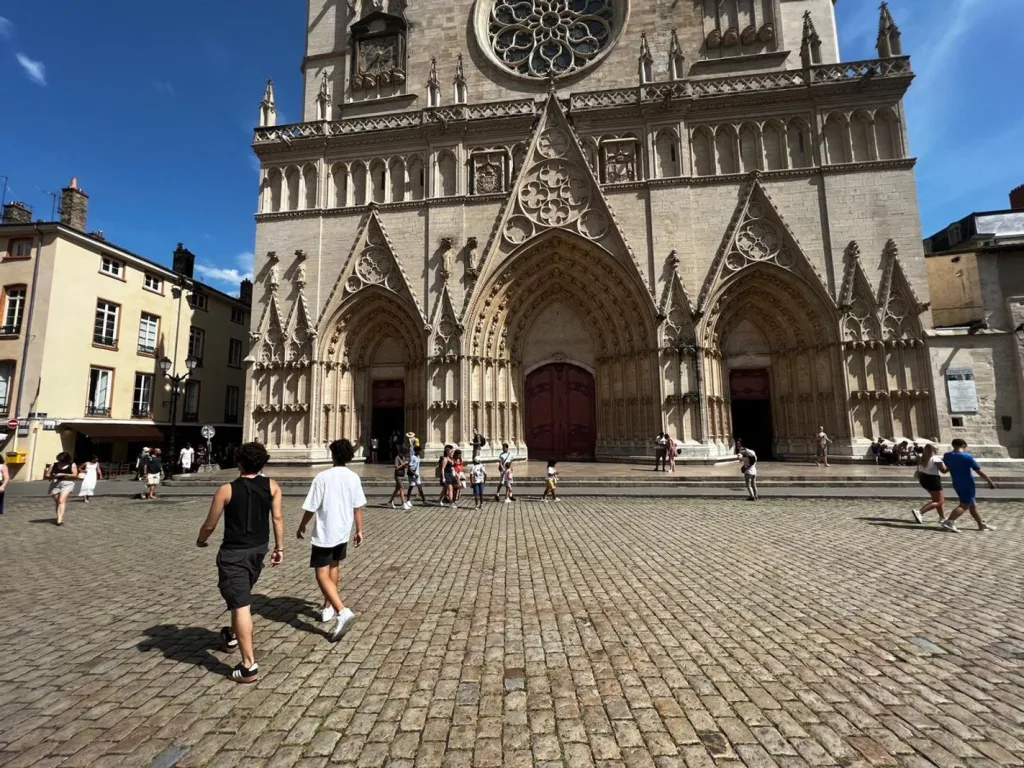
Lyon’s architecture, classified by UNESCO, requires commercial programming in harmony with its standing. The establishment of low-cost brands in historic monuments alters the overall appeal of the city centre. A dialogue with property owners is necessary to establish art galleries or exceptional artisans there. Similarly, culinary influence must regain its highest level of recognition to attract international gourmets.
Major events as international showcases
To carry this message globally, the metropolis is seeking to optimise its flagship events and look to the future. Discussions are underway to extend the reach of the famous Fête des Lumières to neighbouring municipalities, although its management remains firmly anchored at the municipal level. But the real growth lever identified lies in the prospect of the 2030 Winter Olympic and Paralympic Games, a unique opportunity to shape and disseminate Lyon’s new identity on the international stage.
The Fête des Lumières offers an ideal opportunity to attract a high-spending audience, provided that the hosting arrangements are adapted to avoid saturation. By extending certain first-rate artistic creations to surrounding municipalities, the organisers seek to smooth visitor flows while revealing the richness of the greater Lyon area. This attention to the quality of the visitor experience is essential to encourage longer, high-end stays.
The 2030 Olympic Games as a springboard
The 2030 Games represent the ideal springboard to permanently anchor Lyon among the world’s most popular destinations. However, this shift is sparking lively local political debates, with green opponents denouncing an increase in the carbon footprint through the mechanism of air links. A clash of visions that does not alter the determination of the new governance to put the city back in the high-end spotlight.
The 2030 Winter Olympic Games offer Lyon a unique structural development timeline. As a strategic gateway to the Alpine peaks, the city is preparing to welcome international visitors and major decision-makers. This momentum encourages the modernisation of hospitality and transport infrastructure. Local political debates, meanwhile, highlight the importance of reconciling this global economic ambition with environmental preservation goals.