

In brief
- The share of luxury and high-end hotels in the Northern Alps has risen to 27% of the hotel stock in ten years.
- Megève has become the second French resort, after Courchevel, to boast a Palace-rated establishment.
- The transformation dynamic now prioritises exclusivity and the densification of services, permanently altering the local economy.
- 67 hotel and parahotel projects are identified for the region by 2030.
- Prestige residential real estate is posting business volumes exceeding 100 million euros per operation.
- Renowned international brands are increasing their presence in the heart of the most sought-after ski areas.
While the total number of establishments has remained stable over the last decade, their standing has been redefined
The hotel landscape of the Northern Alps is undergoing a profound and structural change. While the total number of establishments has remained remarkably stable over the last decade, their standing has risen considerably under the pressure of demanding international clientele and the desire of local stakeholders to enhance their heritage. In 2026, the high-end and luxury segment represents 27% of the stock, compared to 19% in 2015, confirming an upmarket strategy that prioritises exclusivity. This transformation is not limited to simple aesthetic renovation: it involves a total overhaul of the services offered, from private concierge services to world-class spas, thus transforming traditional hotels into true havens of contemporary luxury.
Megève and Courchevel, epicentres of luxury
Megève and Courchevel at the pinnacle of prestige
The hierarchy of French ski resorts has been permanently shaken up by this race for prestige. While Courchevel, and more specifically the 1850 sector, long held the monopoly on the most prestigious distinctions, the situation has evolved. Luxury in the Alps is no longer concentrated in a single destination, but now irrigates several Savoyard and Haute-Savoie peaks, creating a beneficial emulation for the brand image of the entire region.
Megève and Courchevel at the summit
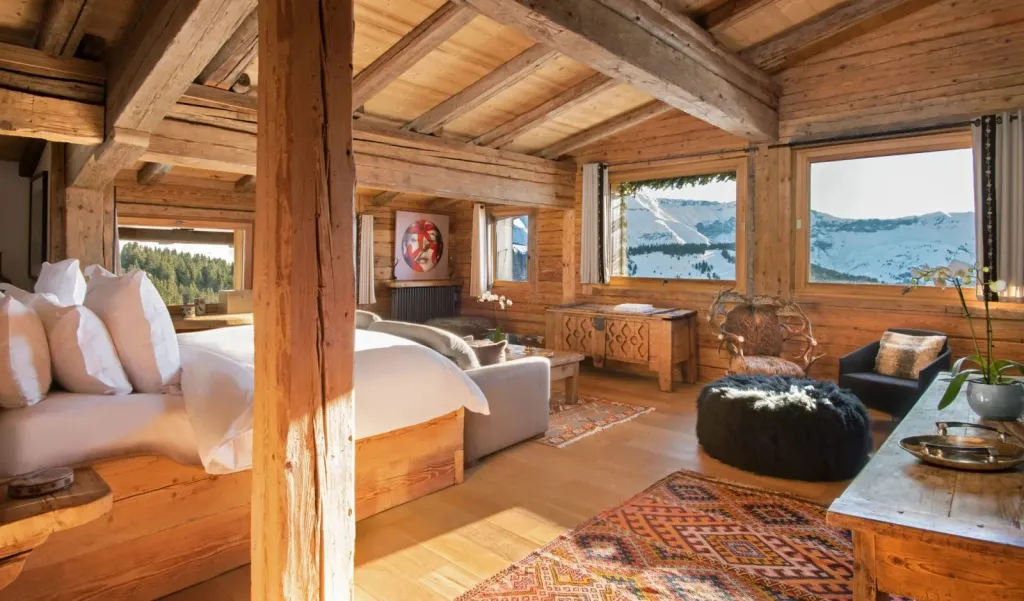
The distinction awarded to the Four Seasons Resort Megève in June 2026 marks a historic turning point for the Haute-Savoie resort. It becomes the second French ski resort to host a Palace-rated establishment, a title once reserved exclusively for Courchevel in the mountain world. This establishment, opened in 2017, perfectly illustrates the maturity of the local offer: beyond accommodation, it is the overall experience that is valued. This official recognition by tourism authorities confirms that Megève has successfully married its traditional architectural heritage with the standards of world-class luxury hospitality.
In Courchevel 1850, the race for prestige continues with the reopening of the Saint Roch on 18 December 2026. Part of the Maisons Pariente collection, the establishment has been completely redesigned to offer 37 rooms and suites, including a full spa and a high-end dining offer. In this sector, rates reflect this rise in standing, with overnight stays reaching up to 2,900 euros in high season. This pricing, although correlated to marked seasonality, is becoming the standard for establishments that now seek to maximise revenue per available room by focusing on a loyal clientele with high purchasing power.

Less volume, more services
A major economic transformation
The economic model of the Northern Alps is in the midst of a transformation. It is moving away from mass tourism to focus on high-value-added services. Data from the specialist firm In Extenso reveals an underlying trend: the shift to a qualitative rather than quantitative offer. With 564 hotels and 18,165 rooms in the Northern Alps, the overall stock has changed little in volume, but small family-run establishments, sometimes considered dilapidated or unsuited to new energy and comfort standards, are gradually disappearing. They are being replaced by exclusive concepts, often operated by large international brands capable of attracting a global clientele accustomed to the standards of luxury metropolises.
The parahotel sector, which includes luxury tourist residences and apartments managed with hotel services, is following this same dynamic. The share of the high-end segment has jumped, rising from 6% to 15% between 2015 and 2026. This shift is significant: it indicates that investors now favour structures offering management flexibility while guaranteeing a five-star level of service, thus meeting an increasingly strong demand for private spaces equipped with high-level collective facilities.
Record investments
The scale of capital invested testifies to the confidence of financial players in the long-term attractiveness of Alpine resorts. Luxury is no longer just a question of decoration, it is an industrial strategy where land, which has become rare and expensive, must be optimised. The figures speak for themselves: operations reaching business volumes exceeding 100 million euros per site have become common. This level of investment requires a demanding return on capital, pushing managers to invent hybrid models between private real estate and hotel operations.
Record investments in real estate
Beyond pure hospitality, it is private residential programmes that are redrawing the topography of the resorts. In Méribel, the programme developed by Rising Stone on the site of the former Hotel du Lac Bleu is expected to generate 113 million euros in business volume. This type of project shows that historic hotel land is a strategic resource, often recycled to create mixed-use complexes, combining prestige residences for sale and high-end hotel services under rental management. Similarly, in Courchevel 1850, the transformation of La Sivolière into a complex combining hotel suites and luxury apartments represents an investment of over 120 million euros, confirming that the market is ready to absorb considerable financial volumes for projects with a strong architectural identity.
2030 strategy and future challenges
Anticipating the challenges of 2030
The transformation of the real estate stock is not slowing down and is part of a long-term plan. The firm In Extenso counts 67 active projects by 2030, promising approximately 4,900 additional accommodation units. These projects are not simple additions; they aim for a cross-cutting upmarket shift. Among the most iconic projects, the arrival of the future Raffles Courchevel in the Jardin Alpin, announced for winter 2028, perfectly illustrates the attractiveness of the Alps to the most prestigious international hotel brands. The arrival of such brands is not accidental: it validates the positioning of the resorts concerned on the map of global luxury.
A transformation beyond the figures
This profound transformation, however, poses complex logistical and social questions for the resorts. The densification of luxury services requires a qualified and numerous workforce, for whom housing is becoming a major issue in the very heart of resorts where residential real estate is reaching price peaks. The transition to this 2030 model, although economically powerful, forces municipalities and operators to rethink the very organisation of local life. While the upmarket strategy guarantees renewed attractiveness in the face of climate challenges and new consumption habits, it requires finding a delicate balance between the exclusivity sought by international clienteles and the preservation of the vitality of the resorts for those who live and work there year-round.