

In brief
- 23 September 2025: opening date of the hotel L’Isle de Leos.
- 49 rooms and suites: guest capacity of this five-star establishment.
- Cyril Mendes: new head chef succeeding Yon Masurel.
- L’Isle-sur-la-Sorgue: commune in Vaucluse where Patrick Bruel’s hotel is located.
- MGallery Collection: luxury brand of the Accor group with which the establishment is affiliated.
In brief
- The hotel L’Isle de Leos, which opened on 23 September 2025 in L’Isle-sur-la-Sorgue, is facing numerous staff departures.
- The initial head chef, Yon Masurel, and the spa director, Coralie Saorin, left the establishment in less than a year.
- The establishment has 49 rooms and suites within the prestigious MGallery Collection.
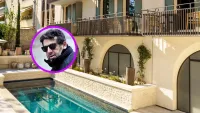
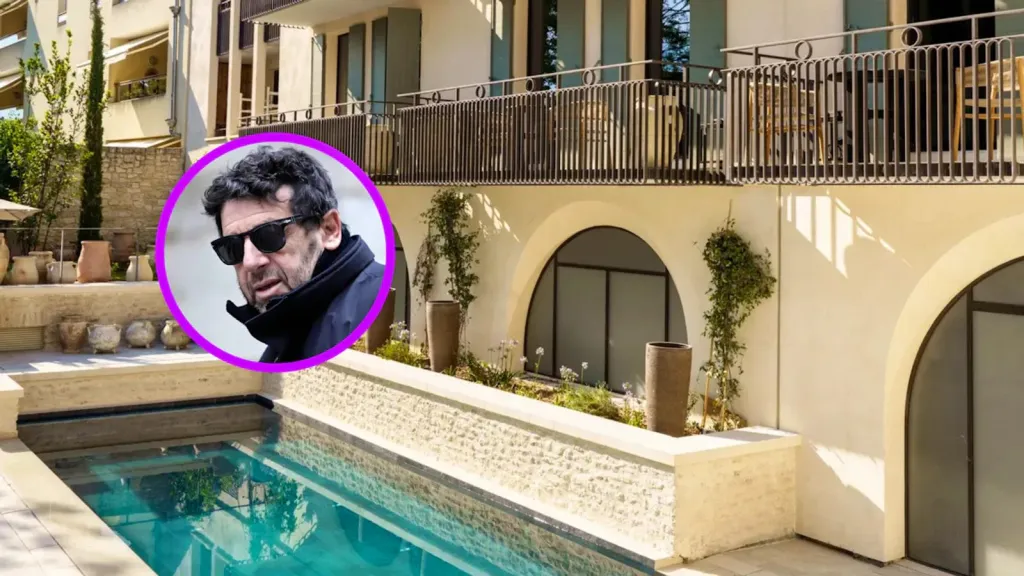
L’Isle de Leos, Patrick Bruel’s hotel address located in L’Isle-sur-la-Sorgue, is experiencing a delicate transition period marked by the renewal of its executives. Inaugurated in September 2025, this five-star establishment, which aims to be the standard-bearer of the Provençal art of living, must now cope with instability among its management and operational teams. This major project, anchored in the tourist landscape of Vaucluse, had nevertheless aroused immense interest from its inception, driven by the notoriety of its owner and its affiliation with a globally recognised luxury brand. L’Isle-sur-la-Sorgue, famous for its canals, antique dealers and bucolic atmosphere, seemed the ideal setting for such a project, targeting a demanding clientele in search of authenticity and refinement.
Belonging to the MGallery Collection imposes extremely rigorous quality standards. Each establishment in this range of the Accor group must tell a unique story, possess its own soul and guarantee a memorable experience. With its 49 rooms and suites, L’Isle de Leos was designed to reflect the identity of Domaine de Leos, Patrick Bruel’s property located on the heights of the commune, known for its olive groves and orchards. The hotel thus presents itself as the urban and hotel extension of this passion for the Provençal land. However, the operational implementation of such a complex requires flawless team cohesion, a challenge that today seems to be tested by a series of resignations and internal restructurings.
A significant turnover in the kitchen
The hotel’s gastronomic department has undergone major transformations in just a few months. Haris Halilovic, a chef de partie who arrived in November 2025, thus left his post in April 2026 to join La Mirande in Avignon. This departure illustrates the difficulty of retaining talent within the restaurant La Roue, despite the prestige of the brand. In the luxury hotel sector, the position of chef de partie is crucial because it ensures the link between culinary management and the technical execution of dishes. The departure of such a collaborator to a renowned Avignon institution highlights a form of volatility within the brigade, which is struggling to find its sustainable balance after only six months of activity.
The kitchen is often the beating heart of a luxury hotel, the place where the identity of the establishment crystallises. In L’Isle-sur-la-Sorgue, a town where local gastronomy is a pillar of tourist attractiveness, expectations for the restaurant La Roue were particularly high. Staff turnover in the kitchen can weaken the consistency of the menu and the fluidity of service, two elements closely scrutinised by gastronomic guides and loyal clientele of five-star hotels. Replacing qualified technicians in the very heart of the tourist season or during operational ramp-up phases represents a logistical and managerial challenge for the entire management structure.
A breath of fresh air at the restaurant La Roue
The management of the kitchens has itself changed hands: Cyril Mendes has succeeded Yon Masurel, the launch chef. With solid experience acquired at the Ritz Paris and in renowned establishments in Courchevel and the Domaine des Andéols, Cyril Mendes has the heavy task of stabilising a brigade that also saw the departure of its initial pastry chef, Aurélien Wargny. This change at the helm of the kitchens marks a turning point for the restaurant La Roue. While the arrival of a chef who has worked in Parisian palaces and prestigious mountain destinations brings undeniable expertise, it takes place in a context of necessary reconstruction. The transition between two management styles and two culinary visions takes time, a rare resource in an establishment that must immediately satisfy the standards of the MGallery Collection.
The challenge for the new chef is to recreate a collective dynamic while honouring the establishment’s promise: to offer gastronomy inspired by local products and Leos olive oil. The departure of Aurélien Wargny, the pastry chef, is another significant loss, as high-flying pastry is often one of the distinctive highlights of luxury hotels, whether for breakfast, tea-time or table desserts. Rebuilding a complete culinary hierarchy, from the head chef to the pastry chef and the chefs de partie, requires a clear vision and an ability to inspire recruits to stabilise the workforce over the long term.
Departures motivated by human values
The well-being sector was also affected by this wave with the departure of Coralie Saorin, director of the spa L’Olivier de Leos. On leaving her post in August, she stressed that the success of a luxury hotel project could not rely solely on a financial strategy, but required constant benevolence and listening within the establishment’s teams. This observation highlights potential tensions between the profitability imperatives inherent in such an investment and the human management essential to service excellence. The spa L’Olivier de Leos is a centerpiece of the hotel, using products derived from Patrick Bruel’s property, and the departure of its director less than a year after opening is a strong signal sent about the internal working atmosphere.
High-end hospitality relies on a subtle balance where staff well-being is directly correlated with customer satisfaction. The observations made during this departure suggest that the corporate culture within L’Isle de Leos may require adjustment. For a relaxation destination like a spa, the serenity of the teams is fundamental. The difficulty in retaining executive managers suggests that the governance model put in place during the inauguration faces major organisational obstacles. Executive loyalty is nevertheless a key indicator of the health of a prestigious establishment, particularly in a region like Provence where competition for qualified profiles is intense.
Geographical location and the aura of the Leos brand
L’Isle-sur-la-Sorgue is a unique destination in France, nicknamed the “Venice of Comtat”. Its appeal relies on its numerous antique dealers and its Sunday market of international renown. The establishment of L’Isle de Leos in this setting is not accidental; it is part of a desire to boost the local hotel offering by proposing a five-star service that was previously lacking on this scale in the town centre. The proximity of the Domaine de Leos allows for the creation of synergies, offering hotel guests privileged access to exceptional artisanal production, notably the award-winning olive oil and the resulting cosmetic products. It is this territorial authenticity that constitutes the establishment’s main selling point to a clientele in search of meaning.
The “Leos” brand itself has become synonymous with a certain revisited Provençal art of living. Since the acquisition of the property by Patrick Bruel, the name has acquired a notoriety that goes beyond the agricultural framework to become a signature of discreet luxury. The hotel is the physical culmination of this brand. However, the transition from an agricultural operation and the production of food products to the complex management of a 49-room establishment involves very different human challenges. Daily operational management requires specific expertise in hotel management, an area where expectations in terms of social climate are today paramount for young talents in the industry.
The challenges of a changing hotel industry
The luxury hotel sector is going through a period of profound change, where the recruitment and retention of qualified staff have become strategic priorities. The shortage of labour in this field forces owners and operators to rethink their hierarchical models and working conditions. For an establishment like L’Isle de Leos, the challenge is twofold: it must meet the profitability requirements of the Accor group while preserving the spirit of a “family home” or “luxury guest house” that Patrick Bruel wishes to instil. The observed instability can be interpreted as the inevitable running-in phase of a vessel of this scale, but it can also reflect a mismatch between initial ambitions and the reality of staff management on the ground.
Competition from other high-end establishments in Vaucluse and Luberon is also a factor to take into account. Talents, whether in the kitchen, at the spa or at reception, have the opportunity to choose establishments where human values and working conditions are optimal. L’Isle de Leos must therefore stabilise its management to avoid a brand image tarnished by an incessant rotation of the hotel’s familiar faces. Long-term success will depend on management’s ability to create a strong sense of belonging, capable of withstanding seasonal pressures and the economic imperatives of the luxury hospitality market.
A management challenge for the five-star hotel
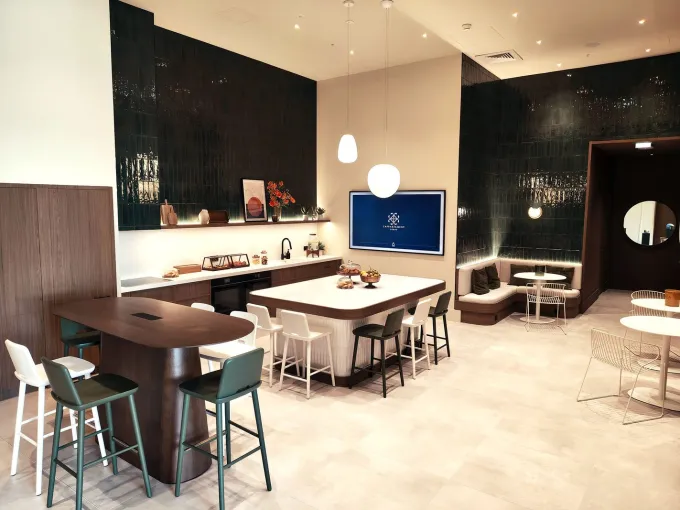
Despite these movements, L’Isle de Leos maintains its high-end offering including two swimming pools, an art gallery and a fitness room. The challenge for Patrick Bruel’s property is now to sustain its human capital to ensure the quality of service expected by the international clientele of the MGallery Collection in the heart of Vaucluse. The art gallery and common living spaces have been designed as meeting places between visitors and local culture, reinforcing the exclusive aspect of the address. However, without a stable team to bring these infrastructures to life, the risk is to offer only a luxurious decor devoid of the human warmth necessary for excellent hospitality.
The recent opening, in September 2025, means that the hotel is still in its first year of operation, a traditionally critical phase for any hotel project. The establishment’s ability to attract a new chef like Cyril Mendes proves that the aura of L’Isle de Leos remains intact and attractive to professionals. The challenge of the coming months will be to transform this initial appeal into lasting stability, by integrating the lessons learned from previous departures. The sustainability of the project relies on this delicate balance between the prestige of a famous signature and the operational rigour of a five-star establishment that must be an exemplary showcase of French hospitality.