

In brief
- The exhibition brings together 160 works, garments, paintings and unseen archives at the Musée Matisse in Nice.
- The event runs until 28 September 2026 under the direction of curators Serena Bucalo-Mussely and Aymeric Jeudy.
- The exhibition trail explores themes common to both creators: pure colour, a passion for patterns and travels in North Africa.
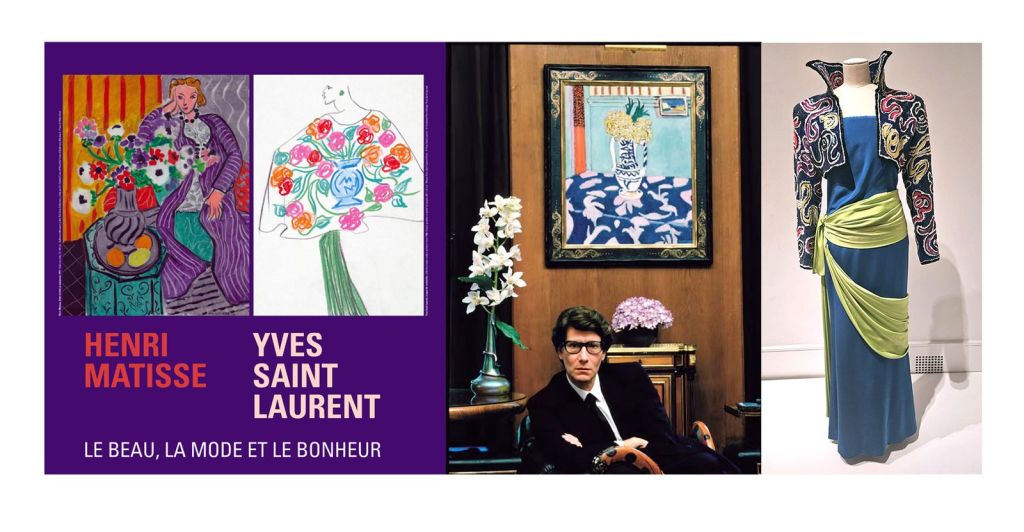
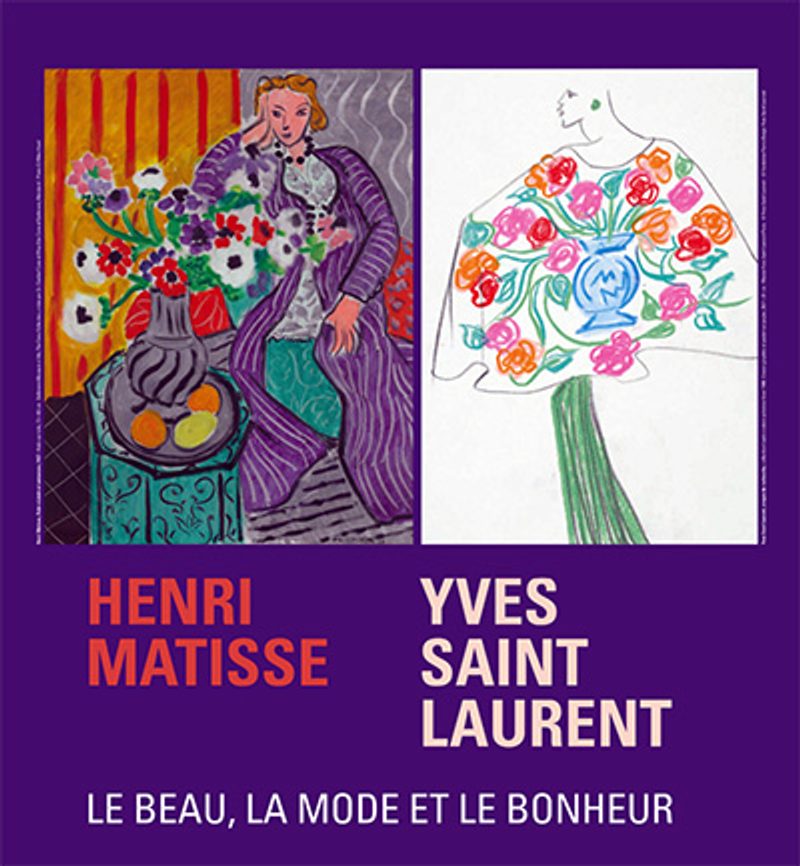
The Matisse Yves Saint Laurent exhibition in Nice, entitled ‘Henri Matisse: Yves Saint Laurent. Le beau, la mode et le bonheur’, is currently on display at the Musée Matisse in Nice until 28 September 2026. This major artistic encounter, orchestrated by curators Serena Bucalo-Mussely and Aymeric Jeudy, highlights the elective affinities of two 20th-century visionaries through a selection of 160 works. By creating a dialogue between paintings, drawings, haute couture and archival documents, the event celebrates the porous boundaries between pictorial art and fashion design on the Riviera.
Two worlds guided by the same freedom
Although belonging to different generations and to disciplines that art history has traditionally compartmentalised, Henri Matisse and Yves Saint Laurent share the same stylistic audacity. The former structures space through colour and paper cut-outs, while the latter reinvents the female silhouette by playing with the fluidity of fabrics and the precision of cuts. The exhibition chooses to ignore simple chronological comparison in favour of a true aesthetic conversation.
The trail highlights an obvious shared vision through common themes: the sensuality of lines, the importance of ornamental patterns and a constant attention to the movement of the body. This posthumous complicity is established organically, revealing how both creators sought, each in their own way, to push the boundaries of their respective arts.
Fabric as a tool for visual creation
The creative complicity between painting and haute couture
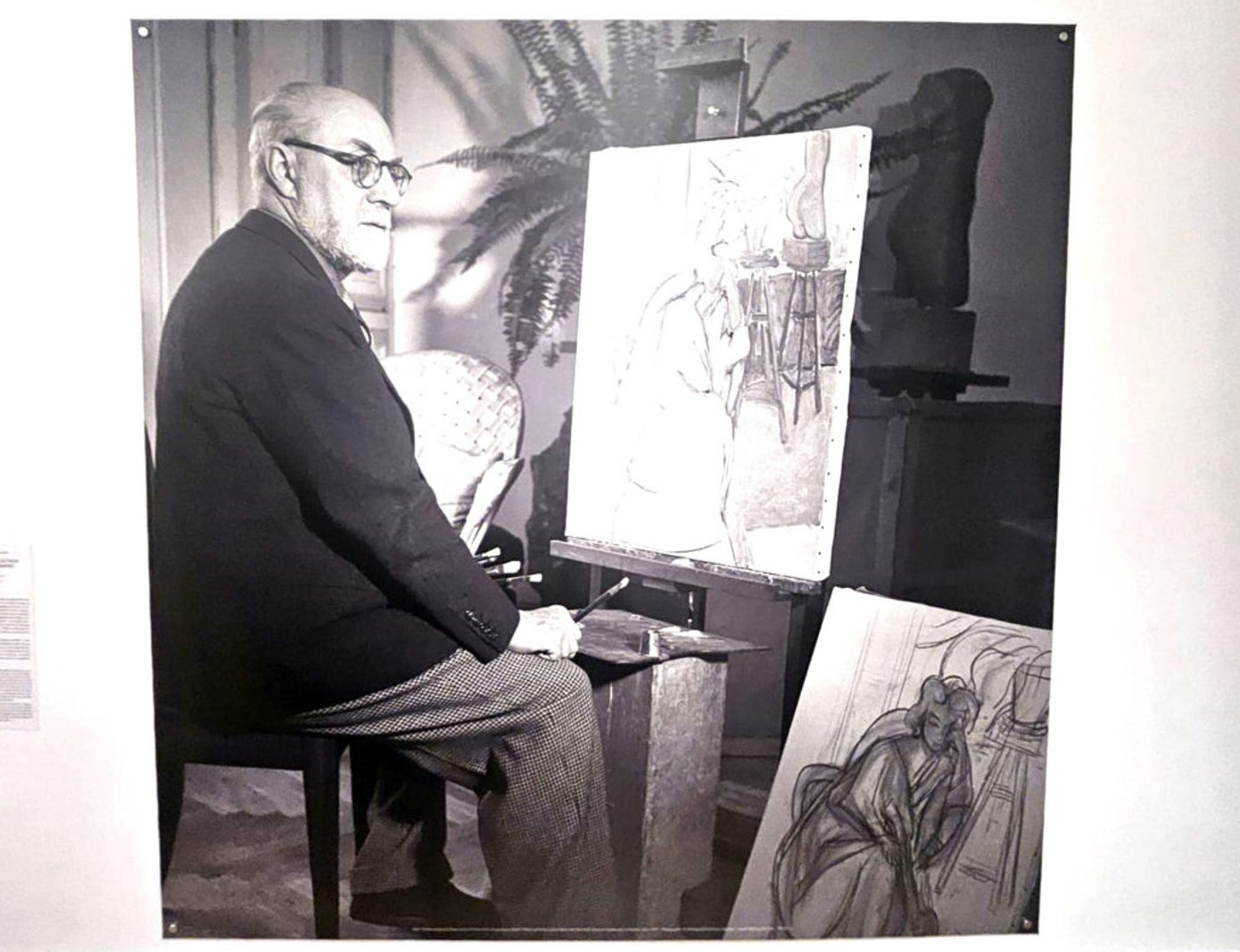
To understand the close relationship between Matisse and fashion, one must go back to the artist’s origins in the North of France, a region deeply marked by the textile industry. Very early on, the painter developed a particular sensitivity to the texture, drape and patterns of fabrics. When he settled in Nice in 1917, this fascination took a methodical turn, with fabric ceasing to be a simple decorative accessory and becoming an integral element of the work.
In his Nice studio, Matisse collected textile fragments, silks and embroideries, which he assembled and observed to compose his paintings. For Matisse, fabrics became true compositional tools capable of altering the three-dimensional perception of space. The dress worn by his models was no longer used solely for clothing, but was fully integrated into an architecture of colours where the boundary between the subject and their environment was subtly blurred.
When the painter thinks like a couturier
Matisse’s modernity also lies in his propensity to design garments from a three-dimensional and scenographic perspective. His collaborations for the world of performing arts and dance demonstrate a clear desire to take art out of its academic frameworks. By working on stage costumes, he understood fabric as a volume in perpetual motion, a visual exploration that directly echoed the philosophy of haute couture.
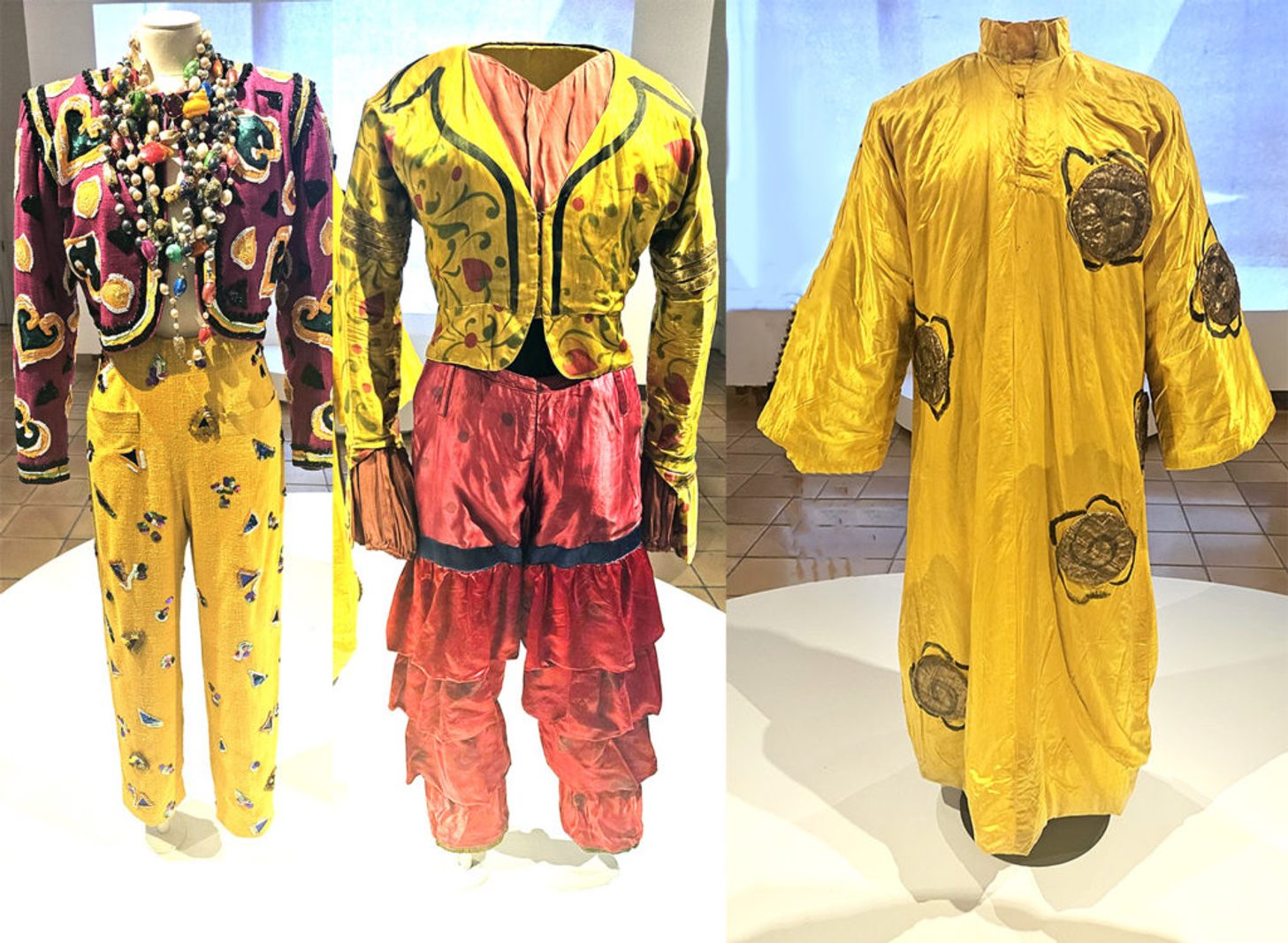
This approach prefigures the work of Yves Saint Laurent, who himself considered clothing as a space for artistic expression in its own right. By transposing pictorial concepts onto contemporary silhouettes, he took an interest in their scenic and volumetric potential with an audacity that redefined the dress codes of his era. The dialogue on display in Nice thus bears witness to this fluid transition between the two-dimensionality of the canvas and the fluid movement of the dressed body.
Saint Laurent as translator of painting
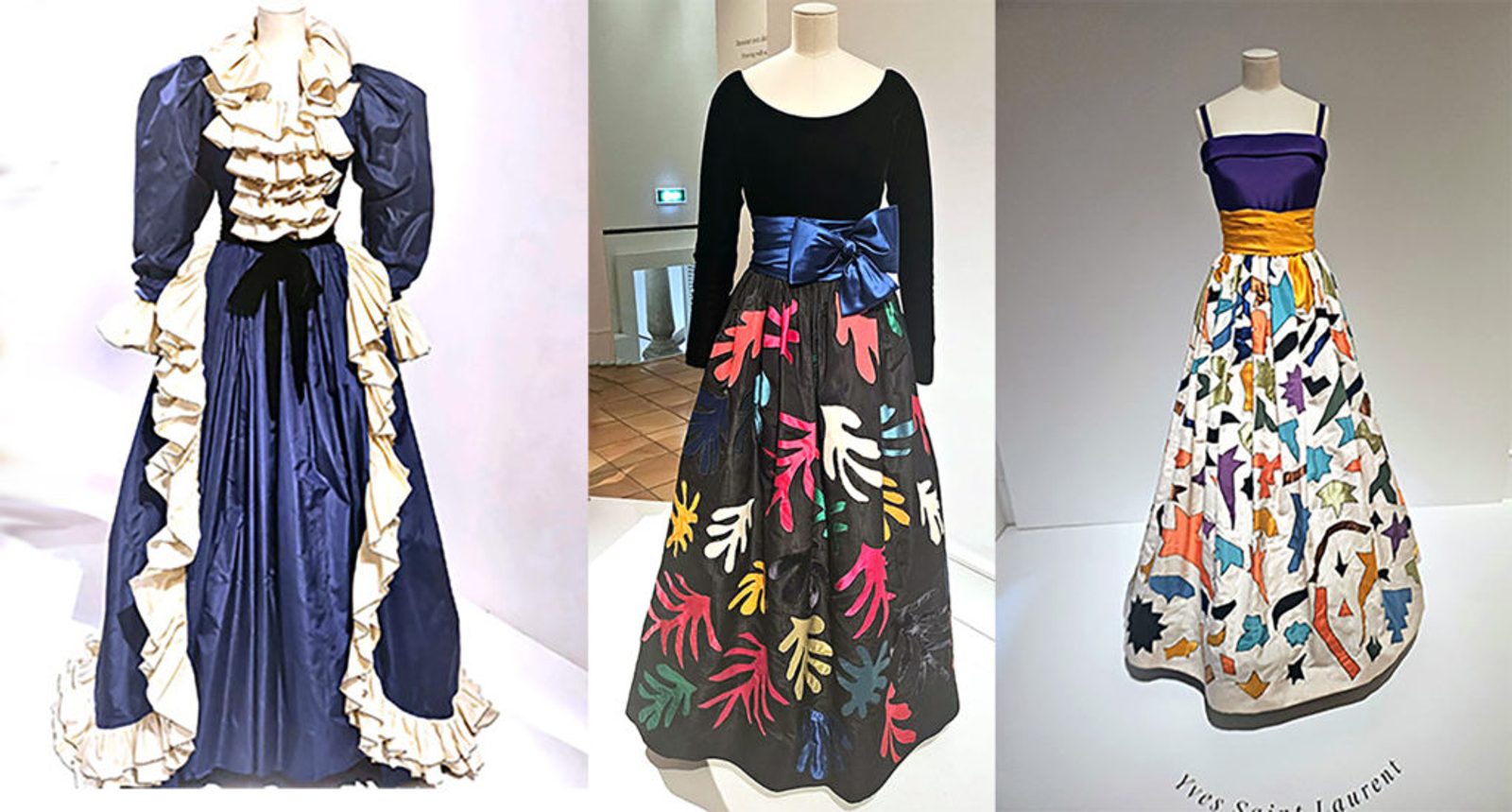
For Yves Saint Laurent, Matisse’s influence went far beyond simple literal quotation or passing tribute. A great art collector, the couturier surrounded himself with the painter’s works, books and visual references throughout his career. This intimate immersion was reflected in his collections through subtle reminiscences: a juxtaposition of bold tones, the clean cut of a line or the deployment of a plant motif on a silk fabric.
Rather than copying the master’s paintings, Saint Laurent positioned himself as a translator of his visual language. The motif leaves the flatness of the canvas to embrace the dynamics of a silhouette in motion, giving the painting a living, tactile dimension. The couturier did not seek to reproduce but to translate the work to give it a new existence on the female body, perfectly illustrating the process of artistic assimilation and reinvention.
Colour and travel as a legacy
A shared passion for colour and elsewhere
Beyond techniques, it is a shared geographical and chromatic sensitivity that unites the two men. Both Matisse and Saint Laurent found a fundamental source of aesthetic regeneration in North Africa. Matisse’s stays in the Maghreb deeply transformed his palette, introducing a new light and saturation. For his part, Saint Laurent drew major chromatic inspiration from his visceral attachment to Marrakech and its gardens, characterised by vibrant contrasts.
This openness to distant horizons and non-Western decorative arts nurtured a shared creative method: observing, absorbing, then simplifying the line to retain only pure emotion. In Nice, the Mediterranean light acts as the natural bond for this encounter, recalling that North Africa nurtured a shared fascination for solar harmonies and plant arabesques in both creators.
Scenography at the service of complicity
An immersive trail in the heart of Cimiez hill
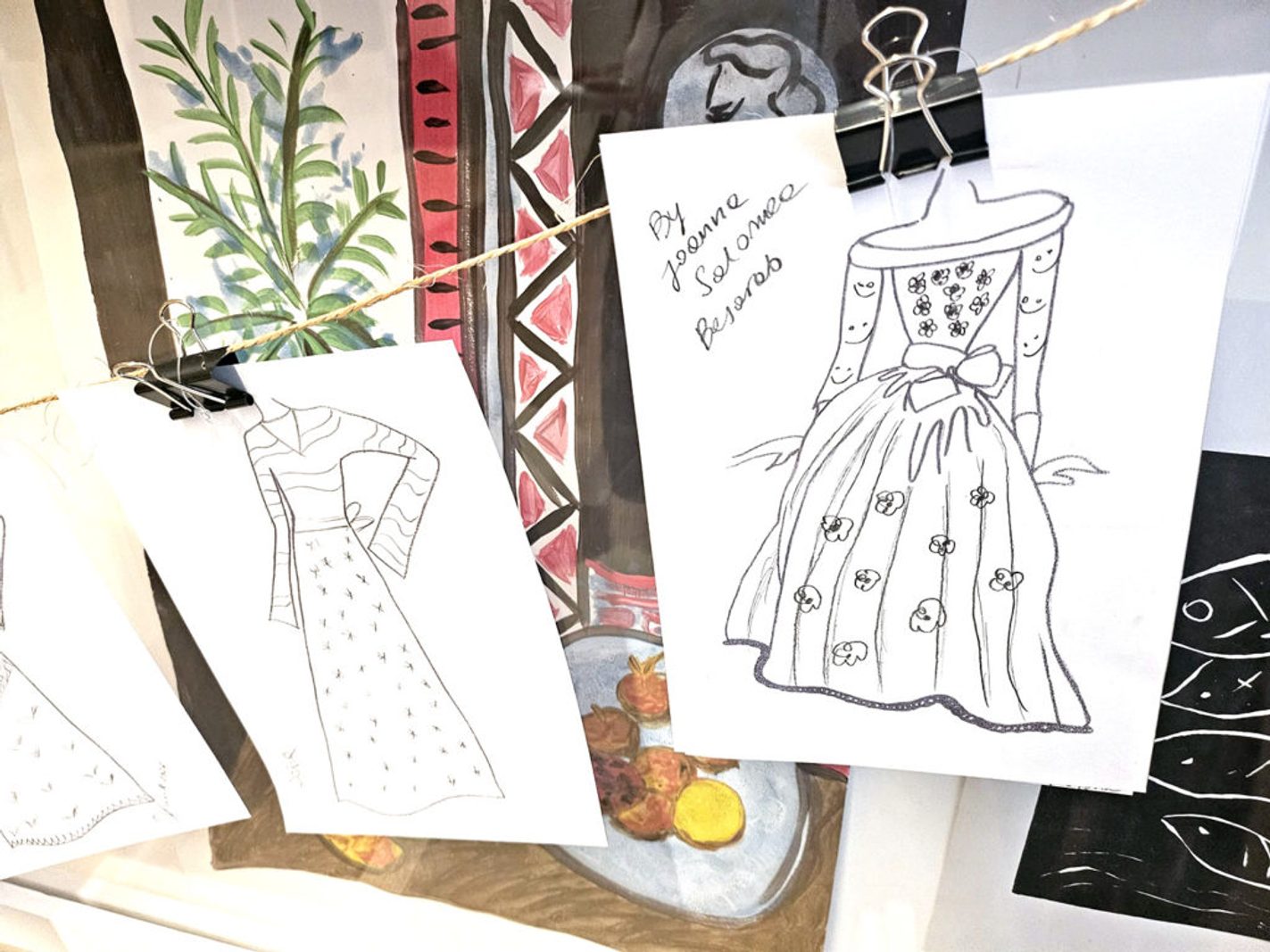
The exhibition trail, structured into seven thematic sections, was designed by Studio Matters to foster a progressive immersion within this posthumous conversation. The paintings, drawings and archives of the Musée Matisse dialogue fluidly with the haute couture designs and accessories from the Fondation Pierre Bergé – Yves Saint Laurent, complemented by major international loans.
This understated staging avoids the pitfall of forced comparison to make way for subtle visual resonances. As they walk through the different rooms, visitors will see how the traditional boundaries between fine arts and applied arts blur in favour of a unified vision of beauty. In Nice, Matisse’s chosen territory, the trail unfolds in seven distinct chapters that demonstrate that artistic creation cannot be confined to a single medium.
Information on the Matisse Yves Saint Laurent exhibition in Nice
For art and haute couture lovers, this temporary exhibition is a notable event on the Côte d’Azur before it closes at the end of the month. The Musée Matisse, located on Cimiez hill, offers the ideal setting to appreciate this dialogue, the relevance of which resonates with the cultural history of the city of Nice.
To guarantee an optimal visitor experience, bookings can be made directly online on the institution’s official website, allowing visitors to plan their visit as well as possible to contemplate these exceptional pieces.
To find out more about the programme and prepare your visit:.