

In brief
- On 24 June 2026, the General Court of the European Union invalidated the automatic exclusion of private jets from the environmental classification.
- The legal appeal, successfully led by French manufacturer Dassault Aviation, is based on an error of assessment regarding operating criteria.
- The decision reopens access to sustainable finance funding for business aviation research programmes.
- All aircraft are subject to an obligation to incorporate 70% sustainable fuels by 2050 in Europe.
Business aviation faces a historic turning point following the decision to annul the automatic exclusion of private jets from the green taxonomy. This decision, made public in the summer of 2026, revives the debate on the scientific and legal criteria governing the ecological transition of high-end air transport.
A record take-off against a backdrop of climate tensions
Record dynamism against a backdrop of climate tensions
The summer of 2026 recorded unprecedented peaks in air activity. On 23 July 2026, the tracking platform Flightradar24 recorded a peak of 153,359 commercial flights in just twenty-four hours, representing an increase of nearly 12% compared to the previous record in July 2023. This surge is occurring in a context where environmental concerns and summer climate anomalies are multiplying across the European continent. Faced with this situation, individual responsibility initiatives show their objective limits: they do not structurally modify travel behaviour. This is why regulatory institutions are now favouring financial and regulatory levers to govern the sector.
The complex inner workings of the green taxonomy
The green taxonomy: a strategic financial lever
Established by a 2020 regulation, it acts as the official dictionary of sustainable finance within the European Union. This classification system aims to direct private capital flows towards economic activities rigorously assessed according to precise scientific criteria. In 2023, the European Commission extended this mechanism to the aviation sector by imposing strict technological requirements to obtain the sustainable label. Within this framework, business aviation was initially excluded automatically, a highly symbolic choice since this transport segment attracts a significant share of environmental criticism. Indeed, estimates indicate that 1% of the world’s population generates nearly half of global aviation emissions.
The legal arguments of Dassault Aviation
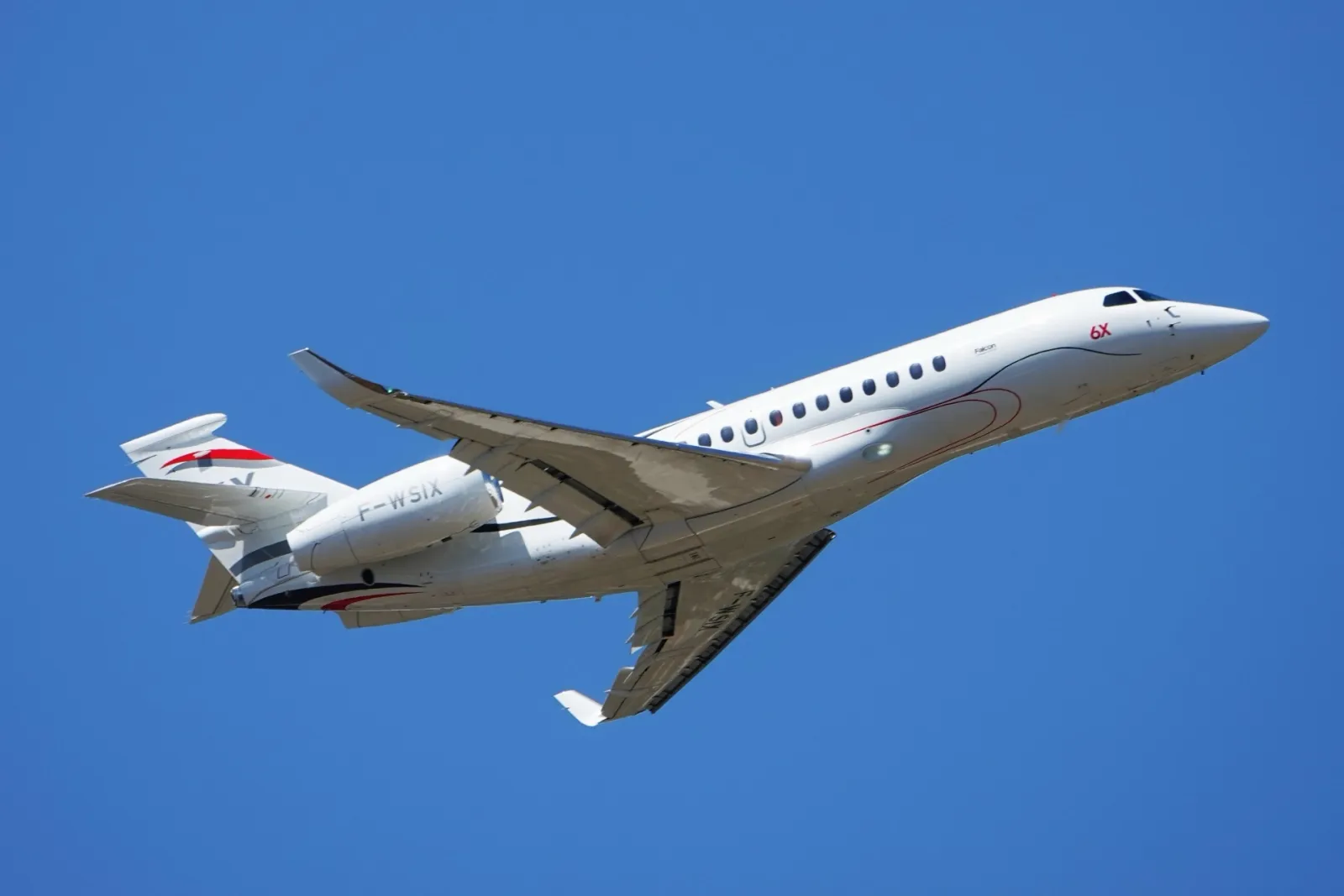
The French manufacturer Dassault Aviation, European leader in the sector with its Falcon range of aircraft, challenged this automatic exclusion before the European courts. The manufacturer’s defence was based on the fact that the Commission had penalised the very nature of the aircraft rather than assessing their actual operating performance. On 24 June 2026, the General Court of the European Union upheld this argument, annulling the exclusion decision for a manifest error of assessment. The judge ruled that the European Commission had compared the different transport segments in a biased manner by failing to apply the general criteria of the sector. This ruling serves as a reminder that legal rigour must prevail over political intuition, even for climate causes widely supported by public opinion.
The real impact on sustainable finance
The technological imperative of sustainable fuels
On an operational level, the court decision relies on the integration trajectory of sustainable aviation fuels (SAF). European regulations already impose a minimum share of bio-based or synthetic fuels during each refuelling at Union airports: the rate, set at 2% in 2026, will rise to 6% in 2030, then to 20% in 2035, reaching 70% by 2050. As private jets are subject to the same refuelling obligations as commercial airliners, their total exclusion from the green taxonomy appeared scientifically inconsistent to the court. For aircraft manufacturers, the major challenge lies in the ability to fund their research and development programmes on eco-responsible capital markets.
Technical specifications and market benchmarks
To put the challenges of this transition into context, here are the key indicators structuring the debate around business aviation and green finance:
- Reference regulation: European Taxonomy (2020 Regulation) and ReFuelEU Aviation mandates.
- Sustainable aviation fuel (SAF) trajectory: 2% in 2026 · 6% in 2030 · 20% in 2035 · 70% in 2050.
- Traffic concentration: Four European hubs (Paris-Le Bourget, Genève, Nice, Londres-Luton) account for more than 40% of jet movements on the continent.
- Key player in the appeal: Dassault Aviation (Falcon range).
European regulation faced with market realities
Towards harmonisation of the European single market
The evolution of legislation highlights the need for harmonisation across the European single market. Isolated tax initiatives, such as the national tax of 2 euros per imported parcel introduced by France in March 2026, regularly demonstrate the limits of local regulations: logistics flows are instantly redirected to neighbouring countries like Belgium or the Netherlands before transiting by road. This economic reality underlines that only a coordinated approach at European Union level can establish truly sustainable and effective competition. Business aviation, now reintegrated under performance conditions into the green taxonomy, illustrates this transition towards a market where access to capital depends on verifiable and harmonised climate requirements.