

In brief
- Marseille-based jeweller Lucas Bauer is establishing himself as a rising figure in design, thanks to sustainable jewellery with organic and poetic shapes.
- A graduate of the Chambre Syndicale de la Couture Parisienne, he consolidated his expertise during nine years within the women’s studio of Louis Vuitton.
- His approach values bespoke creation, the preservation of manual craftsmanship and the use of repurposed materials such as sea-polished glass.
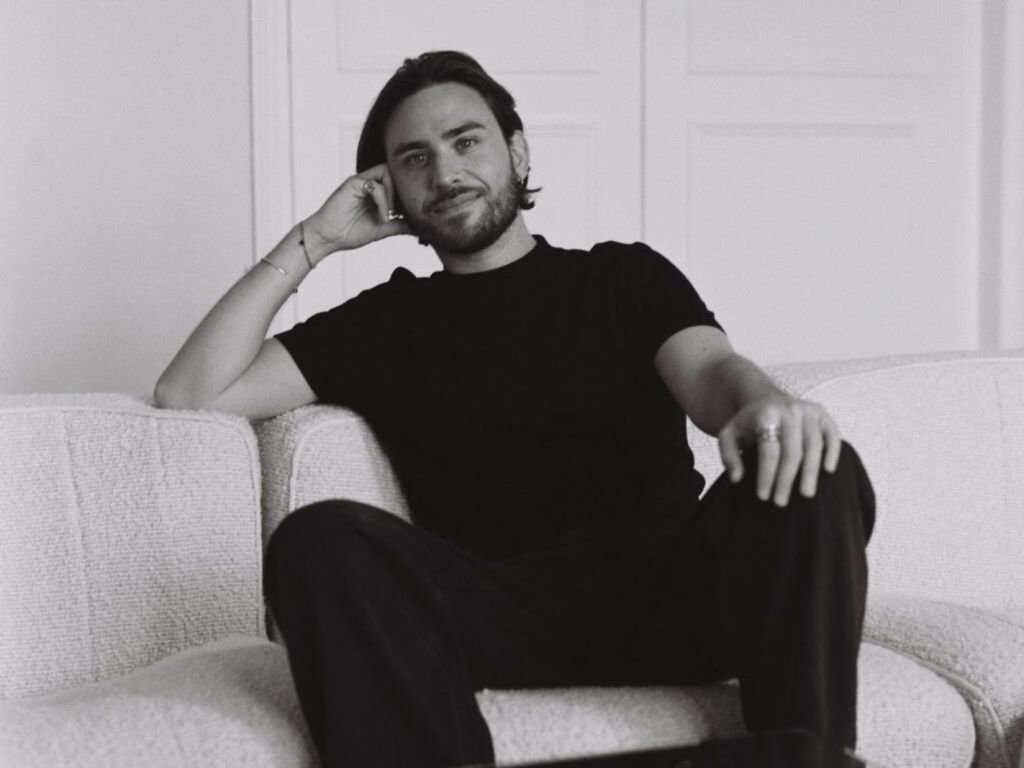
The Marseille-based designer Lucas Bauer is establishing himself today as one of the most unique faces of jewellery design in France, thanks to an unprecedented artistic approach that unites gesture, material and the intimate. In a jewellery world sometimes perceived as rigid and standardised, he breathes a wind of freedom and poetry by offering pieces that tell a story of harmony with the living world. His work is distinguished by extreme attention to detail and a raw sensitivity, making each ornament a miniature work of art. By placing craftsmanship and respect for natural cycles at the heart of his concerns, the Marseille designer outlines the contours of a resolutely contemporary signature jewellery, capable of moving people and transcending eras without losing any of its splendour.
Trained in the greatest Parisian schools and deeply attached to his southern origins, he shakes up the codes of traditional adornment by imagining sustainable and sculptural pieces, inspired by the living world and shaped to hug the natural movement of the body. This dual identity, between the aesthetic rigour of the capital and the wild freedom of the Mediterranean coastline, shapes the unique identity of his creations. In Paris, he immersed himself in haute couture techniques, a taste for precision and the constant search for technical perfection. Returning to his southern roots, he chose to confront this academic background with the asymmetry, irregularity and raw textures of the plant and mineral worlds. The result is a vibrant jewellery, where the metal seems almost liquid, ready to adapt to the movements of the body rather than imposing a constraint upon it.
Organic inspiration born in the Calanques of Marseille
The alliance of nature and metal in contemporary jewellery
The world of jewellery is currently undergoing a remarkable evolution, sometimes abandoning ostentation in favour of a more intimate and respectful dialogue with nature. In this quest for renewal, independent designers play a major role by exploring new aesthetic paths. Nature is no longer simply copied or stylised in a geometric way; it is understood in its essence, with its imperfections, its fragility and its power of regeneration. Lucas Bauer is fully part of this dynamic, designing jewellery that seems to stem from a process of organic growth, where metal dialogues with void and light to give rise to shapes of great aesthetic fluidity.
Sculptural collections inspired by nature
Rootlet, Rhizoé, Xylem, Phloem, Algae or even Inocybe. Far from being simple scientific terms, these names designate the collections of Lucas Bauer. The jeweller designs rings that wind around the fingers or earrings that seem to blossom directly on the skin, reflecting a meticulous observation of flora. Each piece becomes a study of plant biology and its mysteries. The terms “Xylem” and “Phloem” refer to the channels through which the nourishing sap of plants circulates, while “Rhizoé” and “Rootlet” evoke the complex root networks that anchor themselves in the earth to draw life from it. “Inocybe” is inspired by the fascinating world of fungi and their filamentous structures. This fascination with nature has its source in the designer’s childhood in Marseille, marked by walks with his father amidst the mineral reliefs and plants of the Calanques. This arid, wild landscape, bathed in the intense light of the South and bordered by the waters of the Mediterranean, left an indelible mark on his imagination. The influence of his pharmacist grandmother, who introduced him to the power of herbariums and the study of plants, and that of his mother, a yoga teacher familiar with Indian ornamental culture and its holistic vision of the body, completed the shaping of his spiritual and organic approach to adornment.
The technical rigour learned at Louis Vuitton
A career of excellence at the heart of Parisian luxury
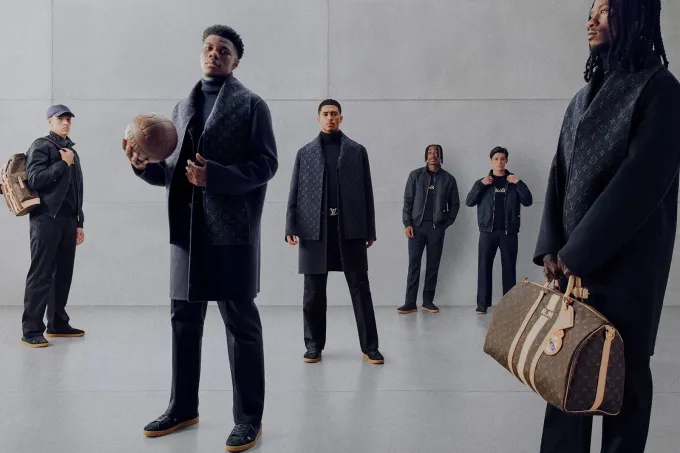
Before launching his own house, the designer followed a path of excellence. A graduate of the Chambre Syndicale de la Couture Parisienne (now the Institut Français de la Mode), he spent nearly nine years within the women’s studio of Louis Vuitton, under the direction of Nicolas Ghesquière. It was in this prestigious setting that he learned the absolute standards of fashion jewellery, the precision of drawing and the constant dialogue with art workshops. This long collaboration within one of the most influential fashion houses in the world allowed him to acquire an iron discipline, an intimate understanding of volumes and a keen sense of the staging of clothing and its accessories. By working daily alongside the finest artisans, he developed a deep respect for manual work and the transmission of expertise. In 2022, wishing to slow down the pace imposed by relentless fashion collections and reclaim his space of expression, he decided to found his eponymous brand to return to a more instinctive and timeless method of creation. This choice of independence allows him today to free his creative gesture from any industrial constraints to design pieces that have a true soul.
The vision of Lucas Bauer: the body as a starting point
For Lucas Bauer, jewellery moves away from classic adornment to occupy areas of the body often neglected by traditional ornament, such as the nose, mouth, arm or waist. The design, sketched with a free line, follows the natural anatomy to accompany movement rather than constraining the skin. The jewellery is no longer thought of as a simple added accessory, but as a physical extension, a second skin that interacts directly with the intimacy of the wearer. His first collection, named Hyphos and inspired by underground mycelium networks, embodies this desire to translate the unity of the living world and to design jewellery not as status-defining finery, but as a vector of relationship and protection between beings. These fine metallic structures, which wrap around the limbs, remind us that every element of nature is connected to others by invisible yet unbreakable bonds, thus creating a sense of comfort and deep connection with the surrounding universe.
The choice of bespoke and recycled glass
Towards responsible jewellery anchored in the local territory
The development of luxury craftsmanship is now accompanied by an acute environmental and social awareness. Contemporary designers question the impact of their practice, favouring production methods that respect nature rather than exploiting it intensively. Lucas Bauer embodies this new generation of jewellers for whom the beauty of a piece of jewellery is not measured solely by the rarity of its traditional components, but by the coherence of its manufacturing process. By prioritising short supply chains, the repurposing of existing materials and on-demand manufacturing, he offers a virtuous alternative model. This eco-responsible approach, far from limiting creativity, becomes an inexhaustible source of aesthetic and poetic inspiration.
The art of bespoke and repurposed materials
Acclaimed from its beginnings by the Ateliers de Paris, the Francéclat association and the Ministry of Culture, the young jewellery house cultivates a great freedom of creation. Lucas Bauer now prioritises bespoke orders and direct dialogue with his clients, defending the primacy of handcraft and human encounters in the face of the rise of digital technologies. This collaborative process makes it possible to establish a unique relationship of trust, where each piece of jewellery becomes the reflection of a personal story, an emotion or a life milestone. His collection, highly anticipated in this month of September 2026, showcases “pierres d’étoile”, fragments of glass polished by the waves and gathered from coastal rocks. These small shards of glass, once discarded by humans, have been gently polished and softened by the ocean for years, until they acquire a satin texture and a soft shape reminiscent of the finest precious stones. By blending these recycled materials with precious gems, the designer, who also teaches his art in a fashion school, redefines true luxury through the prism of poetry, transmission and the long term. Through his teaching activity, he is committed to transmitting this ethical and artistic vision to the young generation of designers, where the value of an object lies above all in the care that has been given to it, in its history and in its capacity to awaken a sincere emotion in the person looking at it.