
At a glance
- What? The partial skeleton of Dubreuillosaurus valesdunensis, the only known specimen of the species according to Millon, goes on sale at the Hôtel Drouot.
- When? Wednesday 18 November 2026 at 2 pm, Room 10, lot 203 of the “Histoire Naturelle” (Natural History) sale.
- Estimate: €250,000-350,000 excluding fees, plus a 27% buyer’s premium.
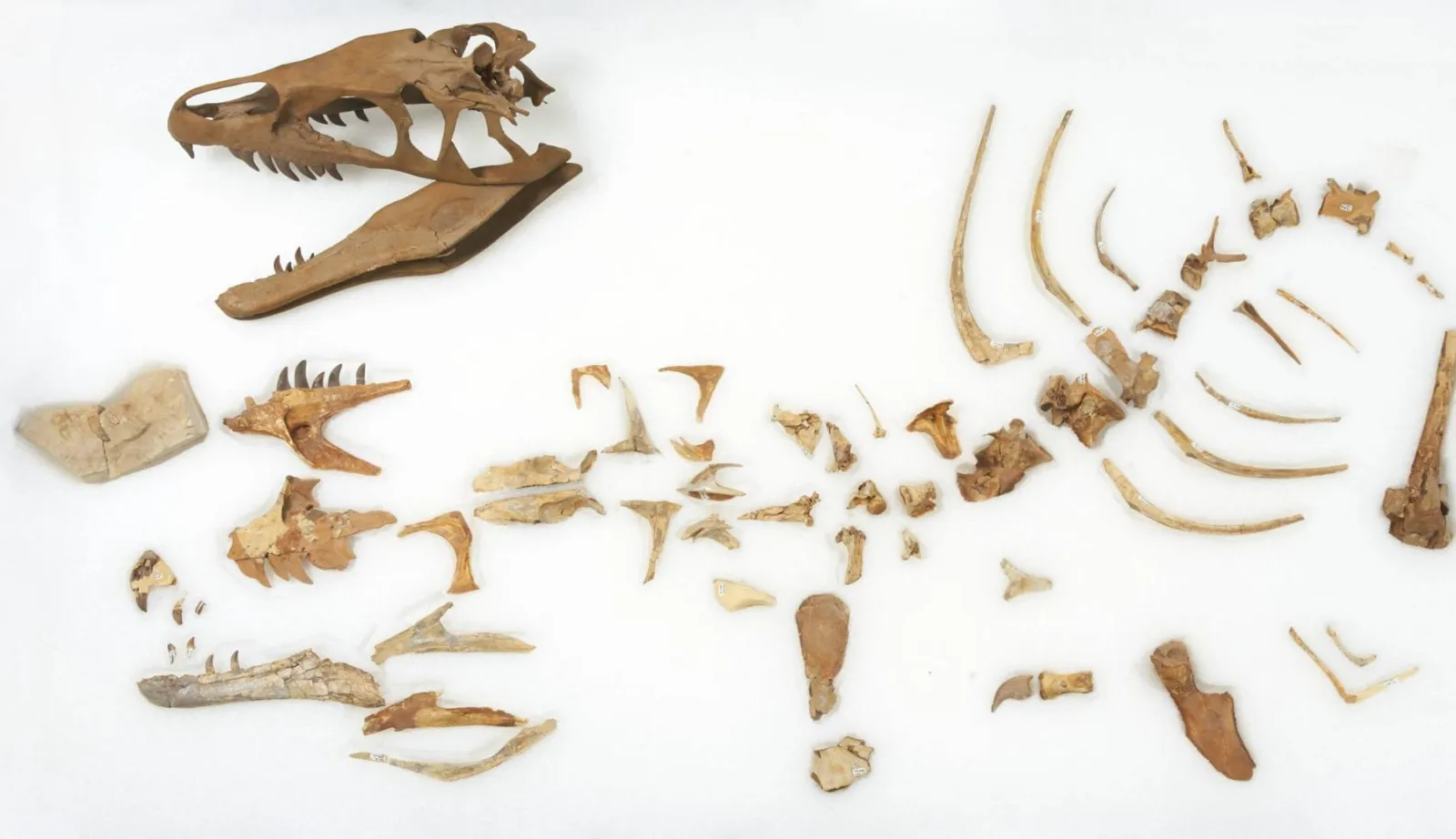
- The fossil: 62 bones from a juvenile theropod about 5 m long, some 167 million years old, discovered in 1994 in Calvados, Normandy.
- Controversy: the CR2P palaeontology research centre (MNHN, CNRS, Sorbonne Université) has launched a petition to suspend the sale; the French State can exercise its right of pre-emption in the saleroom, on the day of the sale.
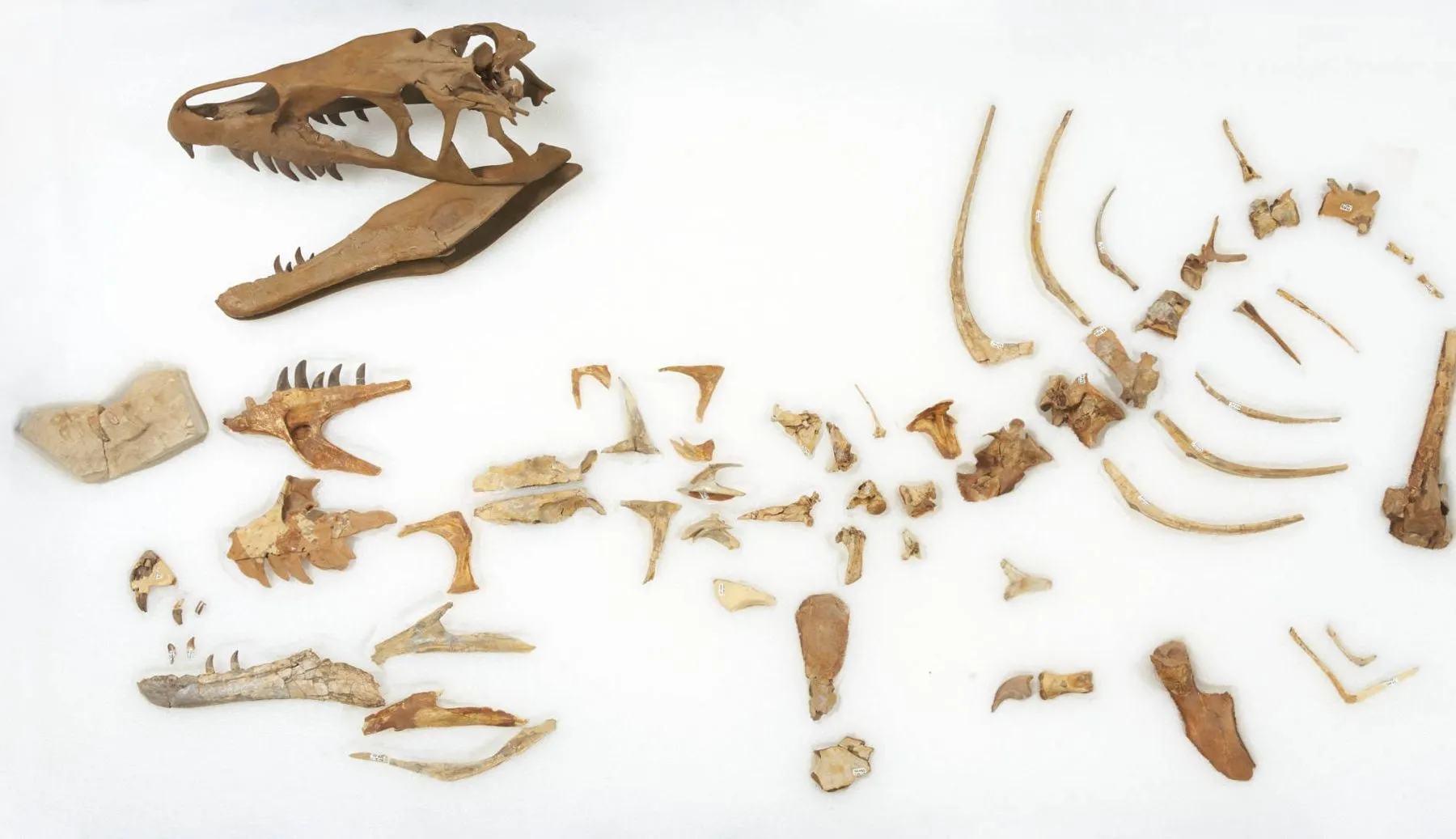
Thirty-two years after its discovery in Normandy, Dubreuillosaurus valesdunensis is going under the hammer. The Millon auction house presents this dinosaur as the only currently known specimen of its species: its holotype, the specimen that serves as the reference for its scientific description. Palaeontologists at the Muséum national d’Histoire naturelle, France’s National Museum of Natural History, want it to stay in a public collection.
Lot 203: €250,000-350,000 before fees
Millon’s “Histoire Naturelle” (Natural History) sale will take place on Wednesday 18 November 2026 at 2 pm in Room 10 of the Hôtel Drouot, 9 rue Drouot, in Paris’s 9th arrondissement, and will be streamed live for online bidding. The dinosaur is listed as lot 203. Millon estimates it at €250,000-350,000 excluding fees, plus a 27% buyer’s premium. The stated provenance is a French private collection.
A 167-million-year-old carnivore
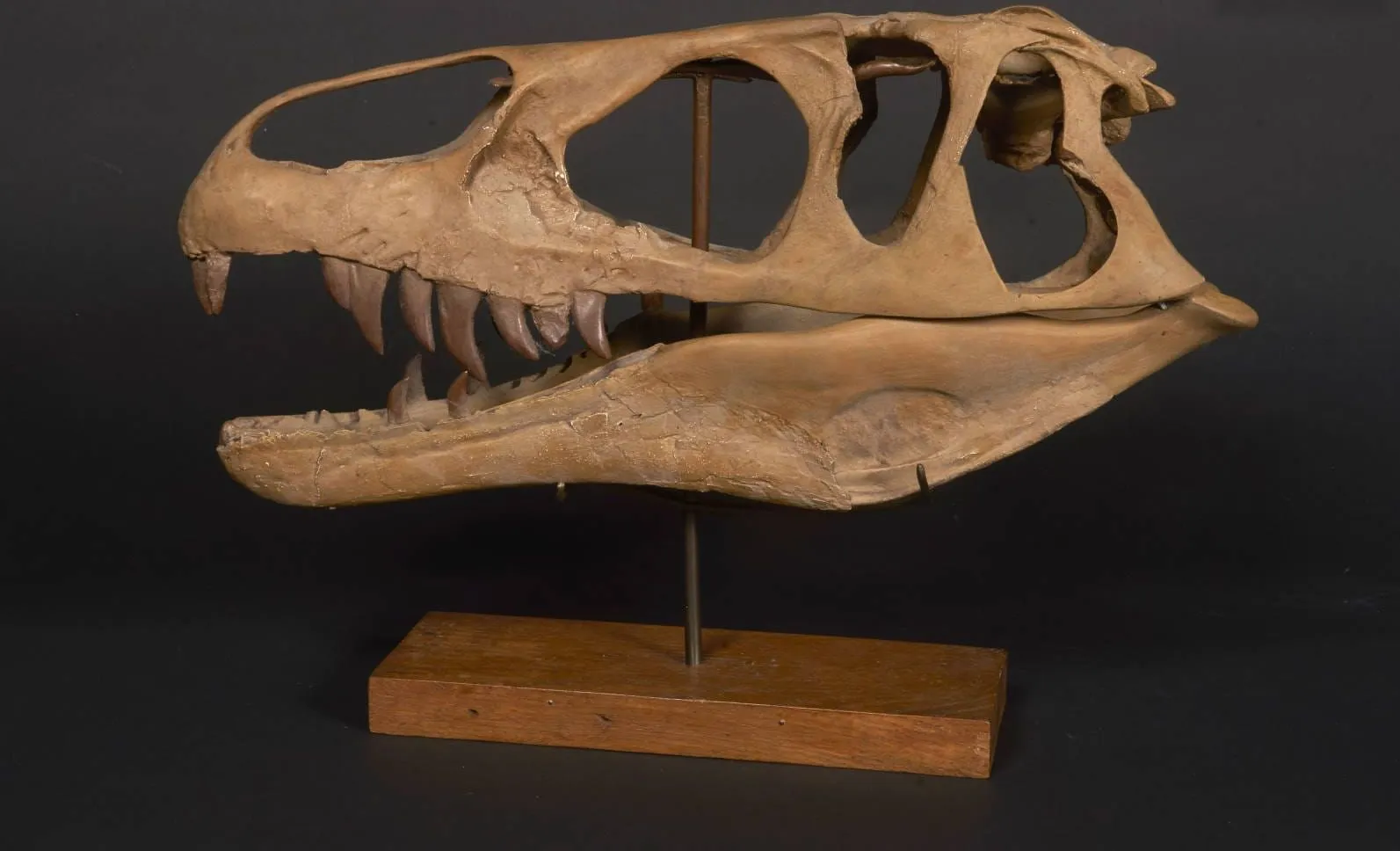
Dubreuillosaurus is a carnivorous theropod of the family Megalosauridae. It lived on land in Europe during the Middle Jurassic (Bathonian stage), around 167 million years ago. The specimen on sale is a juvenile under 10 years old, about 5 m long, whereas an adult probably reached 9 to 10 m. Its name changed along the way: in 2002, palaeontologist Ronan Allain described the species as Poekilopleuron valesdunensis; in 2005, he moved it to a new genus, Dubreuillosaurus, in honour of the man who found it.
62 bones and a cast of the skull
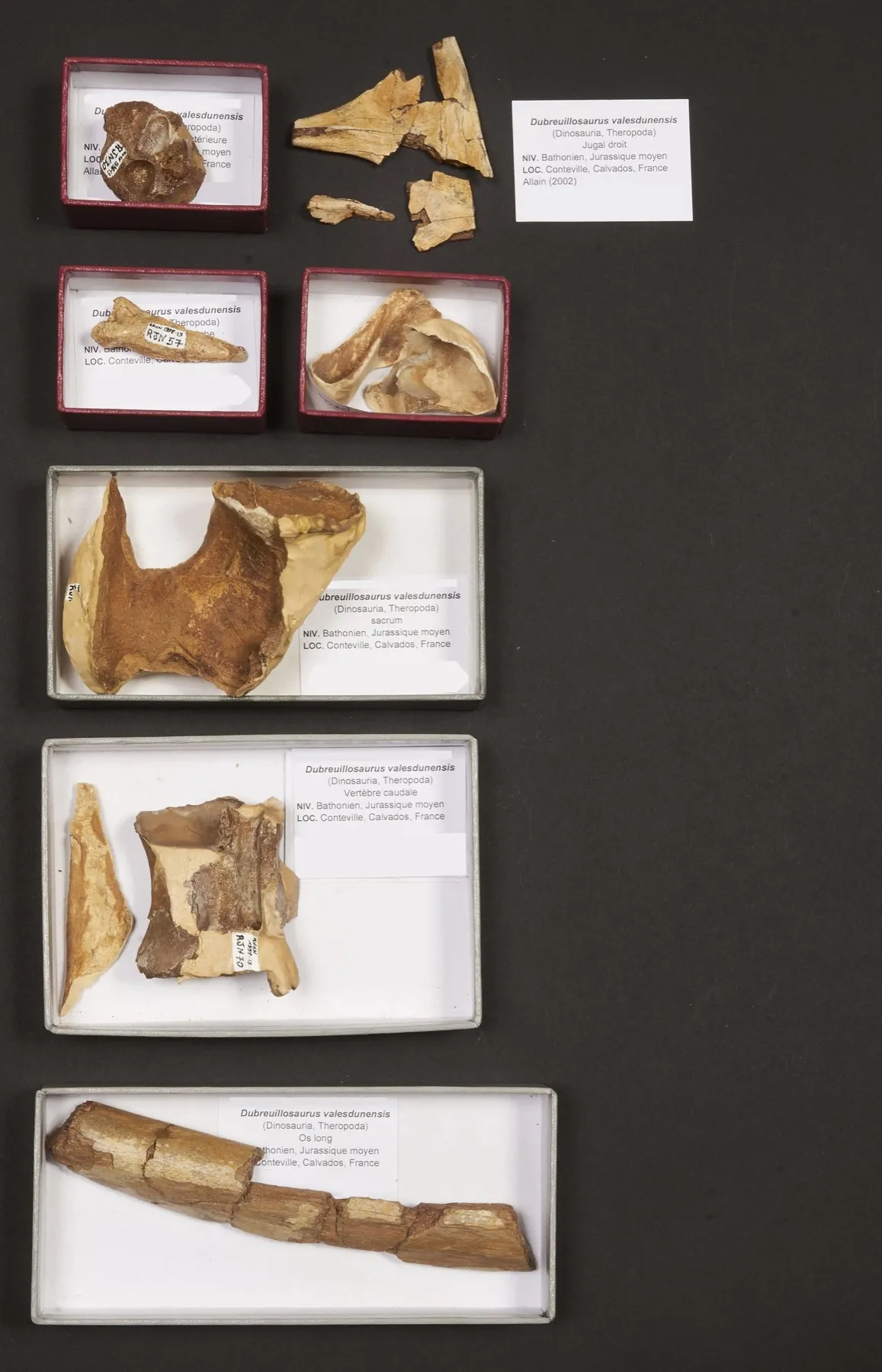
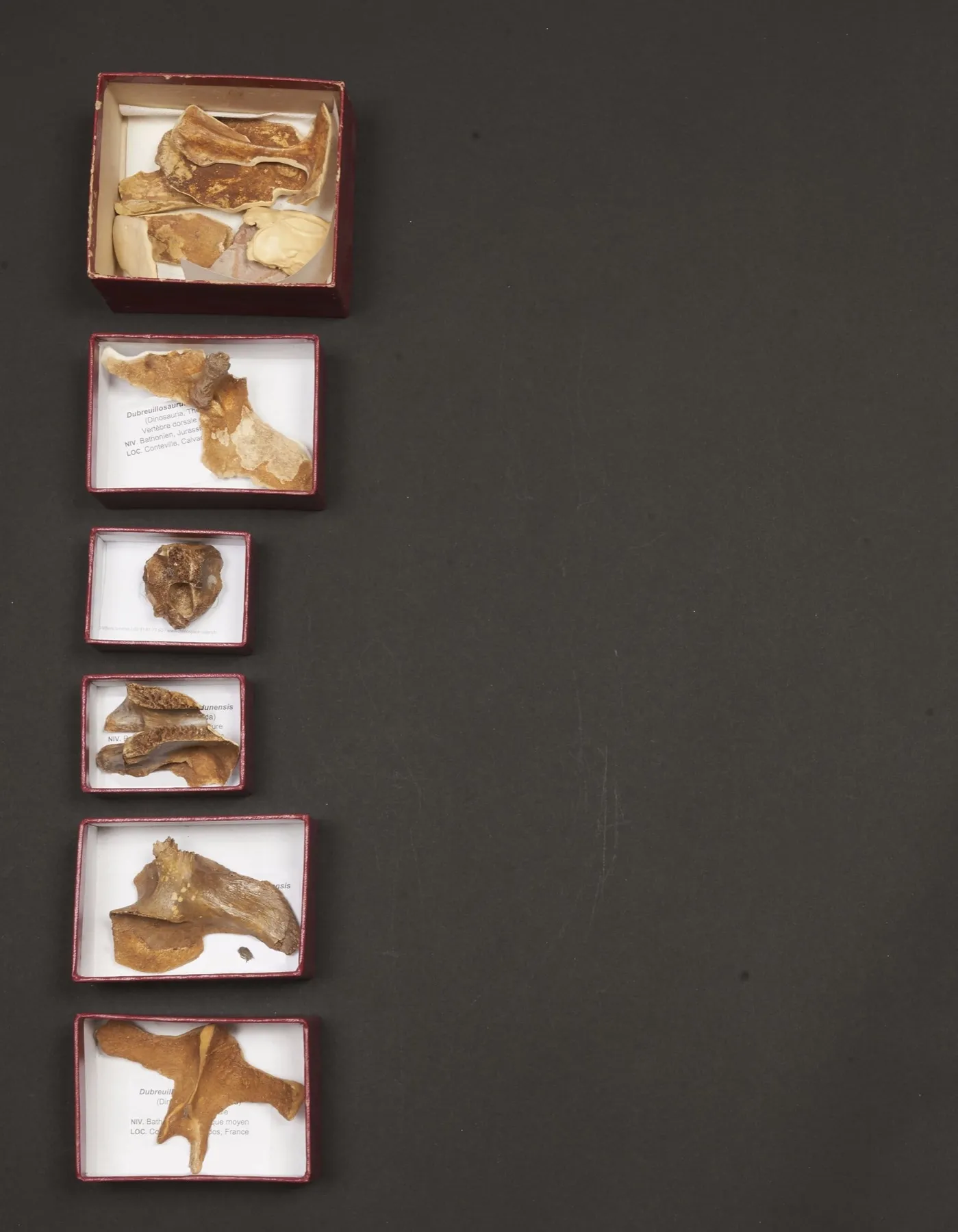
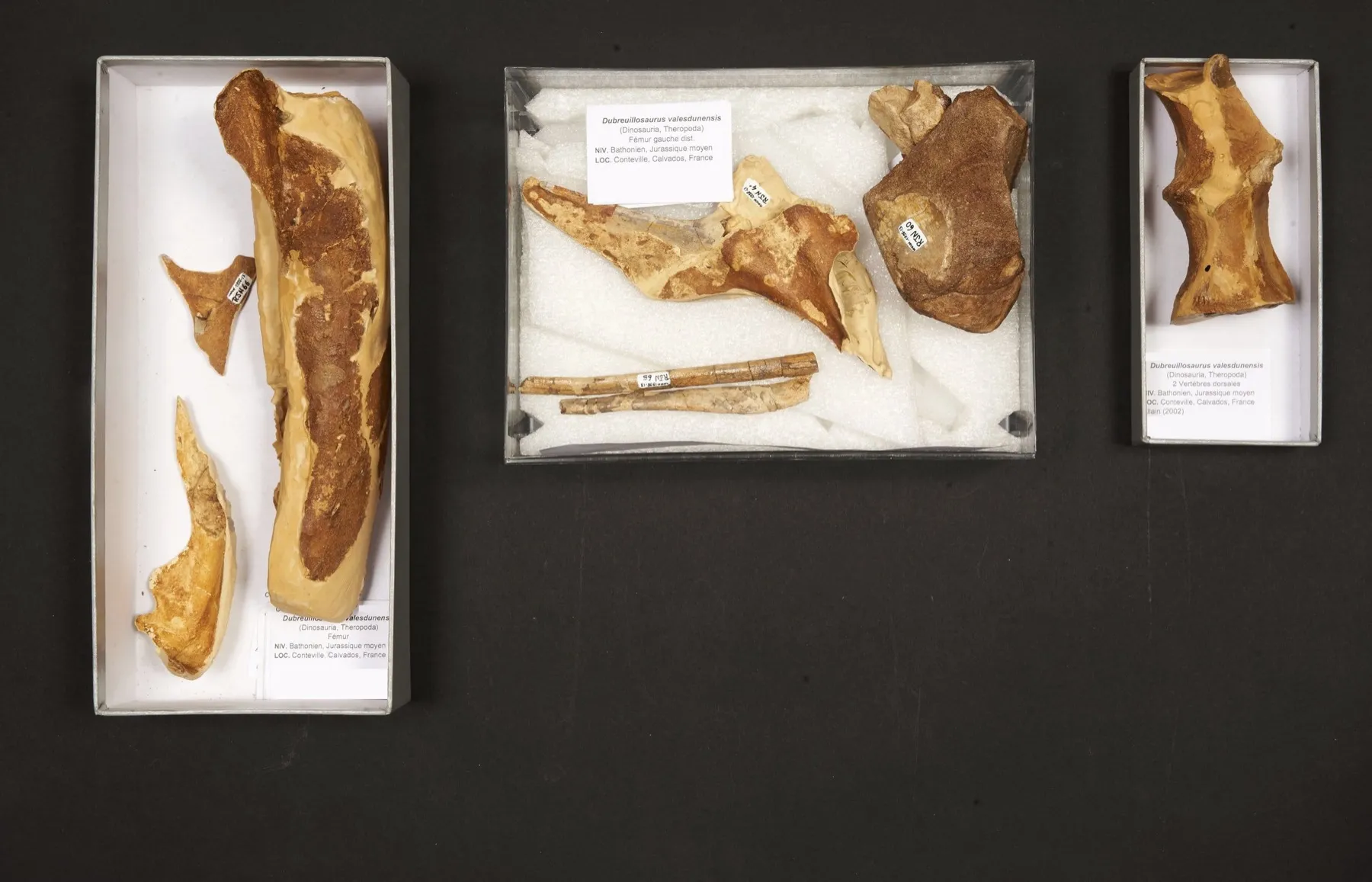
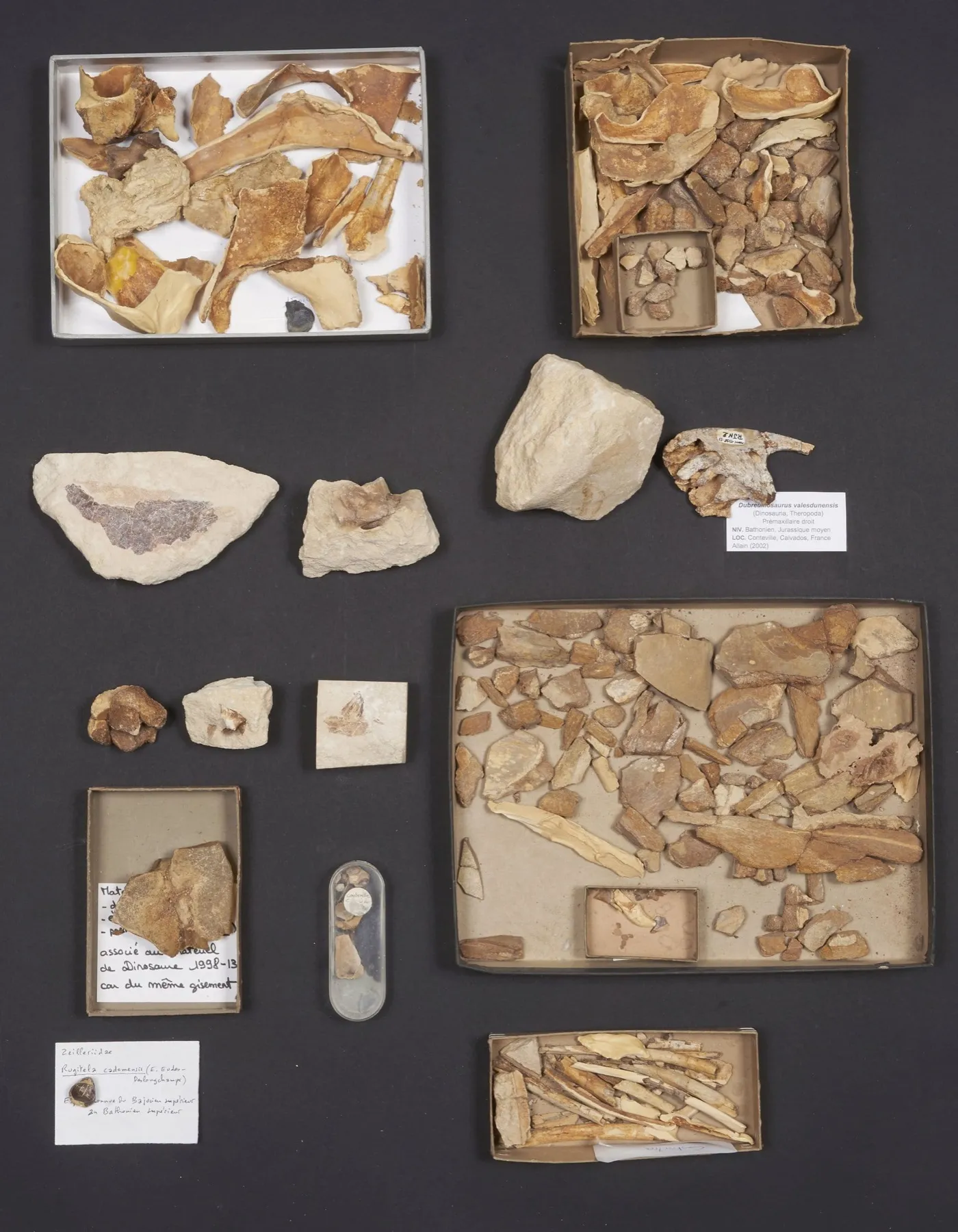
This is a partial skeleton. A first glazed case measuring 2.16 m x 1.26 m x 45 cm displays 62 bones laid flat, including a skull that is 70% preserved, cervical, dorsal, sacral and caudal vertebrae, the jaw, teeth, a femur, ribs, chevrons, a scapula, a coracoid, a tibia, a clavicle and a fifth metatarsal. The lot also includes a second glazed case of bones and fragments, measuring 1.30 m x 90 cm x 25 cm, and a cast of the skull on a base, 26 cm high and 48 cm long.
Found in 1994 by the mayor of Conteville
The fossil was unearthed at the end of September 1994 in Conteville, in the commune of Val-ès-Dunes (Calvados), by André Dubreuil (1941-2024), then mayor of the village and a member of a palaeontology association. Teams from the MNHN and the CNRS then carried out excavations; part of the jaw came out of the ground in 1998. Several hundred hours of preparation at the CR2P preceded the reconstruction of the skull in 2005. The dinosaur was later exhibited at the Paléospace in Villers-sur-Mer, in the gallery devoted to the dinosaurs of Normandy.
The CR2P launches a petition
As no donation was ever formalised, the heirs of André Dubreuil, who died at the end of 2024, recovered the fossil and consigned it for sale. The Centre de recherche en paléontologie de Paris (CR2P), which brings together the MNHN, the CNRS and Sorbonne Université, raised the alarm on 22 October 2026, with an update on 29 October. It is calling for signatures on an online petition to suspend the sale, supports a crowdfunding campaign and wants the law reformed to protect exceptional fossils. In France, a fossil belongs to the owner of the land where it was found, which allows private individuals to sell it.
Can the French State pre-empt the fossil?
The French Heritage Code (Code du patrimoine, Article L123-1) allows the State to exercise a right of pre-emption over any public sale of works of art or cultural goods, in its own name or on behalf of a local authority. This right is exercised in the saleroom, on the day of the sale, immediately after the hammer falls: the State then takes the place of the highest bidder. No decision can therefore be known before 18 November. The catalogue also points out that the specimen is a cultural good under export rules: taking it out of France will require an export certificate, and taking it out of the European Union an export licence from the Ministry of Culture; Millon states that it will not refund the buyer if either is refused. At Drouot, another heritage case marked the spring: the Hans Baldung Grien masterpiece recognised as a national treasure. Elsewhere on the market, the Meissonnier tureen is expected to fetch up to 6 million pounds at Christie’s.
| Item | Dubreuillosaurus valesdunensis, holotype (partial skeleton) |
| Family | Megalosauridae, carnivorous theropod |
| Geological age | about 167 million years (Middle Jurassic, Bathonian) |
| Specimen | juvenile under 10 years old, about 5 m long |
| Contents | 62 bones (including 70% of the skull), second case of bones and fragments, skull cast |
| Discovery | late September 1994, Conteville (Val-ès-Dunes, Calvados), by André Dubreuil |
| Auction house | Millon, “Histoire Naturelle” sale, lot 203 |
| Date and venue | Wednesday 18 November 2026, 2 pm, Hôtel Drouot, Room 10, Paris 9th arrondissement |
| Estimate | €250,000-350,000 excluding fees (buyer’s premium: 27%) |
| Export | certificate (outside France) and licence (outside the EU) required |
Information verified on 31 October 2026. Sources: lot 203 listing, Millon sale of 18 November 2026 (drouot.com), CR2P, Muséum national d’Histoire naturelle (22 and 29 October 2026), Paléospace, Villers-sur-Mer, French Ministry of Culture.