

In brief
- The Hilton group has been crowned number one among Asia’s best employers by the Great Place to Work® institute in 2026.
- This accolade comes for the tenth consecutive year in the hospitality industry of the Asia-Pacific region.
- The brand now relies on 99,000 employees, a workforce that has doubled since 2017 to support a portfolio of over 1,300 hotels.
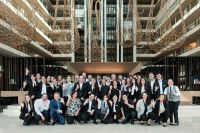
The Hilton Asia hotel group has just been named first in the ranking of the region’s best employers by the Great Place to Work® institute in 2026. This major accolade, obtained for the tenth consecutive year in the hospitality sector, crowns the human resources policy of a rapidly expanding giant. At a time when the sector faces unprecedented recruitment challenges, the group demonstrates that rapid growth can go hand in hand with a particularly nurtured corporate culture.
The meteoric growth of Hilton Asia
A meteoric expansion driven by people
Since its first appearance in this benchmark ranking, Hilton has pursued an aggressive expansion strategy in Asia-Pacific while placing the employee experience at the centre of its business model. In 2026, the company relies on a network of over 1,300 hotel properties across the region, driven by committed local teams. The group’s workforce has thus doubled in less than ten years, growing from 48,000 employees in 2017 to over 99,000 today. This momentum reflects the brand’s attractiveness in a highly competitive job market.
This global recognition is built on outstanding performance at the local level. The group has secured the top spot in national rankings in key markets such as China, India, the Philippines, Vietnam, Sri Lanka, Thailand, Malaysia, and New Zealand. At the same time, Hilton was praised for its initiatives in favour of diversity, notably earning the title of best workplace for women in Japan for the first time.
Programmes of excellence to develop talent
Structured and attractive career paths
To support this expansion, the operator has structured rigorous internal development paths, designed to foster professional mobility and the social advancement of its executives. Among these cutting-edge initiatives, the SHINE programme focuses on training future hotel general managers. Added to this are the Luxury Leaders Program, dedicated to ultra-luxury properties, as well as the Women in Leadership programme, aimed at increasing female representation in executive roles across Asia.
These paths make it possible to offer clear career prospects within the group’s various brands and diverse geographical territories. By investing heavily in continuous training and personalised support, the company ensures a pool of loyal talent, capable of upholding the brand’s service standards across the entire continent.
Technology supporting hospitality tasks
Adapting to new expectations in the job market also involves increased flexibility and optimising daily working conditions. Hilton distinguished itself by becoming the first hospitality player to integrate gig work (the “gig economy” model) in countries like China and Japan. To streamline the organisation, smart scheduling tools assisted by artificial intelligence have been deployed, simplifying roster management for employees.
The automation of repetitive administrative tasks allows teams to refocus on the very essence of hospitality: human relationships and personalised customer service. By modernising its recruitment processes through predictive and analytical technologies, the brand improves the candidate experience from the first point of contact, while preserving the human connection essential to the luxury and travel industries.
Holistic support extended to employees’ families
Well-being and social commitment at the heart of the strategy
Beyond career development, the group’s social policy is distinguished by its holistic approach to quality of life at work. Named Thrive@Hilton, this employee appreciation programme incorporates employee benefits of an unprecedented scale in the hospitality industry. Hilton thus offers a true ecosystem of physical and mental well-being, which now extends to employees’ families through assistance services, personalised therapies, and fertility support programmes.
Specific initiatives crown this scheme, such as the Thrive Sabbatical, which offers selected employees the opportunity to take time off to pursue an inspiring personal project. In China, a dedicated platform allows teams to access all the brand’s products and services at preferential rates. This constant focus on people strengthens the sense of belonging and demonstrates that a bold social policy forms the essential foundation for sustainable economic success.