
In brief
- “The Last Remedy” puzzle game available in 3 difficulty levels from age 6.
- Exceptional participation in the Night of the Castles on 17 and 18 October 2026.
- Medieval and Renaissance architectural duo to discover from 17 October to 8 November 2026.
For the Toussaint holidays, from 17 October to 8 November 2026, the Château de Langeais invites the public to a playful and historical immersion in the time of Louis XI. Between captivating puzzles, brand new night tours and period sets, the Indre-et-Loire fortress offers a full programme suitable for all generations. Nestled in the heart of Touraine, this landmark of French heritage offers a privileged opportunity to travel through the centuries and discover a royal legacy of exceptional richness, magnified by the colours of autumn.
Autumn is a particularly favourable time to discover the châteaux of the Loire. When the coolness sets in and the low light gilds the ancient stones, the Loire Valley unfolds a singular atmosphere, imbued with mystery and poetry. Within this exceptional cultural landscape, the Château de Langeais occupies a prominent place. A witness to major events that shaped the history of France, this royal residence combines impressive military architecture with a refined setting. The programme developed for Toussaint aims to showcase this historical setting through activities adapted to all ages, blending scientific rigour with family entertainment.
An immersive puzzle game
An immersive puzzle game at the heart of history
The flagship event of this period is entitled “The Last Remedy”, a mysterious trail that plunges visitors into a royal plot. As a strange influence has taken hold of King Louis XI, apprentice detectives must explore the cabinet of advisor Olivier le Daim and venture near the old dungeons to find the antidote. The trail offers 3 difficulty levels specifically designed for children aged 6 to 10, 11-13 year olds and those over 14. Fancy dress is highly recommended to fully enjoy the settings.
Designed to encourage intergenerational transmission and learning through play, this scripted trail leads participants to walk through the different rooms of the fortress with a keen eye. The plot is based on historical facts scripted around the emblematic figure of Louis XI, nicknamed the “Spider King” due to his complex diplomacy and network of informants. By pushing open the doors of the secret cabinet of Olivier le Daim, a key figure in the royal entourage, and then descending into the gloom of the dungeons, families discover the little-known aspects of medieval power while having fun.
Each level of the game has been rigorously developed to correspond to the analytical and deductive skills of the different age groups. For children aged 6 to 10, the puzzles rely on a sense of observation and the search for details hidden in the furnished rooms. For teenagers aged 11 to 13 and adults over 14, the mechanisms require more logical thinking, decryption and historical analysis. Visitors dressed in medieval or fantasy costumes thus naturally blend into the carefully arranged decor, accentuating the impression of a true journey through the centuries.
The Night of the Castles under the stars
The Night of the Castles and nocturnal discoveries
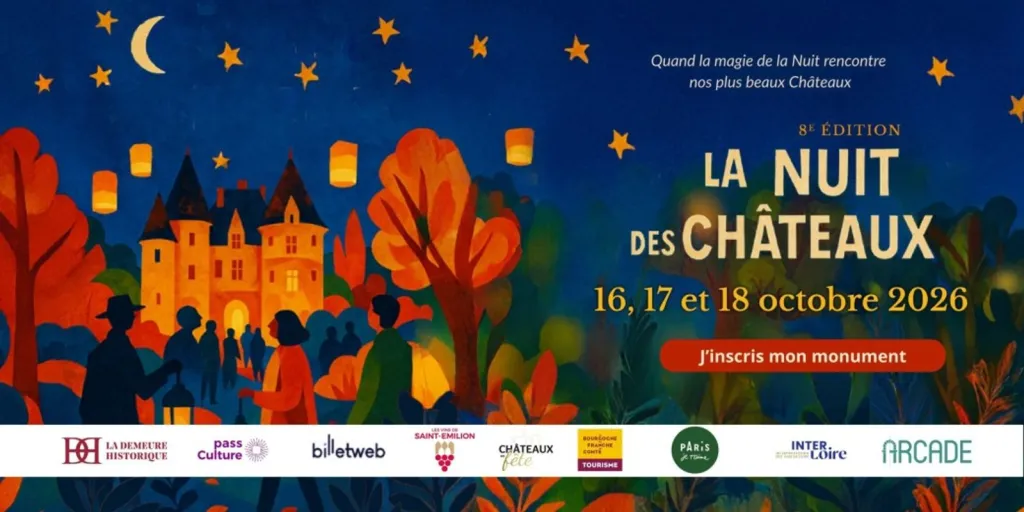
On 17 and 18 October 2026, the Château de Langeais is participating for the first time in the Night of the Castles. From 6pm to 9pm, the building opens its doors after dark, offering a unique perspective on its imposing medieval structures bathed in twilight. This nocturnal experience requires prior booking on the monument’s official ticketing site.
The Night of the Castles is a national event that aims to showcase heritage in a new light, under the cover of darkness. By opening its doors in the evening during this October weekend, the site offers history buffs and the curious a striking atmospheric walk. When night envelops the imposing walls of the castle, the play of lighting highlights the height of the towers, the depth of the moats and the majesty of the medieval architecture. The volumes are transformed, and the shadows cast on the stone facades give the place a solemn and captivating character.
Strolling through the royal rooms after the usual closing time allows one to feel the special atmosphere that once reigned in the fortress after the sun had set. Twilight metamorphoses the perception of the place: the parquet floor creaking underfoot, the large tapestries silhouetted in the soft light and the surrounding silence create ideal conditions for soaking up the soul of the monument. Due to a limited capacity intended to preserve the comfort of the visit and the magic of the moment, access to these nocturnal slots is only available via online pre-booking.

An exceptional heritage between the Middle Ages and the Renaissance
Located in Indre-et-Loire, the Langeais estate presents a major heritage singularity by bringing together two buildings from different eras on the same site. On one side stand the remains of the stone keep built at the end of the 10th century by Foulques Nerra, Count of Anjou. Considered one of the oldest masonry structures preserved in France, this medieval tower bears witness to feudal power struggles and the first stone defensive architectures in the Loire region.
On the other side rises the 15th-century castle, commissioned by King Louis XI. This double presence offers a living architecture lesson on the evolution of seigniorial and royal constructions. Visitors can thus appreciate the transition between the high defensive tower of the central Middle Ages and the royal residence of the late 15th century, marking the transition to the modern era and the artistic influences of the Renaissance.
Historical presentations and royal heritage
Mediators offer 25-minute talks every day at 11am, 2.30pm, 3.30pm and 4.30pm at no extra charge. These interventions provide a better understanding of the site’s political role. Built from 1463, the estate is distinguished by its double identity: a defensive facade with a drawbridge on the town side and a softer Renaissance-inspired architecture on the garden side. Inside, the scenographed reconstruction of the marriage of Charles VIII and Anne de Bretagne is a highlight of the visit.
From an architectural point of view, the facade overlooking the town retains all the attributes of a military fortress: imposing circular towers, a wall-walk on machicolations, a working drawbridge and thick walls designed to withstand potential sieges. In contrast, the facade facing the gardens is much more open and bright. Large mullioned windows, delicate sculptures and harmonious lines bear witness to the first breaths of the Renaissance, illustrating the desire to combine strategic defence with living comfort.
The most famous political event to occur within these walls remains the royal wedding celebrated in 1491 between the young King Charles VIII and Duchess Anne de Bretagne. This crucial union sealed the attachment of the Duchy of Brittany to the Kingdom of France. Inside the castle, a remarkable scenographed reconstruction with life-size wax figures, dressed in costumes faithfully reconstructed from period documents, allows visitors to relive the intimacy of this major historical ceremony.
An immersion into daily life in the 15th century
In addition to the great history of France, the castle’s permanent tour makes a point of showcasing the living environment of the nobility at the end of the Middle Ages. The monument houses a remarkable collection of carved chests, sideboards, four-poster beds and period seating. This sumptuous furniture helps to recreate the warm and refined atmosphere of seigniorial residences of the late 15th century.
The ensemble is enriched by an exceptional collection of Flemish and mille-fleurs tapestries hanging on the walls of the various rooms. These hangings, with their still vibrant colours, formerly served both as thermal insulation against the cold of the stone walls and as ostentatious decoration testifying to the wealth of the master of the house. The scenes depicted illustrate hunting, courtly life or complex botanical motifs, providing valuable insight into the iconography and art of living of the time.
Practical information and pricing
Practical information to prepare for your visit
The site is open continuously throughout all school holidays. The adult rate is €12, the reduced rate is €10 and the child ticket (6 to 17 years) is €7. A family pass is offered at €32 for two adults and two children. Access remains free for children under 6 as well as for people with reduced mobility. In addition to the tour of the furnished apartments, visitors benefit from access to the park, the remains of the Foulques Nerra keep and the outdoor play areas.
To fully enjoy the day, it is recommended to plan several hours on site. After discovering the furnished interiors and participating in “The Last Remedy” puzzle game, visitors can stroll through the vast wooded park overlooking the Loire. This green setting offers landscaped walking paths connecting the castle to the remains of the feudal keep, while offering panoramic views of the valley and the town’s rooftops.
The outdoor facilities also include installations for younger visitors, notably themed play areas perfectly integrated into the natural environment. The immediate proximity of the historic town centre of Langeais also allows for the visit to be completed by a discovery of the shopping streets and the banks of the Loire, making this autumn getaway an unforgettable cultural and heritage experience in the heart of the Loire Valley.