
From 23 to 25 October 2026, the Grand Palais hosts the fifth edition of Art Basel Paris, marking a major milestone in the history of international artistic gatherings. Under the majestic glass roof of the restored monument, the event brings together 211 exhibitors from 41 countries and territories. More than just a commercial event, the fair asserts its status as an exceptional cultural crossroads in the heart of the French capital.
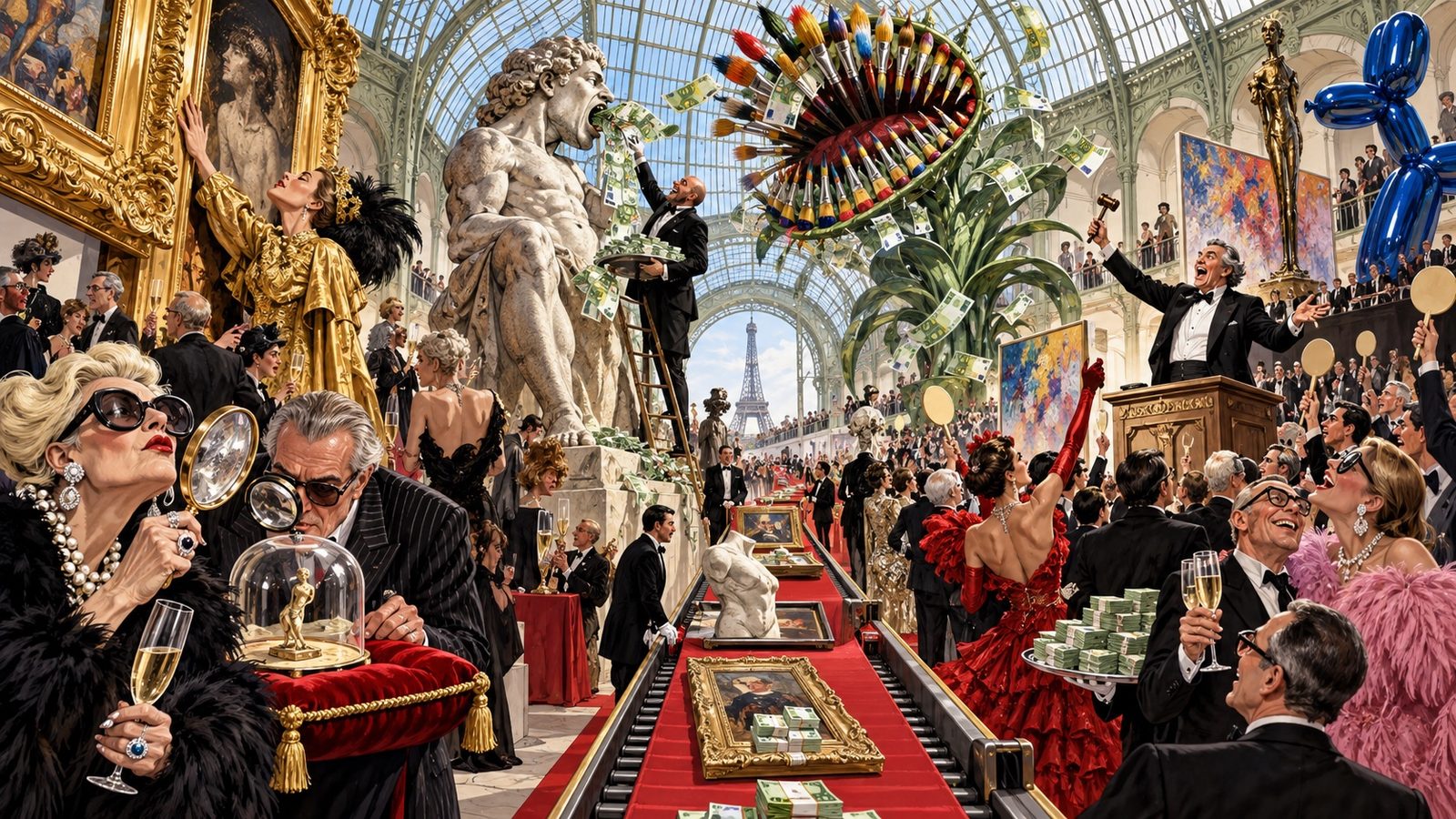
An exceptional gathering under the nave of the Grand Palais
Under the direction of Karim Crippa, the fair now transcends the traditional boundaries of the market to become a structuring cultural infrastructure. The event unites a prestigious ecosystem where seasoned collectors, institutional directors, and enthusiasts from around the world engage in dialogue.
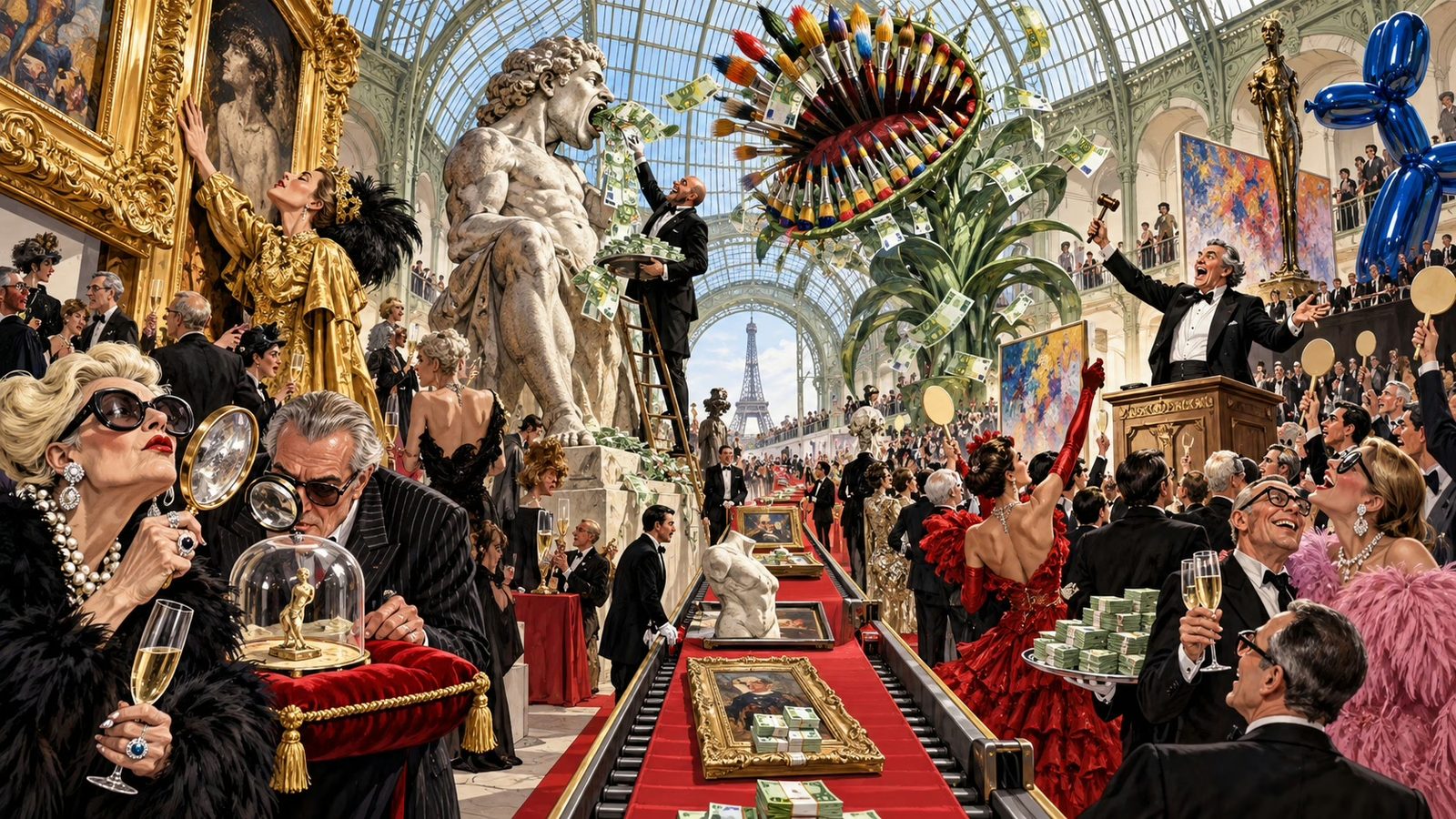
The natural porosity between commercial dynamics and the rigour of museum presentations gives the event a unique energy. Paris thus confirms its central role in the global contemporary art calendar.
A strategic mutation and a strengthened Parisian anchor
The evolution of the event reflects a perfectly mastered trajectory since its launch in 2022 at the Grand Palais Éphémère. Succeeding the FIAC, the fair now known as Art Basel Paris has successfully established itself by returning to the renovated Grand Palais in 2024.
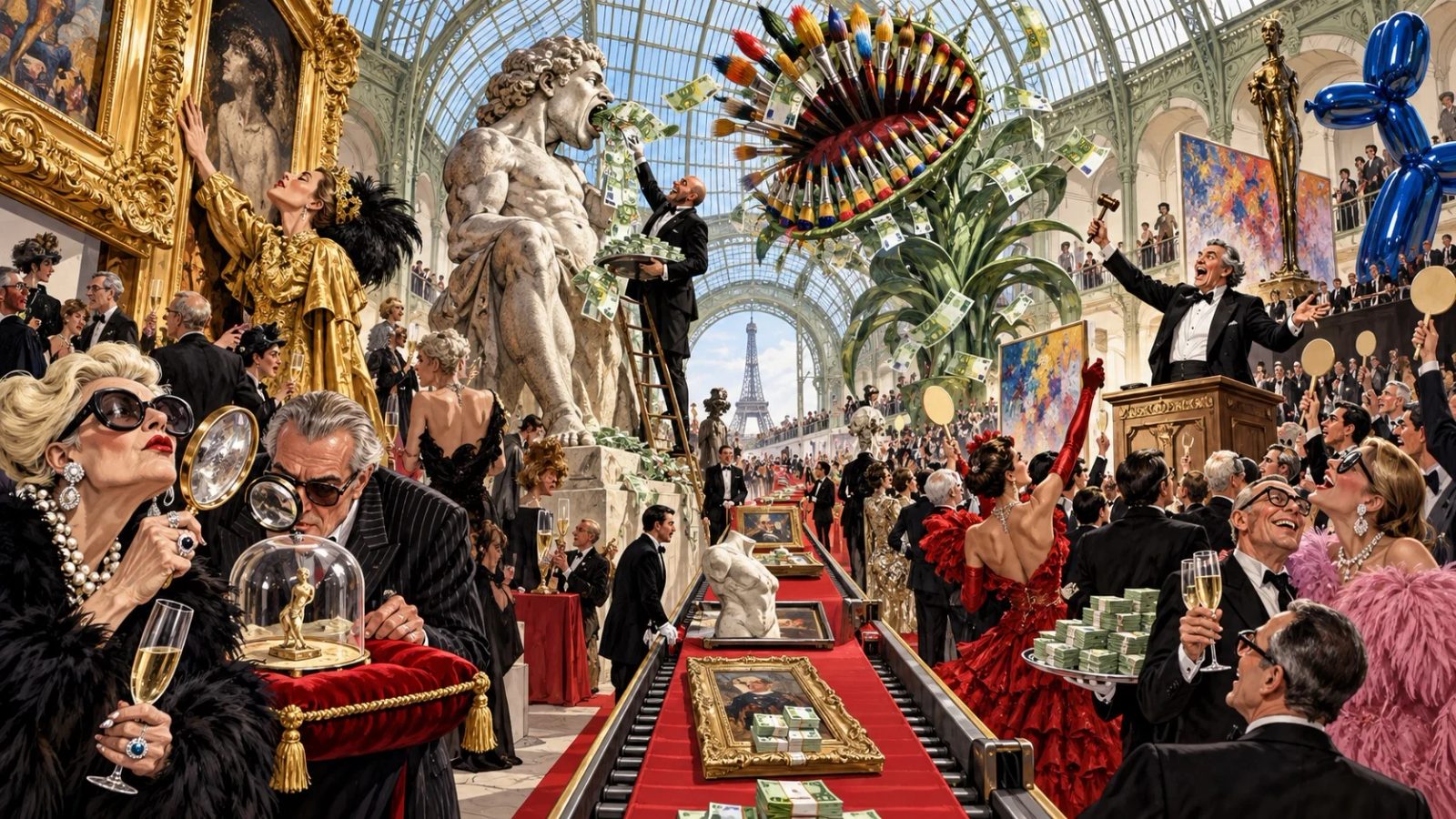
By crossing the symbolic threshold of two hundred exhibitors for this 2026 edition, the event consolidates its model while offering an exemplary balance between historic names and new emerging galleries.
The Premise sector and the rediscovery of major artists
Beyond the main Galeries sector, the Premise sector highlights twelve proposals focused on art history and research. This section offers valuable insight into artistic approaches that are sometimes unfairly overlooked.
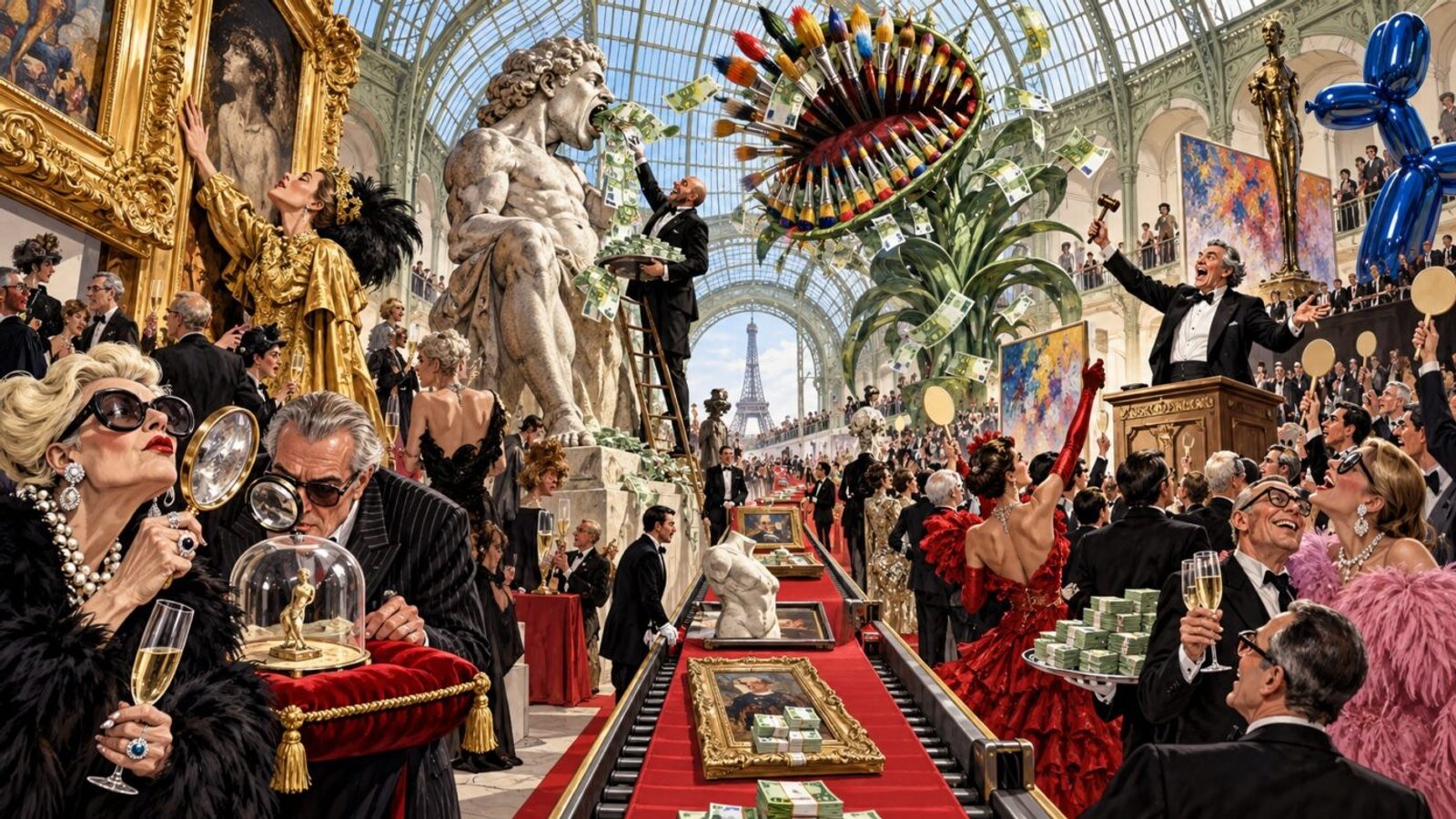
Highlights include the early works of Vera Molnár presented by Galerie Zlotowski, as well as the remarkable canvases of Jacqueline Lamba brought by the gallery Pavec. These curatorial choices meet the expectations of a market seeking solid historical benchmarks.

Tributes paid to Hilla Rebay, Tarsila do Amaral, or Derek Jarman complete this demanding selection, demonstrating the historiographical richness that galleries intend to highlight.
Gallery collaborations and unprecedented synergies
The layout of the 2026 edition is distinguished by a record twelve shared stands between several renowned galleries. These associations allow for a dialogue between works from various periods and horizons within the same space.

The associations between Michael Rosenfeld Gallery and Jeffrey Deitch, or between Tina Kim Gallery and Take Ninagawa, testify to a collective desire to go beyond simple commercial presentation in favour of true co-designed exhibition projects.
Contemporary emergence and new visual languages
On the balconies of the Grand Palais, the Emergence sector brings together 16 presentations individually dedicated to young artists. Twelve galleries are participating in this section for the first time, breathing fresh air into the fair.

The subversion of urban objects by Clémentine Adou, the hybrid creations of Nat Faulkner, or the architectural research of Asma Belhamar illustrate the diversity of mediums explored by this new generation.
A global resonance for the Parisian art scene
Set within an attentive global economic context, this 2026 edition reaffirms the cultural magnetism of Paris. By combining intellectual demand, contemporary audacity, and heritage rigour, Art Basel Paris establishes itself more than ever as an unmissable event for luxury and living art.
Thanks to this unifying dynamic, the capital no longer merely celebrates contemporary art for three days: it reaffirms its position as a major hub for the world’s leading players in creation and the art market.