

In brief
- On 19 October 2025, eight jewels were stolen from the Galerie d’Apollon at the Louvre: three pieces from the sapphire parure of Marie-Amélie and Hortense, two from the emerald parure of Marie-Louise and three jewels belonging to Empress Eugénie.
- The loss is estimated by the museum at 88 million euros, a figure made public on 21 October 2025 by the Paris prosecutor, Laure Beccuau.
- One year later, none of the eight pieces has been announced as recovered. Only Eugénie’s crown, dropped during the escape, was retrieved.
- Five people were charged at the end of 2025, including the four alleged members of the commando, all of whom are presumed innocent.
- The Galerie d’Apollon reopened on 22 July 2026, without display cases or jewels.
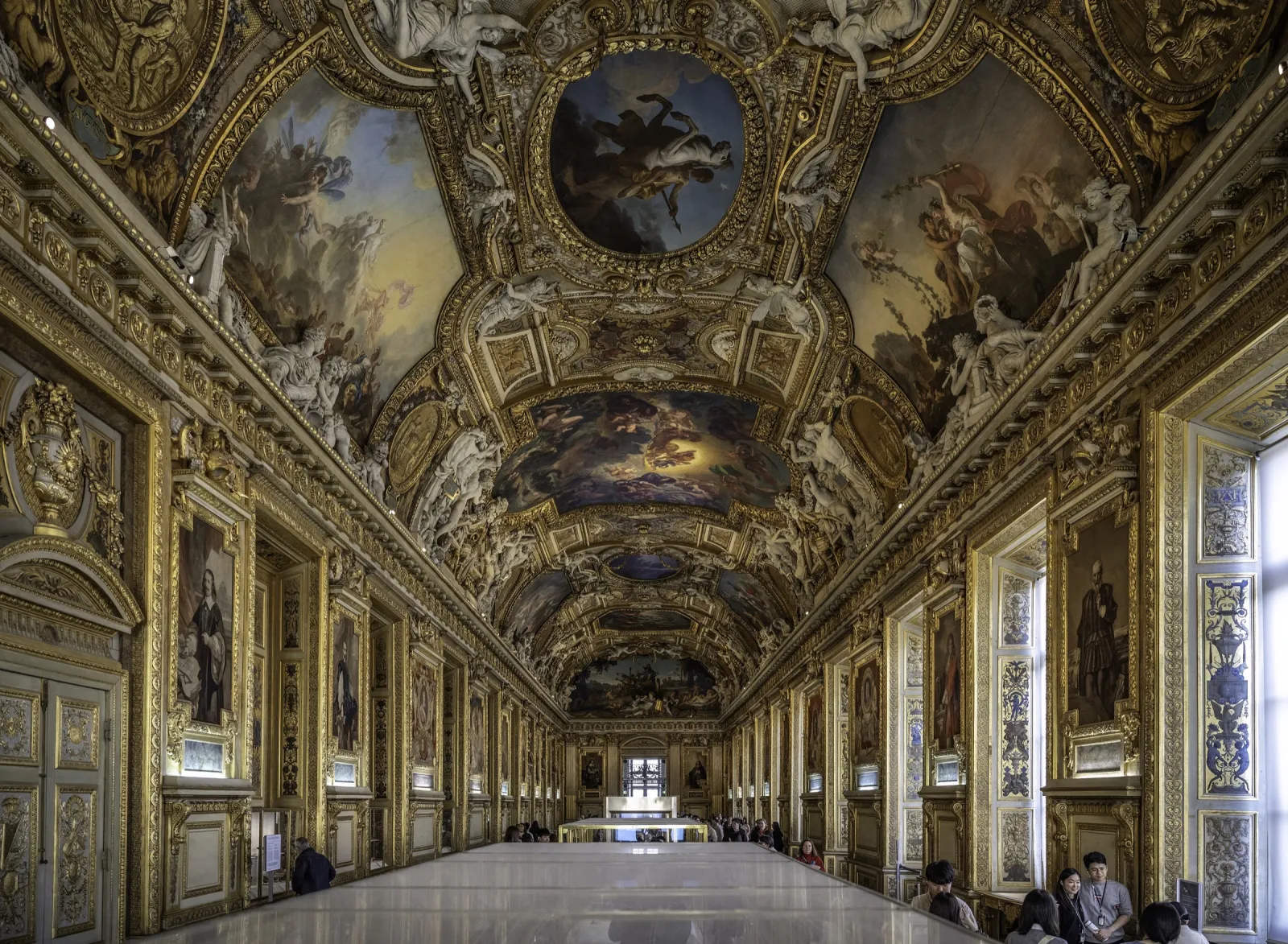
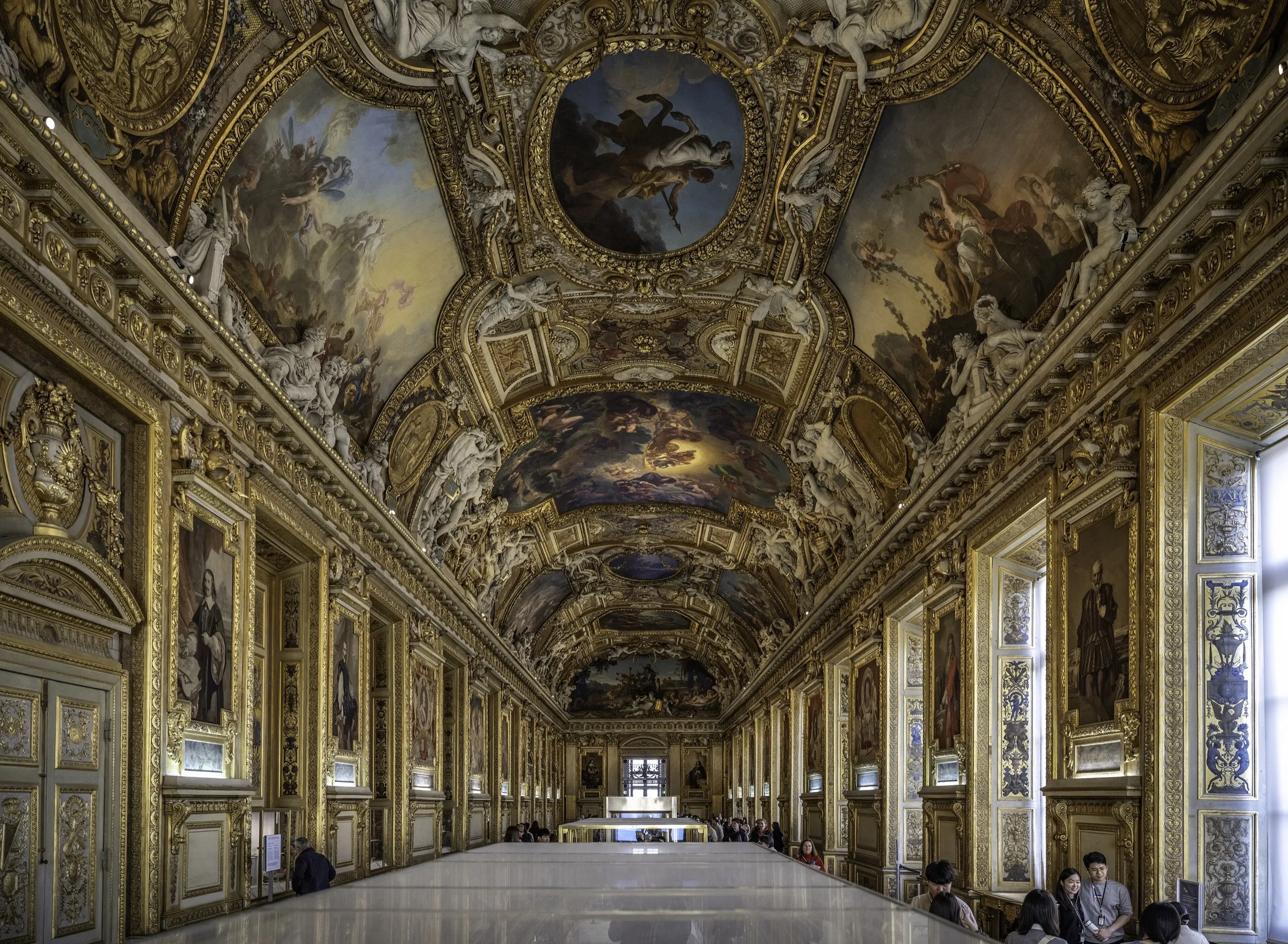
On Sunday 19 October 2025, half an hour after the museum opened, two men ascended via a service lift to the balcony of the Galerie d’Apollon, forced a window, cut through two display cases with a circular saw and left with eight pieces from the royal and imperial collections. The heist lasted a few minutes; the loot remains missing. One year later, here are the stolen jewels, their value, their history and the status of the investigation, according to the Paris public prosecutor’s office, the Ministry of Culture and the Louvre.
The official list of the eight stolen jewels
On the same day, the Ministry of Culture published the list of stolen objects. The thieves targeted two high-security display cases in the room housing the Crown diamonds. The eight pieces, in the order of the press release:
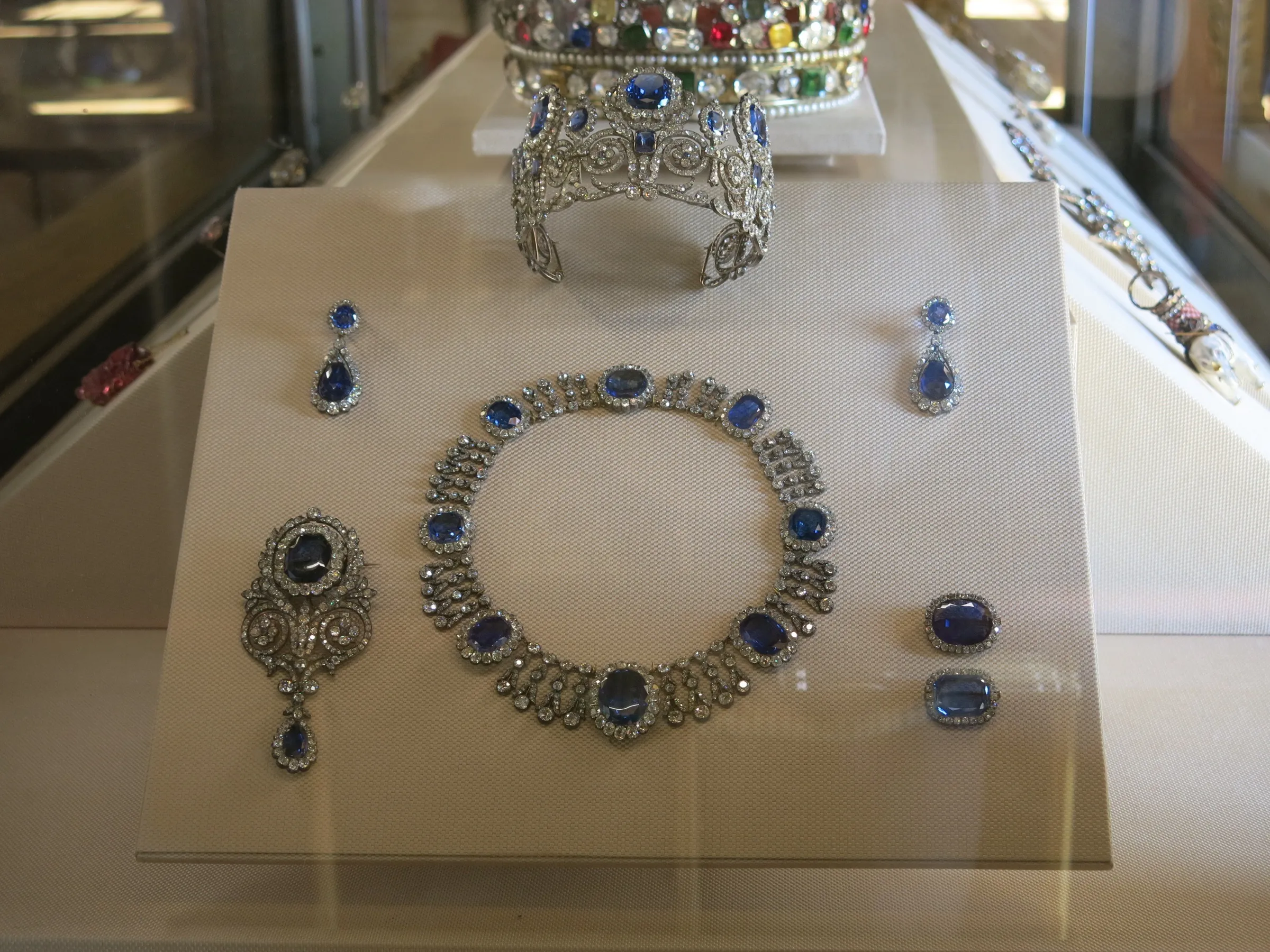
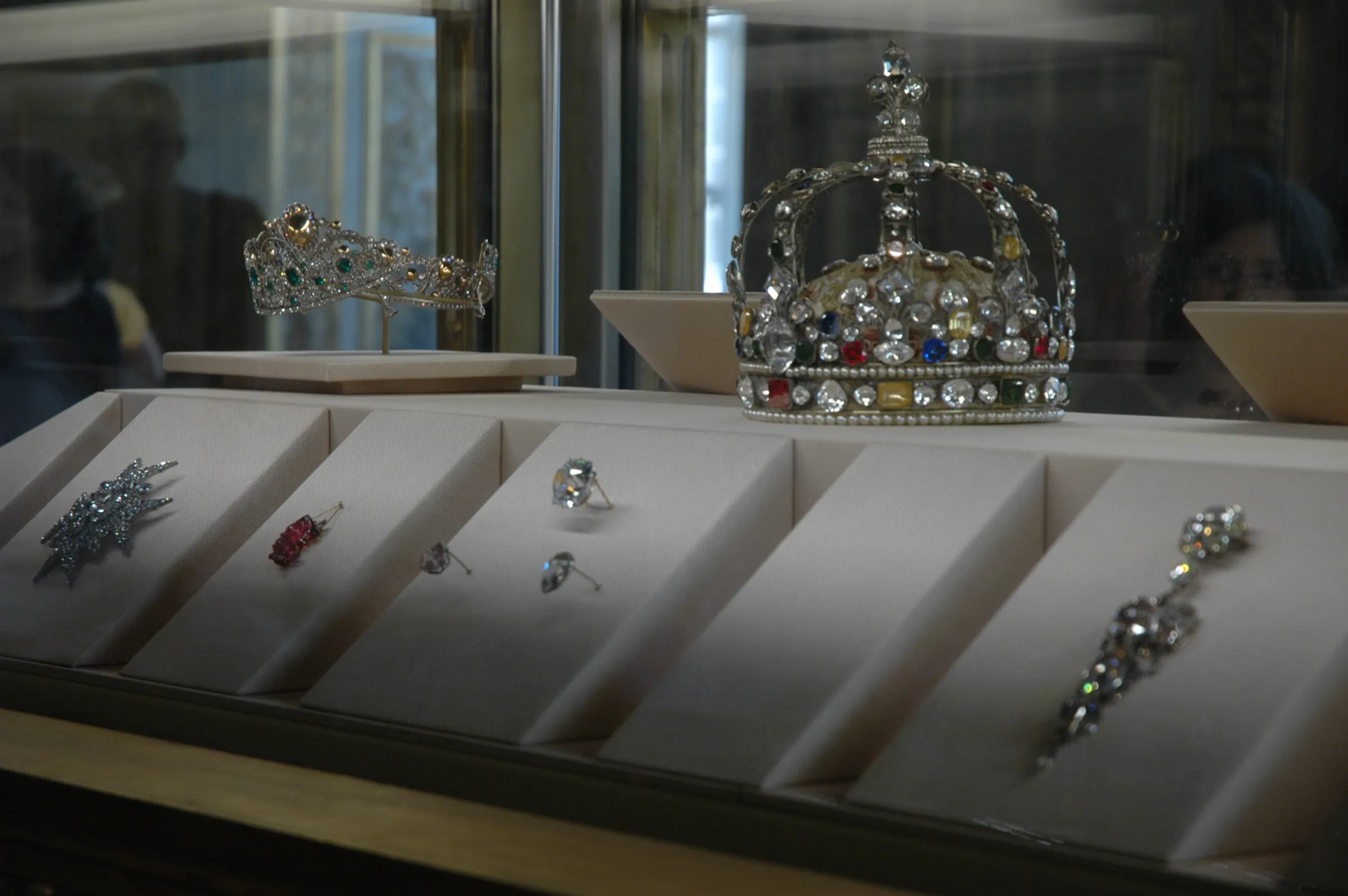
- the tiara from the sapphire parure of Queen Marie-Amélie and Queen Hortense;
- the necklace from the same parure;
- one earring, from a pair belonging to this parure;
- the emerald necklace from the Marie-Louise parure;
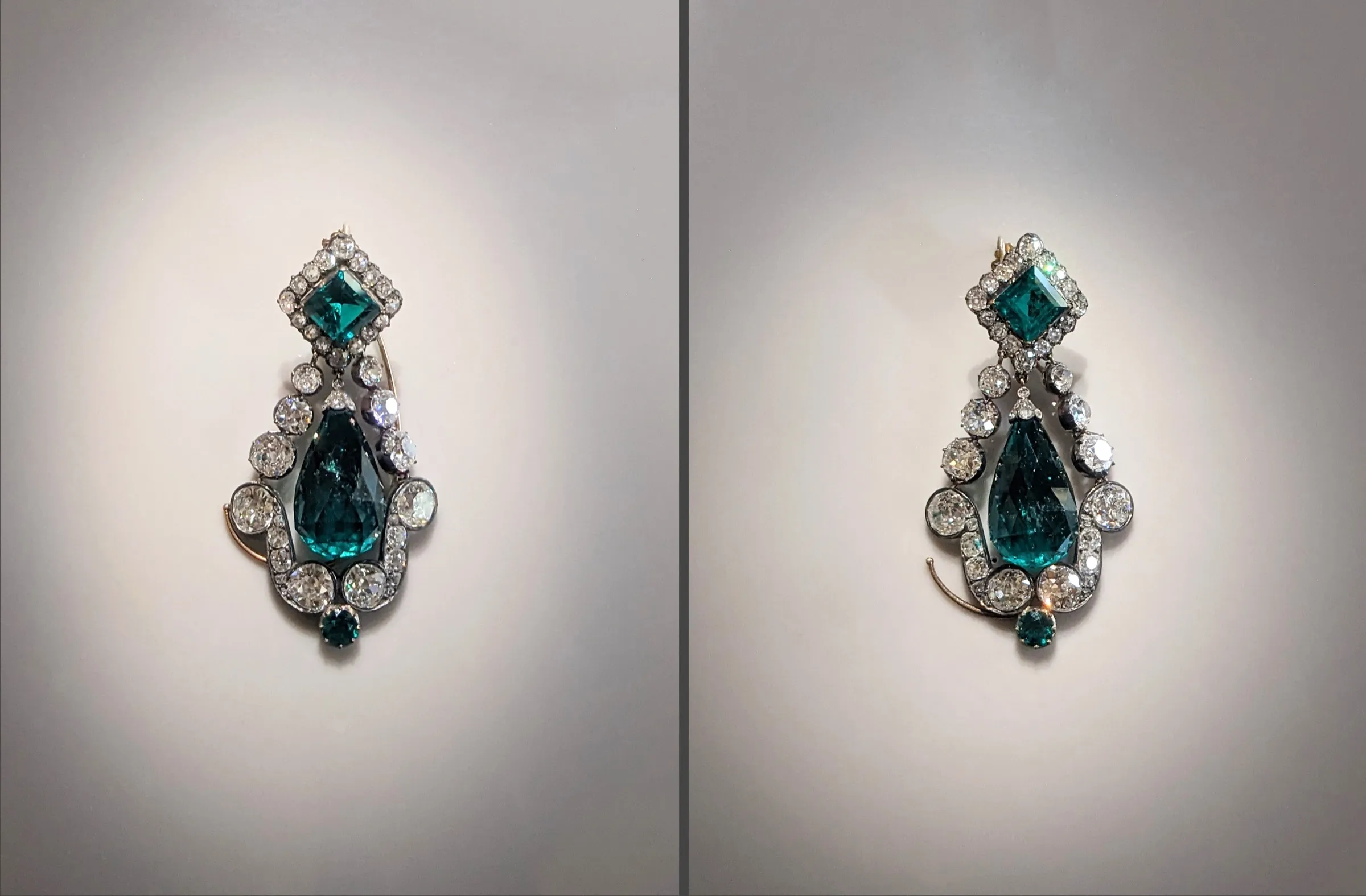
- the pair of emerald earrings from the Marie-Louise parure (the Louvre inventory sheet, updated in 2026, mentions only one earring taken);
- the so-called reliquary brooch;
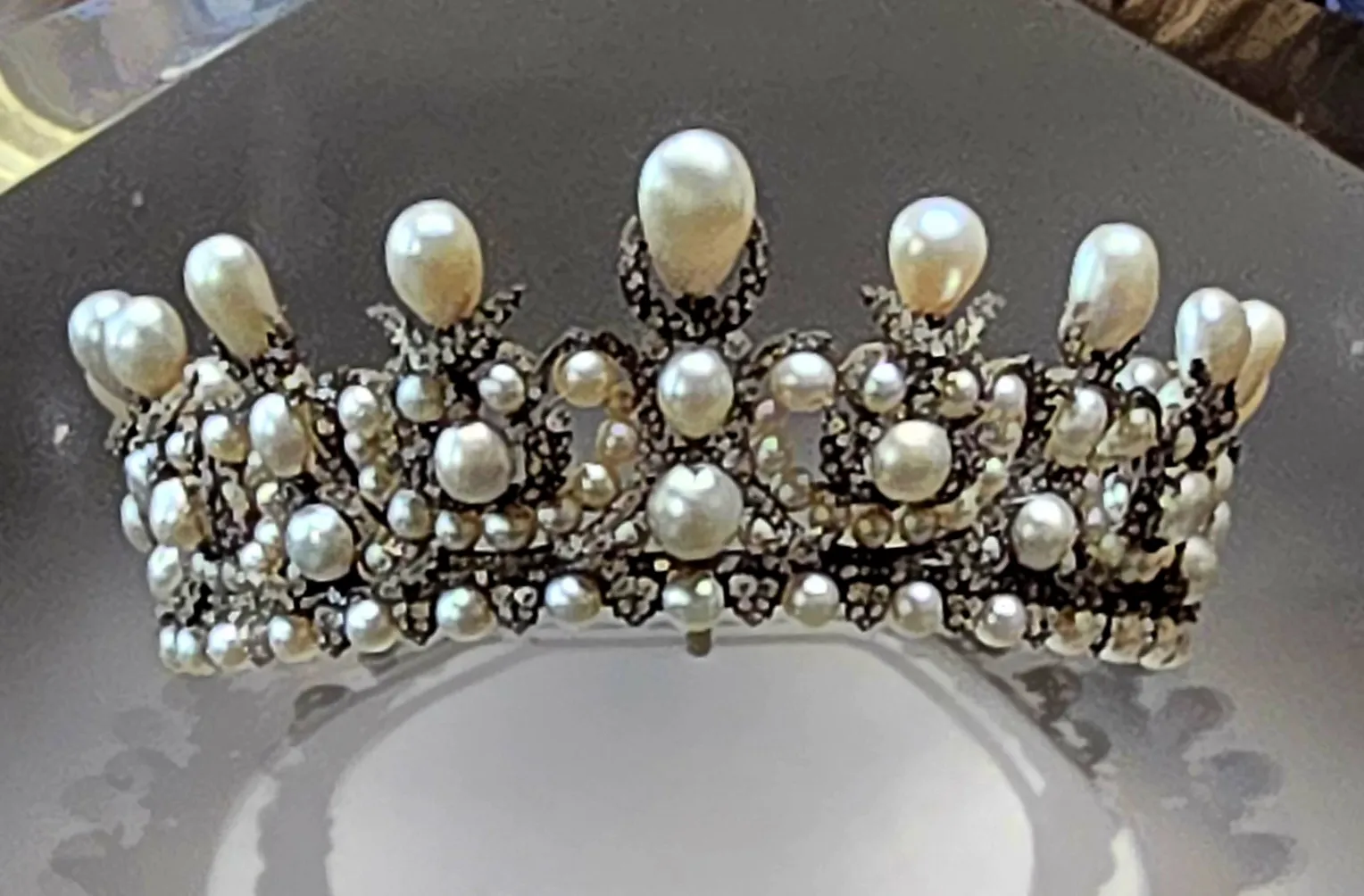
- Empress Eugénie’s tiara;
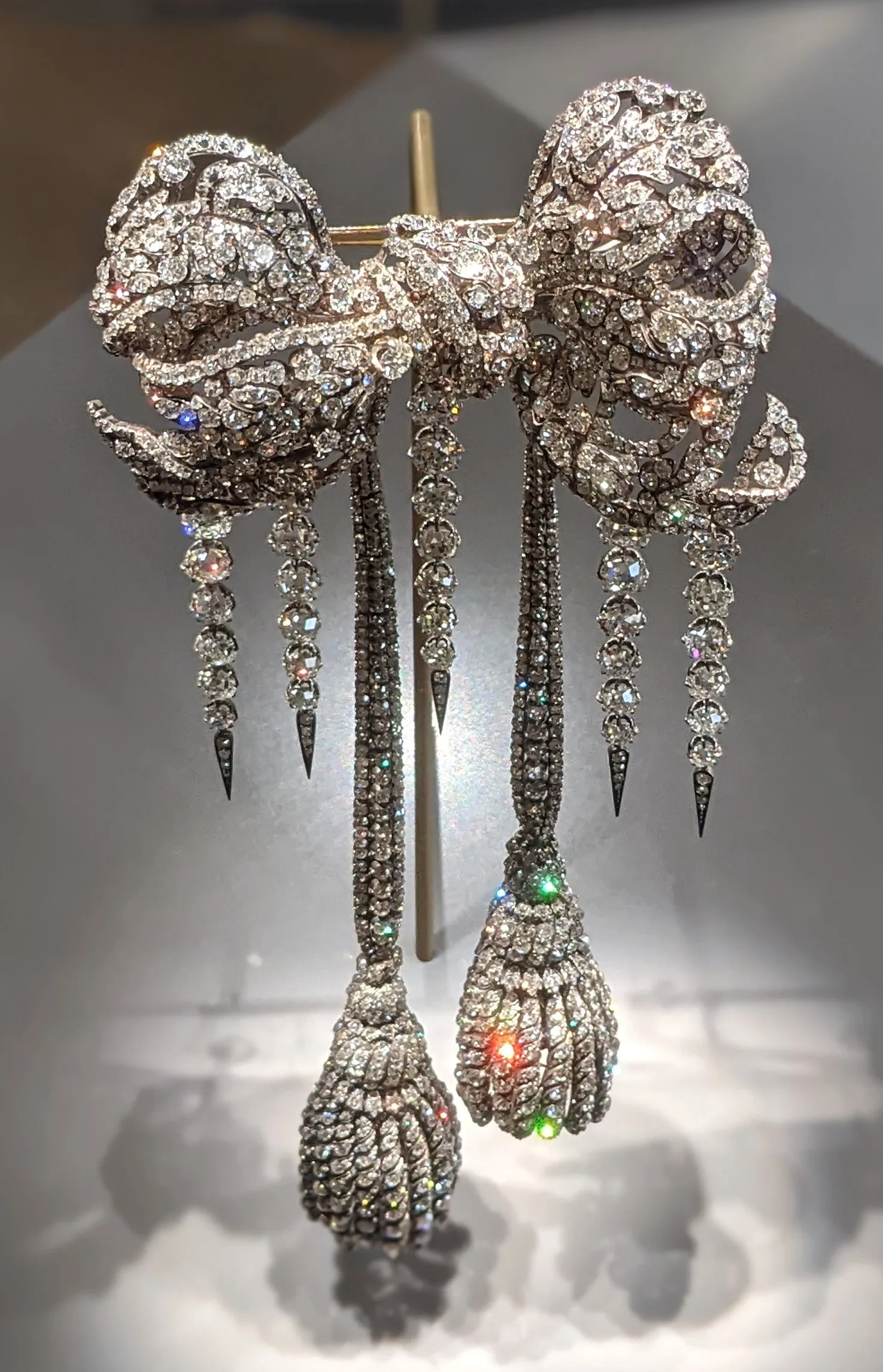
- Empress Eugénie’s large corsage bow.
Empress Eugénie’s crown, abandoned by the perpetrators, was found at the foot of the gallery. On 21 October 2025, Interpol added the missing pieces to its database of stolen works of art. The Regent, the most famous diamond in the collection, was not taken.
What the 88 million euros represents
The figure was made public on 21 October 2025 by the Paris prosecutor, Laure Beccuau, based on the estimate by the museum’s curator. The Louvre confirmed it the same day: “The loss has been estimated by the museum at 88 million euros.” This is an evaluation of the loss suffered by the national collections, not a sale price. The prosecutor pointed out that the thieves would not obtain such a sum by dismantling the jewellery.
Seven of the eight pieces were bought back by the Louvre between 1985 and 2008, often with the Société des Amis du Louvre, to reconstitute the jewellery collection of 19th-century sovereigns, which had been dispersed by the sale of the Crown diamonds in 1887 and by inheritance. Only the reliquary brooch had been at the Louvre since 1887.
The Marie-Louise emeralds, a wedding gift
For his marriage to Marie-Louise of Austria on 2 April 1810, Napoleon commissioned Maison Nitot to create two personal parures for the young Empress, one in emeralds and the other in opals. The emerald parure, delivered at the end of March 1810 by François-Régnault Nitot, included a tiara, a necklace, a pair of earrings and a comb. Maison Nitot is the ancestor of the current Maison Chaumet.
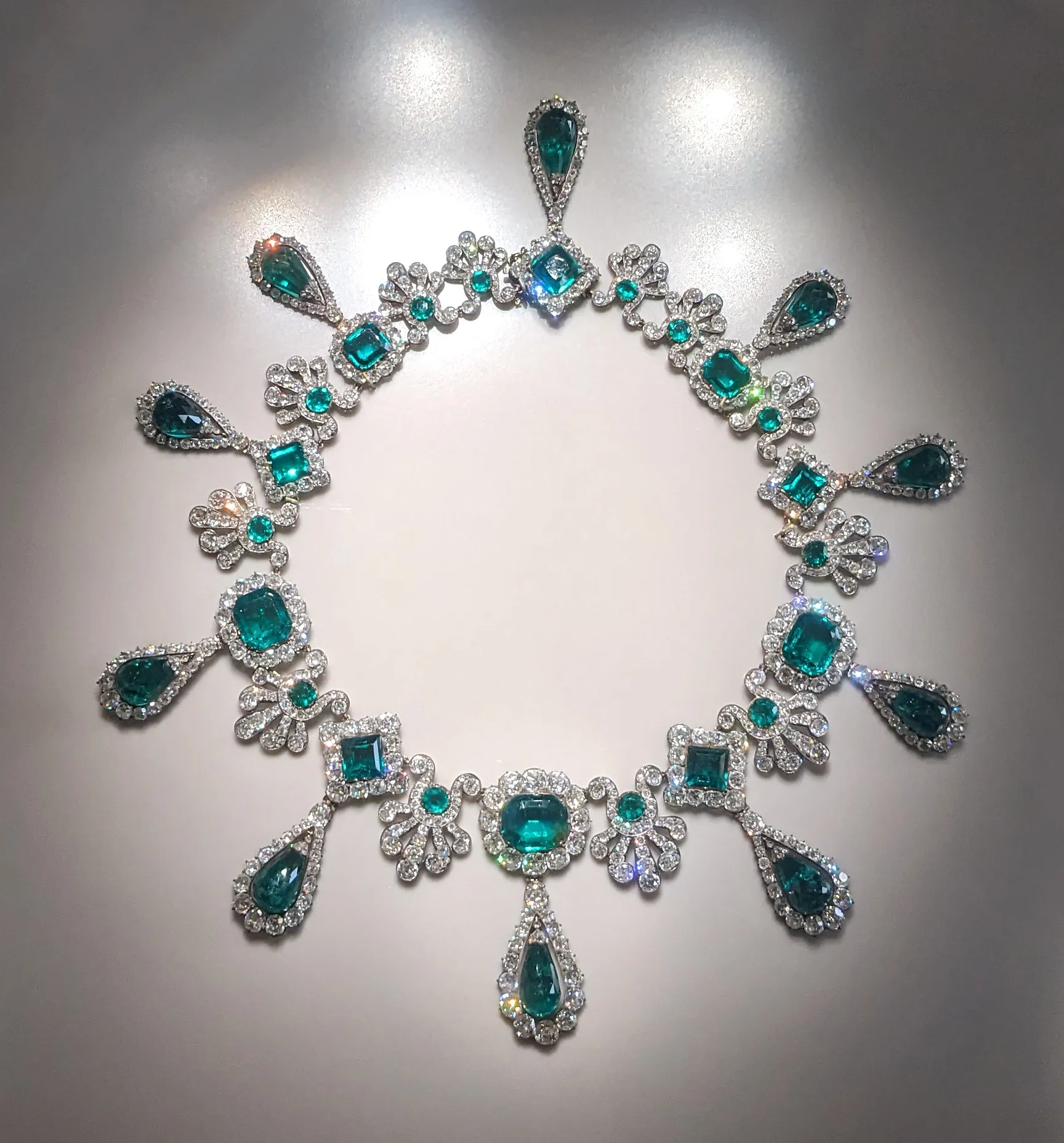
The necklace features ten large emeralds, each extended by a pear-shaped emerald; the earrings bear two pear-shaped emeralds totalling 45.20 carats and 108 diamonds. Marie-Louise took the parure with her when she left Paris in 1814. It remained with the Habsburgs until 1953, when it was sold to Van Cleef & Arpels, who sold the emeralds from the tiara one by one. The necklace and earrings, intact, entered the Louvre in 2004.
Ceylon sapphires for two queens
Created during the First Empire, this parure of Ceylon sapphires surrounded by diamonds was worn by Hortense de Beauharnais, Queen of Holland and daughter of Joséphine, then by Marie-Amélie, Queen of the French. Passed down through the Orléans family to the Count of Paris, the parure was partly purchased by the Louvre in 1985.
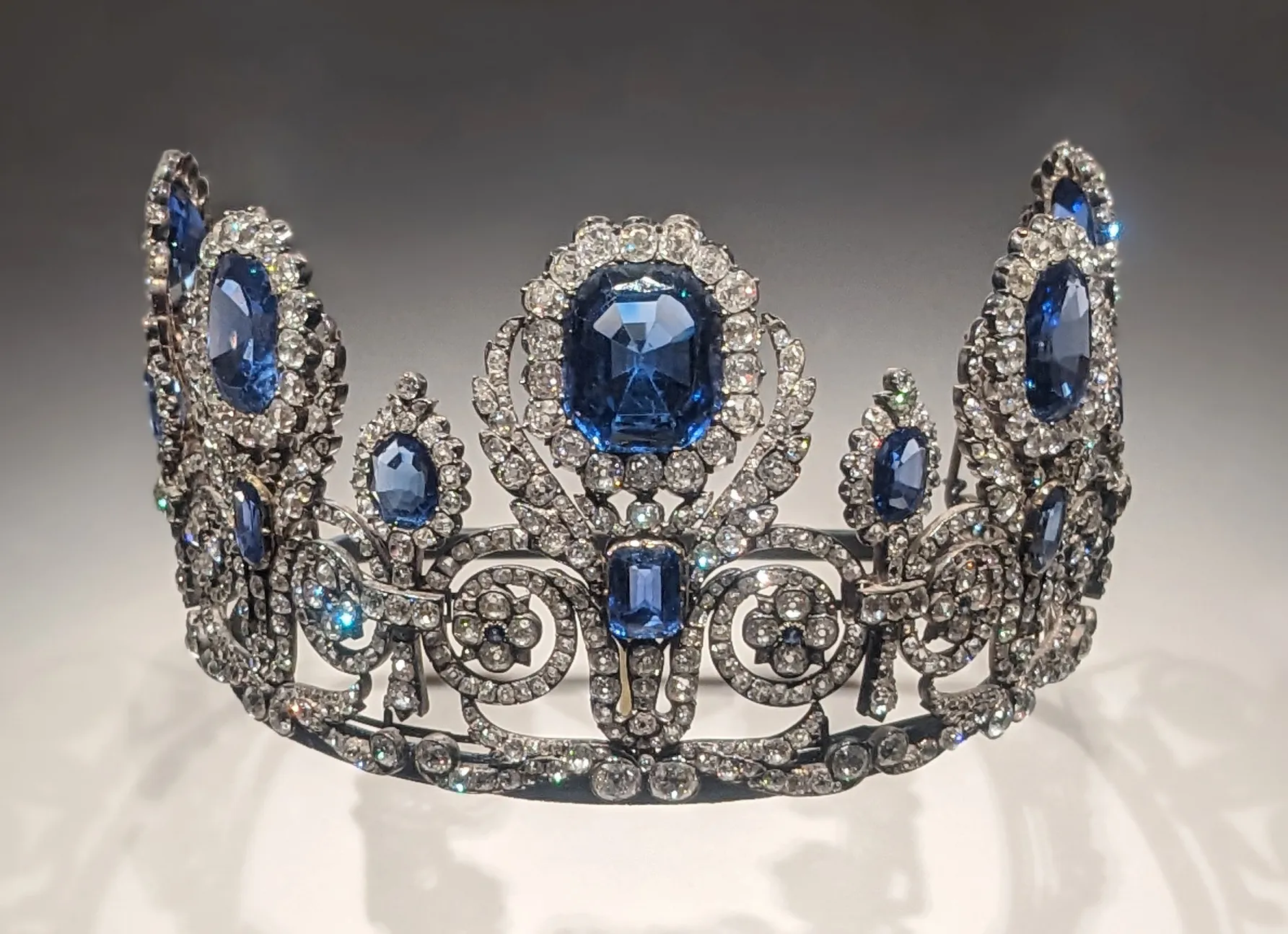
The stolen tiara brings together twenty-four sapphires and 1,083 diamonds, the necklace eight sapphires and 631 diamonds. The large brooch, the two small brooches and the second earring are not on the list of stolen objects.
Eugénie, three jewels and a saved crown
Eugénie’s pearl tiara was made by Alexandre-Gabriel Lemonnier shortly after her marriage to Napoleon III in 1853. Sold in 1887, it passed to the Princes of Thurn und Taxis before being presented to the Louvre by the Société des Amis du Louvre in 1992.
The large corsage bow, signed by François Kramer, was the centrepiece of a belt featuring over 4,000 stones from the Crown diamonds, created for the 1855 Universal Exhibition and worn at Versailles during Queen Victoria’s visit. From 1864, Eugénie kept only the bow, transformed into a brooch. Sold in 1887 to Caroline Astor, it was bought back by the Louvre in 2008.
The reliquary brooch, made in 1855 by Alfred Bapst, bears the 17th and 18th Mazarins, diamonds bequeathed to the Crown by the Cardinal and worn by Louis XIV as jacket buttons. It is the only one of the eight stolen pieces never to have left the public collections since 1887.
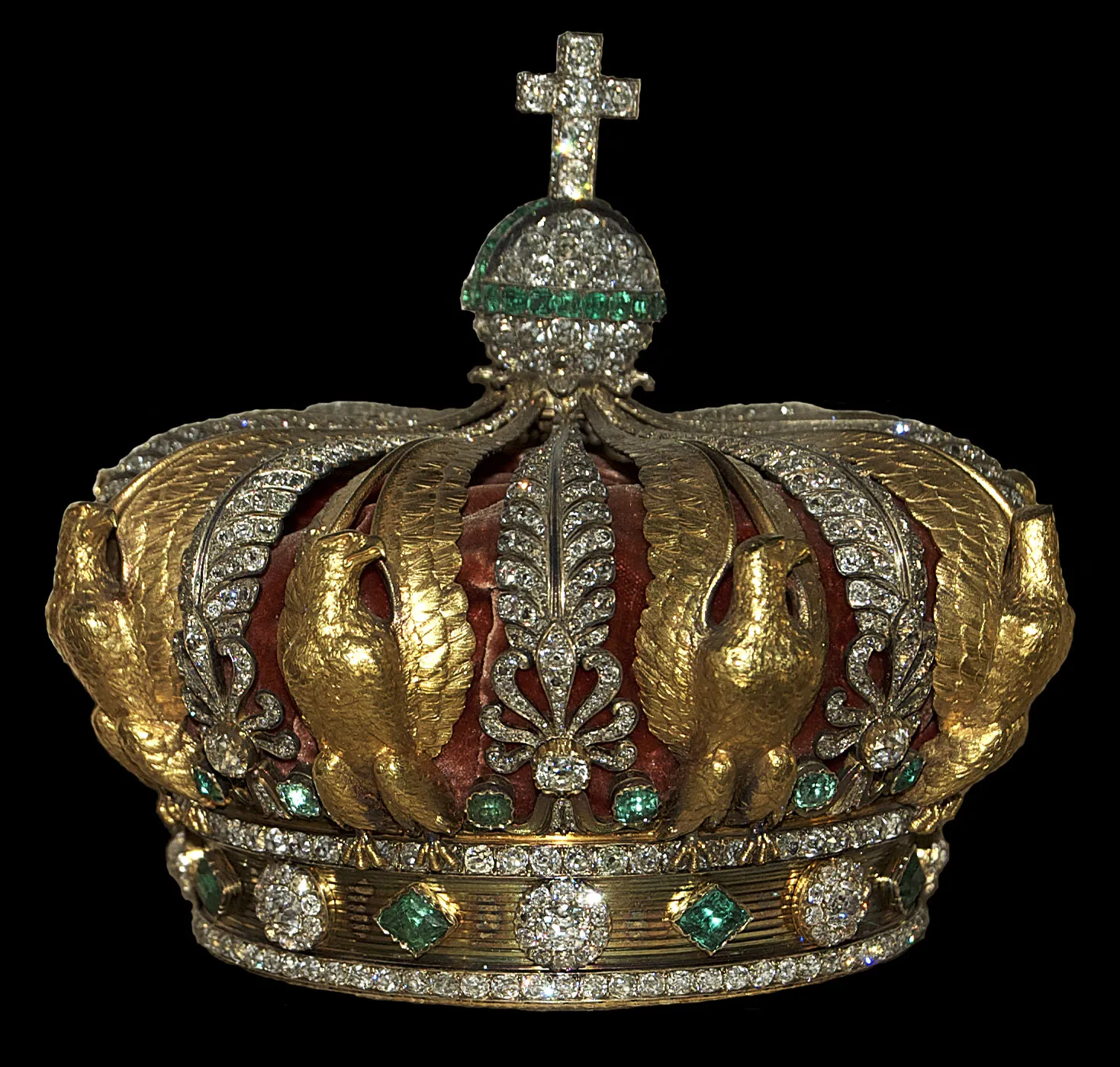
The Empress’s crown escaped the theft. According to the museum (4 February 2026), although crushed, it retains its 56 emeralds; only one gold eagle and about ten tiny diamonds out of 1,354 are missing. It can be fully restored.
Status of the investigation one year on
The investigation for organised theft and criminal association is being led by the Brigade de répression du banditisme, under the authority of the Paris public prosecutor’s office. The steps made public:
- 25 October 2025: two men are arrested, one at Roissy-Charles-de-Gaulle as he was about to leave for Algeria.
- 29 October 2025: they have partially admitted the facts, are charged and placed in pre-trial detention. Five other people are arrested.
- 31 October and 1 November 2025: a 37-year-old man, suspected of belonging to the commando, and a 38-year-old woman are charged; they contest the facts. The three others are released.
- 25 November 2025: four arrests, including that of the fourth suspected member of the commando, a 39-year-old man, charged at the end of November and imprisoned. The three others are released.
DNA traces found at the scene guided investigators. As of 11 October 2026, none of the eight pieces has been announced as recovered by the prosecutor or the museum. No official communication has established the existence of a sponsor. The individuals involved are presumed innocent.
What has changed at the Louvre since the theft
Before the Senate on 22 October 2025, the museum’s President-Director, Laurence des Cars, admitted that the only camera on this facade did not cover the balcony used by the thieves. On 7 November 2025, following the administrative inquiry, the Louvre detailed emergency measures:
- a security coordinator reporting to the presidency and a dedicated steering committee;
- anti-ram devices at the entrances to the Louvre and the Tuileries;
- additional cameras and reinforced patrols with the Prefecture of Police;
- a training budget increased by 20% and a cybersecurity operations centre.
These are in addition to a security master plan estimated at 80 million euros. On 5 December 2025, the National Assembly created a commission of inquiry into the security of museums. Laurence des Cars left the Louvre on 24 February 2026; Christophe Leribault, from the Château de Versailles, succeeded her. The Galerie d’Apollon reopened on 22 July 2026 as a ceremonial gallery, without display cases: the precious objects it housed have been removed.
Five major jewellers at the crown’s bedside
Eugénie’s crown, commissioned by Napoleon III from Lemonnier for the 1855 Universal Exhibition, will be entrusted to an approved restorer, supported by a committee of experts announced on 4 February 2026. Mellerio, Chaumet, Cartier, Boucheron and Van Cleef & Arpels are associated with it through their workshop heads and craftsmen. An echo of the history of the missing pieces: the Marie-Louise emeralds came from the workshops of Nitot, the forefather of Chaumet, and had passed through Van Cleef & Arpels in 1953.