

At a glance
- Price: about 5.27 million euros (4,815,000 Swiss francs), including buyer’s premium, for Cartier’s Portico Mystery Clock No. 4, at Phillips in Geneva on 8 November 2026.
- Estimate: about 1.97 to 3.5 million euros (1.8 to 3.2 million Swiss francs), excluding premium.
- The piece: a 1924 clock standing 38.5 cm tall, in rock crystal, jade, onyx, mother-of-pearl, pearls and diamonds, the only one of the six Porticos with a hexagonal dial.
- Provenance: Alain Cartier, grandson of Louis Cartier; it reputedly once belonged to the Maharaja of Nawanagar.
- For comparison: its twin, Portico No. 3, fetched about 4.2 million euros at the exchange rate of the time (3,932,000 Swiss francs) at Phillips in May 2025.
On 8 November 2026 in Geneva, Cartier’s Portico Mystery Clock No. 4, dated 1924, sold for about 5.27 million euros (4,815,000 Swiss francs) including premium, well above its estimate. Price, piece, provenance and the history of the mystery clocks.
How much did Portico No. 4 sell for?
The lot 220 page gives a price of about 5.27 million euros (4,815,000 Swiss francs) at the ECB reference rate of 6 November 2026 (1 euro to 0.9143 Swiss franc). At Phillips, the price achieved includes the hammer price and the buyer’s premium. Based on the premium scale published for the sale, 27% up to about 1.75 million euros (1.6 million Swiss francs) and 21% above, it corresponds to a hammer price of about 4.27 million euros (3.9 million Swiss francs). The estimate in the 27 October press release was about 1.97 to 3.5 million euros (1.8 to 3.2 million Swiss francs), excluding premium; the lot page went up to about 3.94 million euros (3.6 million Swiss francs) at the top end. The clock went under the hammer on Sunday 8 November at The Geneva Watch Auction: XXIV, held by Phillips with Bacs & Russo, whose star lots we previewed.
A 38.5 cm, 10.6 kg clock
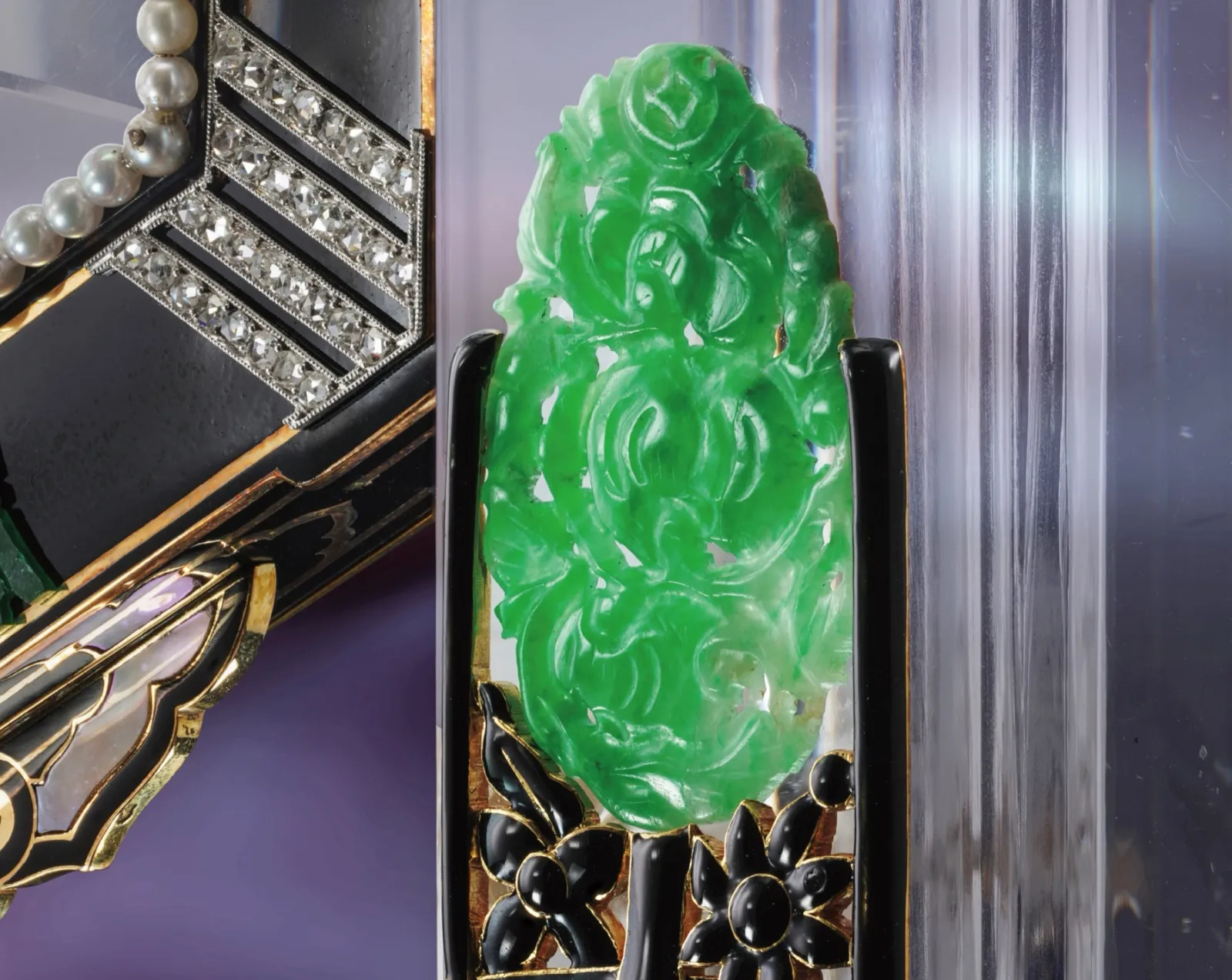
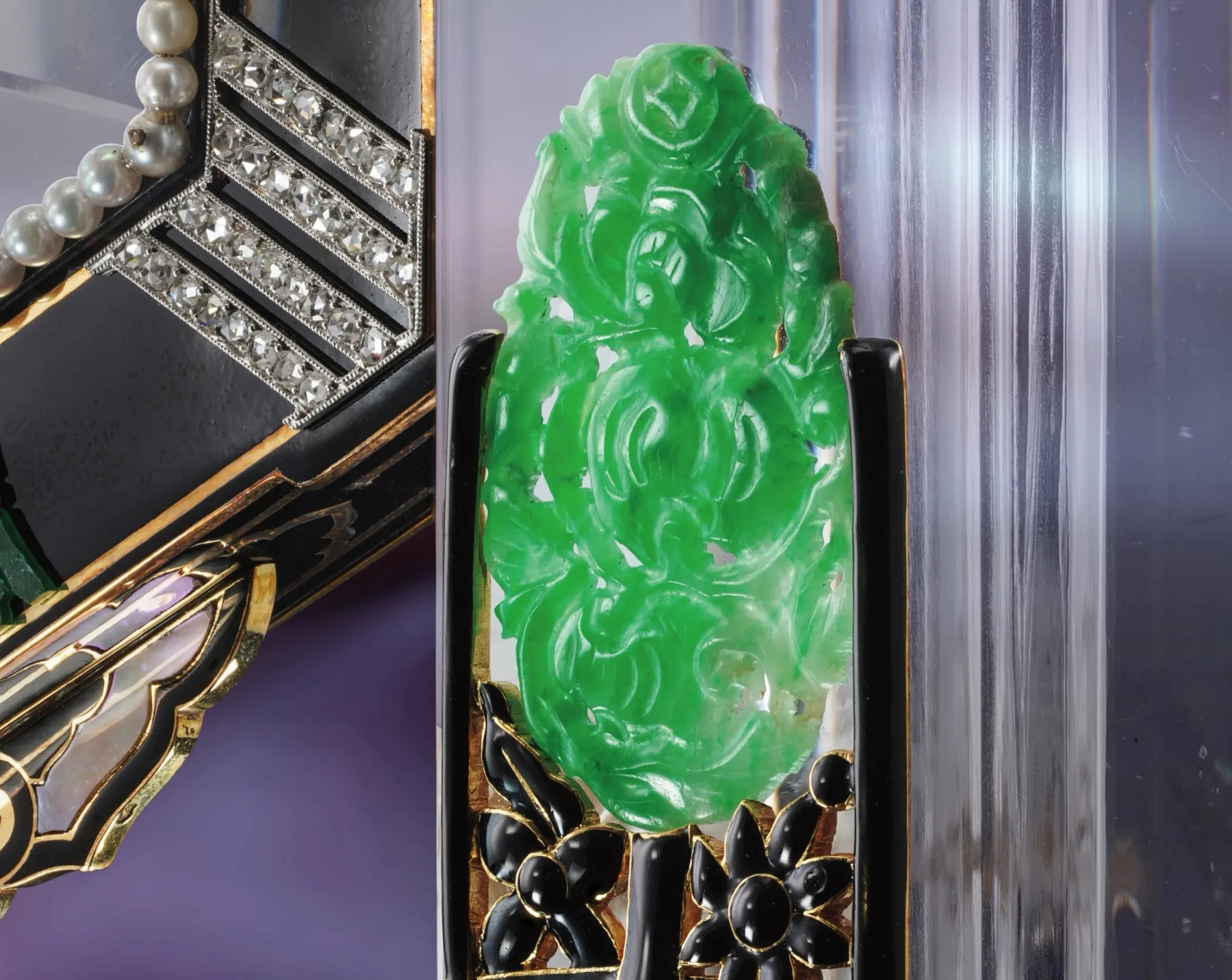
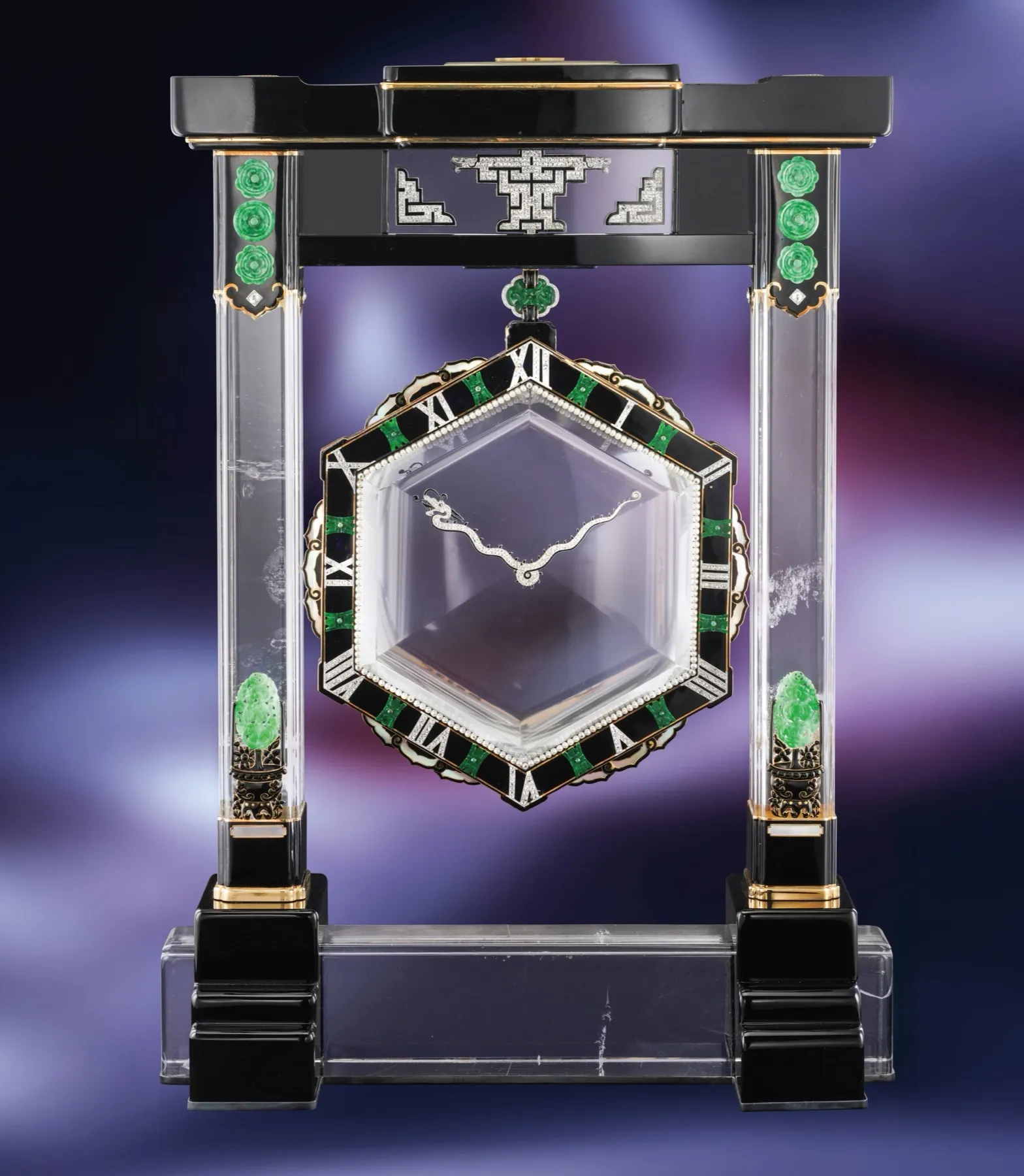
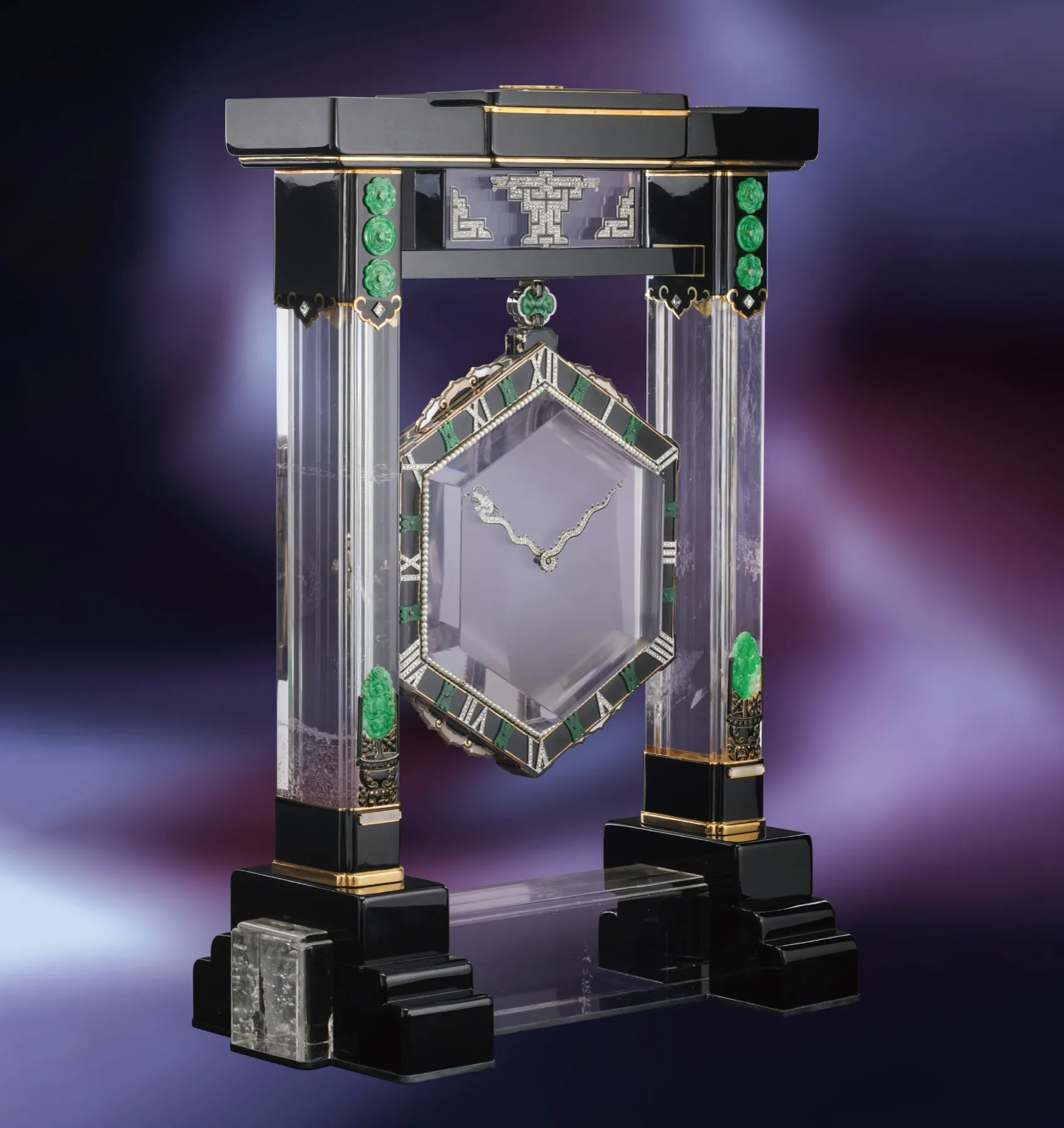
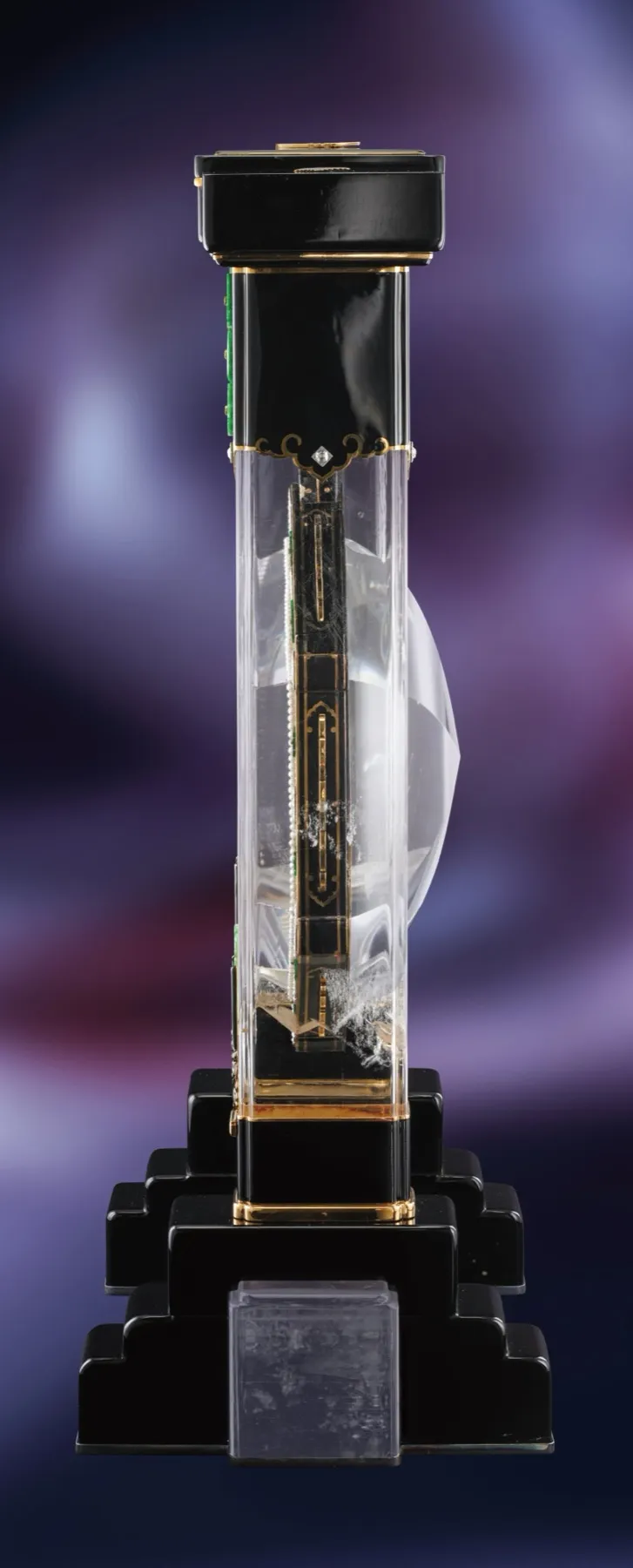
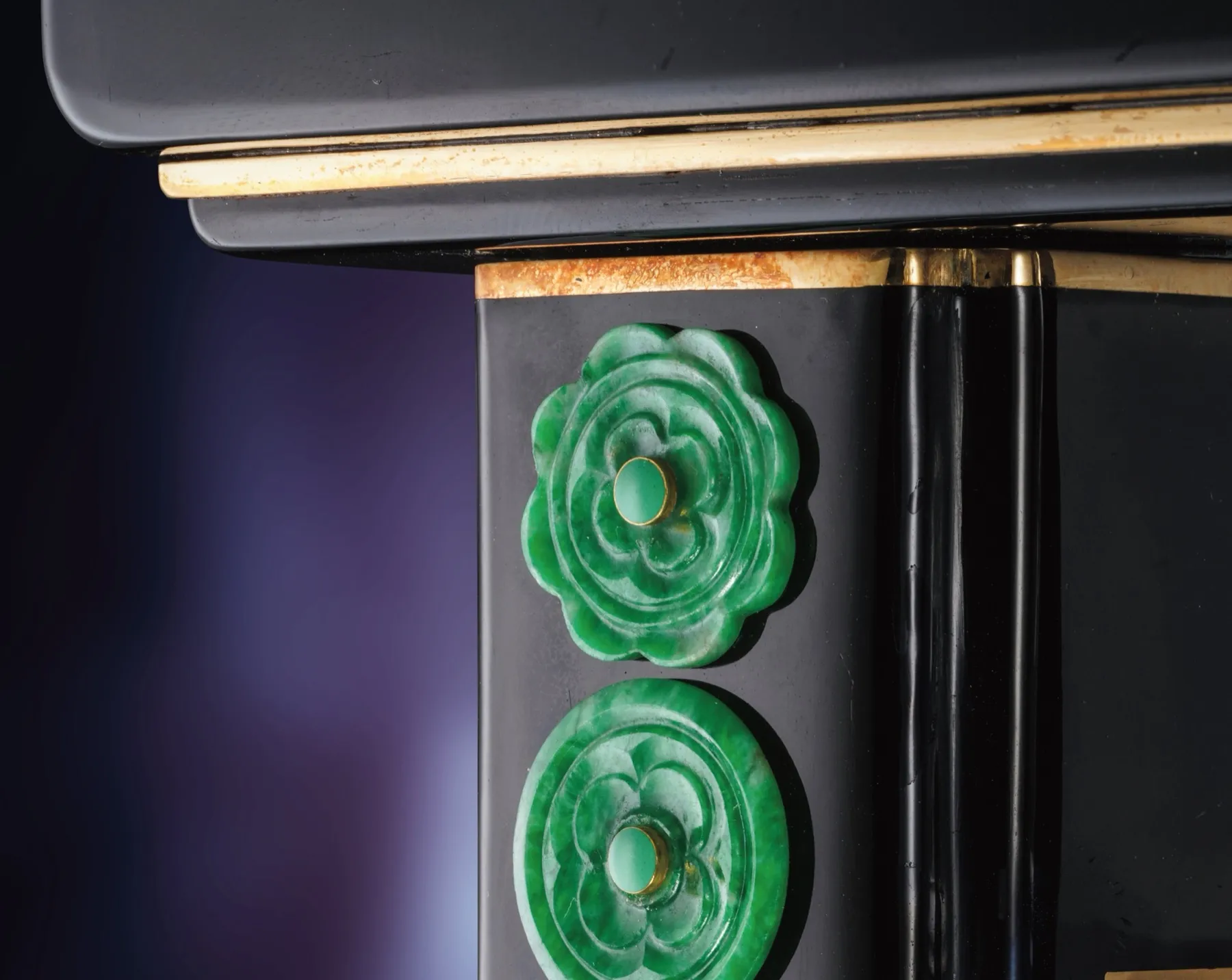
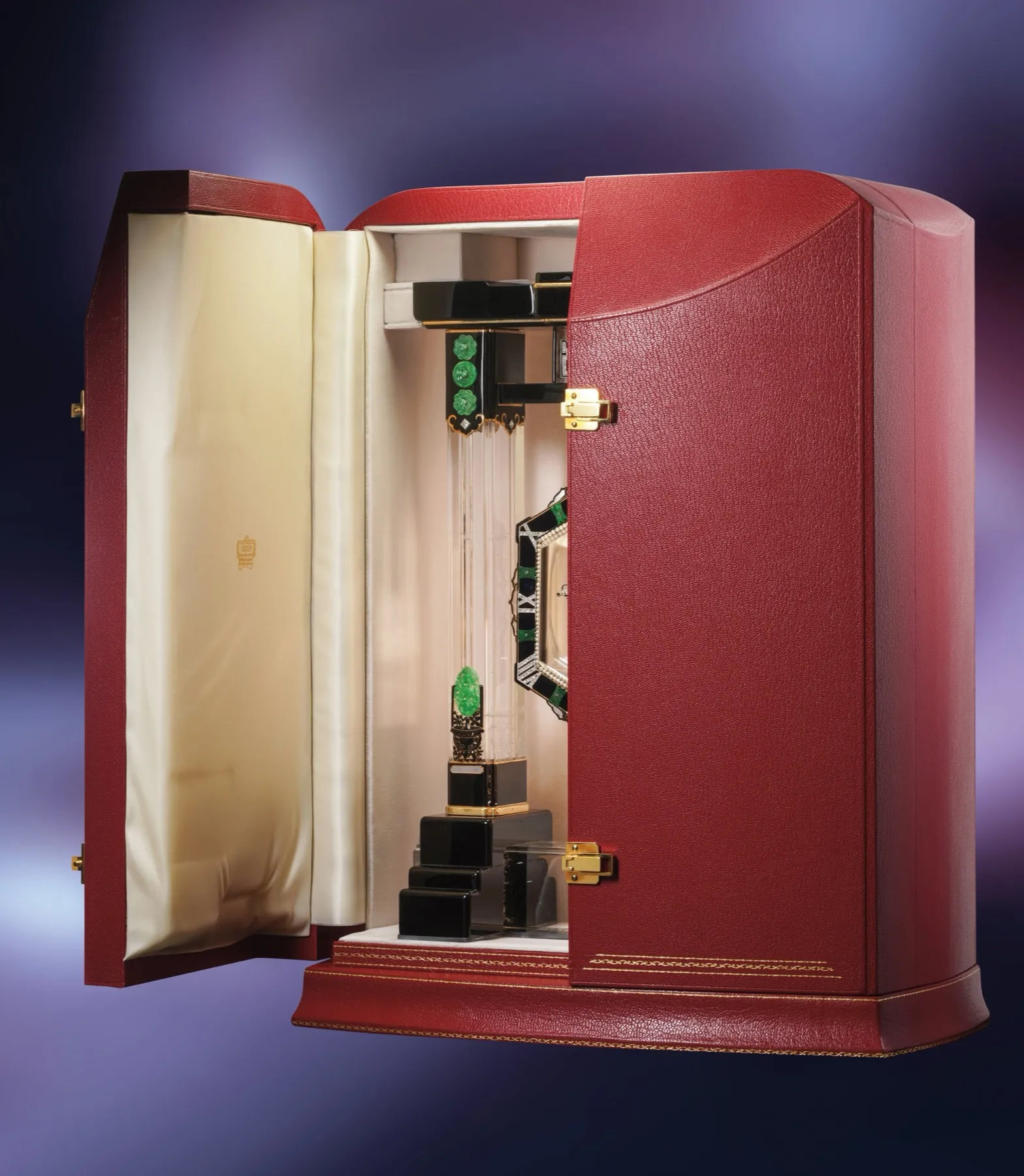
Portico No. 4 takes the form of a temple gate: a dial carved from rock crystal hangs between two square rock crystal columns, beneath a flat arch. It stands 38.5 cm high and 28 cm wide and weighs 10.6 kg. Its dial has six sides, whereas the other five Porticos have twelve. The bezel combines onyx and jade, with diamond-set Roman numerals and an inner row of pearls; the hands, pavé-set with rose-cut diamonds, form a dragon. Two jade trees rise at the foot of the columns. The key-wound manual movement, signed European Watch & Clock Company, is hidden in the arch above the dial.
From the Maharaja of Nawanagar to Alain Cartier
According to Alain Cartier, grandson of Louis Cartier and a fifth-generation member of the family, who owned it, the clock once belonged to the Maharaja of Nawanagar, ruler of a princely state in western India. The lot page lists a jewellery sale at Sotheby’s on 11 November 1987, then The Magical Art of Cartier sale in Geneva on 19 November 1996. It had not been back at auction for thirty years. It comes with a 2002 Cartier certificate of authenticity and its presentation box. In 1996, Eric Nussbaum, first director of the Cartier Collection, described it as the largest, most expressive and most Art Deco of the family of six.
1912: the Model A and its floating hands
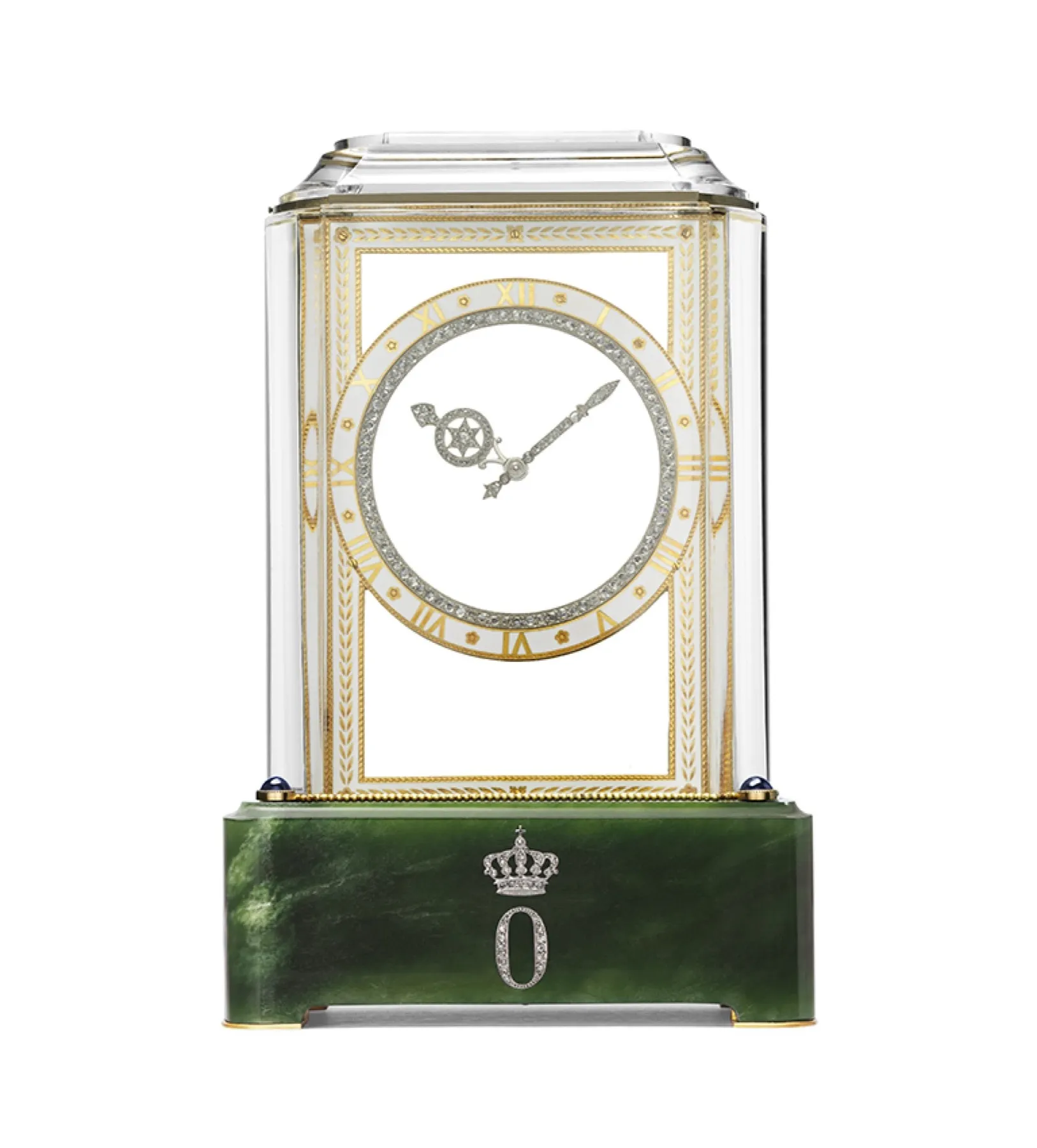
Cartier dates its first mystery clocks, the Model A, to 1912. The house explains the name by their platinum and diamond hands, which appear not to be connected to any movement. According to Phillips, Cartier developed them with clockmaker Maurice Couët: the hands are fixed to transparent discs, driven around their edge by a hidden movement. The principle draws on the illusion clocks of the magician Jean-Eugène Robert-Houdin. The Cartier Collection holds a 1918 Model A in platinum, gold, rock crystal and nephrite, bearing the monogram of Grand Duchess Olga Constantinovna of Russia.
Six Porticos, each one unique
Cartier made six Portico clocks between 1923 and 1925, each one unique, shaped like a Shinto shrine gate. The first, from 1923, belongs to the Cartier Collection. According to Phillips, unlike the earlier models, the movement sits not in the base but in the structure above the dial. Nos. 3 and 4, both from 1924, are the largest and the only ones with square columns. No. 3, in rose quartz, sold for about 4.2 million euros (3,932,000 Swiss francs) at Phillips in May 2025, at the rate Phillips used at the time, which presented it as the highest price achieved for a Cartier creation. The six have been shown together only once, at the 1991 Salon International de la Haute Horlogerie. To compare these prices with watches, see our ranking of the world’s most expensive watches.
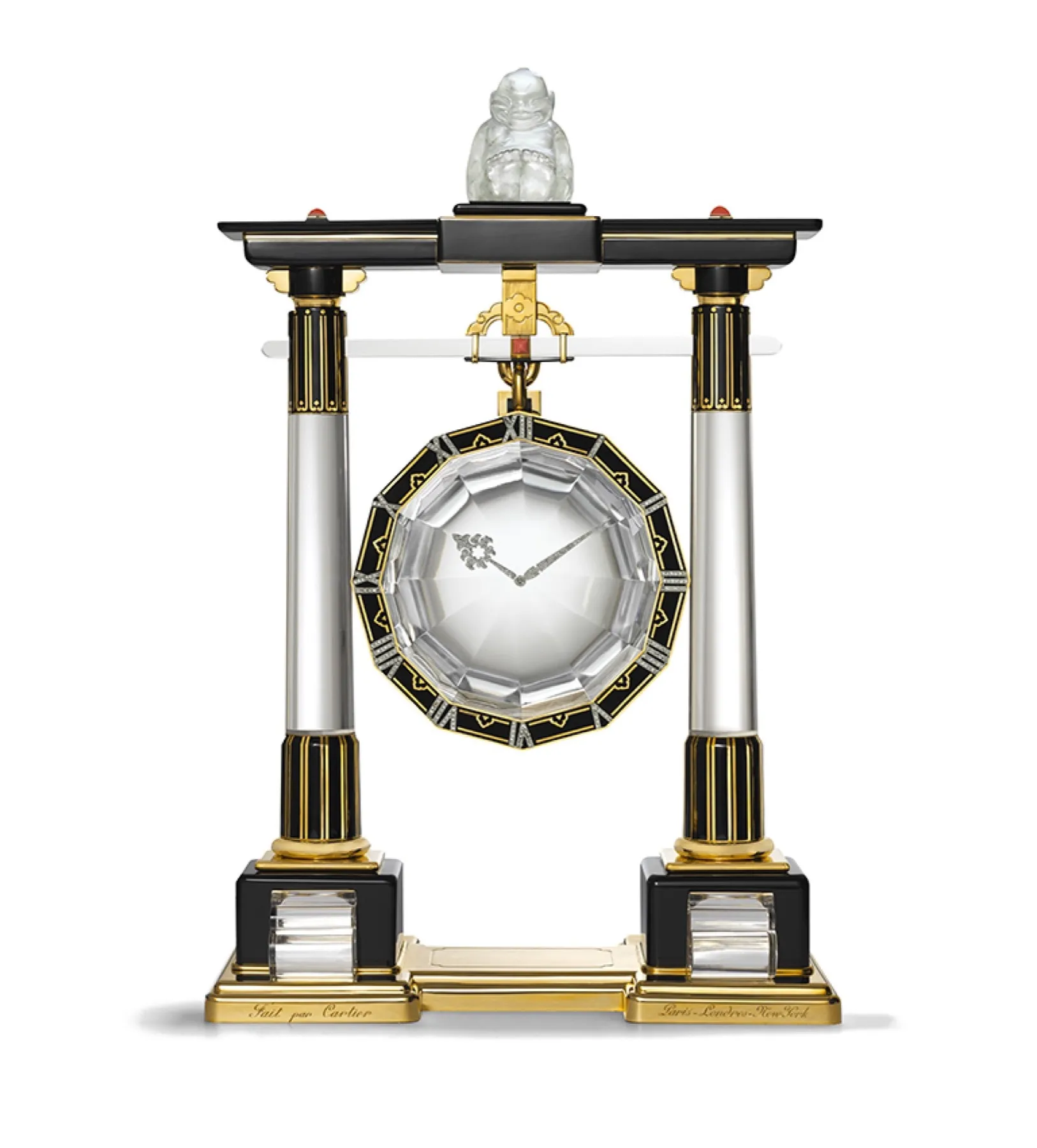
| Object | Portico Mystery Clock No. 4 |
| House | Cartier, 1924, case no. 978 |
| Materials | yellow gold, platinum, enamel, rock crystal, mother-of-pearl, pearls, onyx, jade, diamonds |
| Dimensions | 38.5 cm high, 28 cm wide, 10.6 kg |
| Movement | manual key winding, European Watch & Clock Company |
| Distinctive feature | the only Portico with a hexagonal dial |
| Provenance | Alain Cartier; according to him, the Maharaja of Nawanagar |
| Sale | The Geneva Watch Auction: XXIV, lot 220 |
| Auction house and date | Phillips, Geneva, 8 November 2026 |
| Estimate | about 1.97 to 3.5 million euros (1.8 to 3.2 million Swiss francs), excluding premium |
| Price | about 5.27 million euros (4,815,000 Swiss francs), including premium |
Information verified on 9 November 2026. Sources: lot 220 page, Phillips, Phillips press release of 27 October 2026, Phillips, history of the Portico clocks, Cartier Collection, watchmaking, ECB reference rate.