

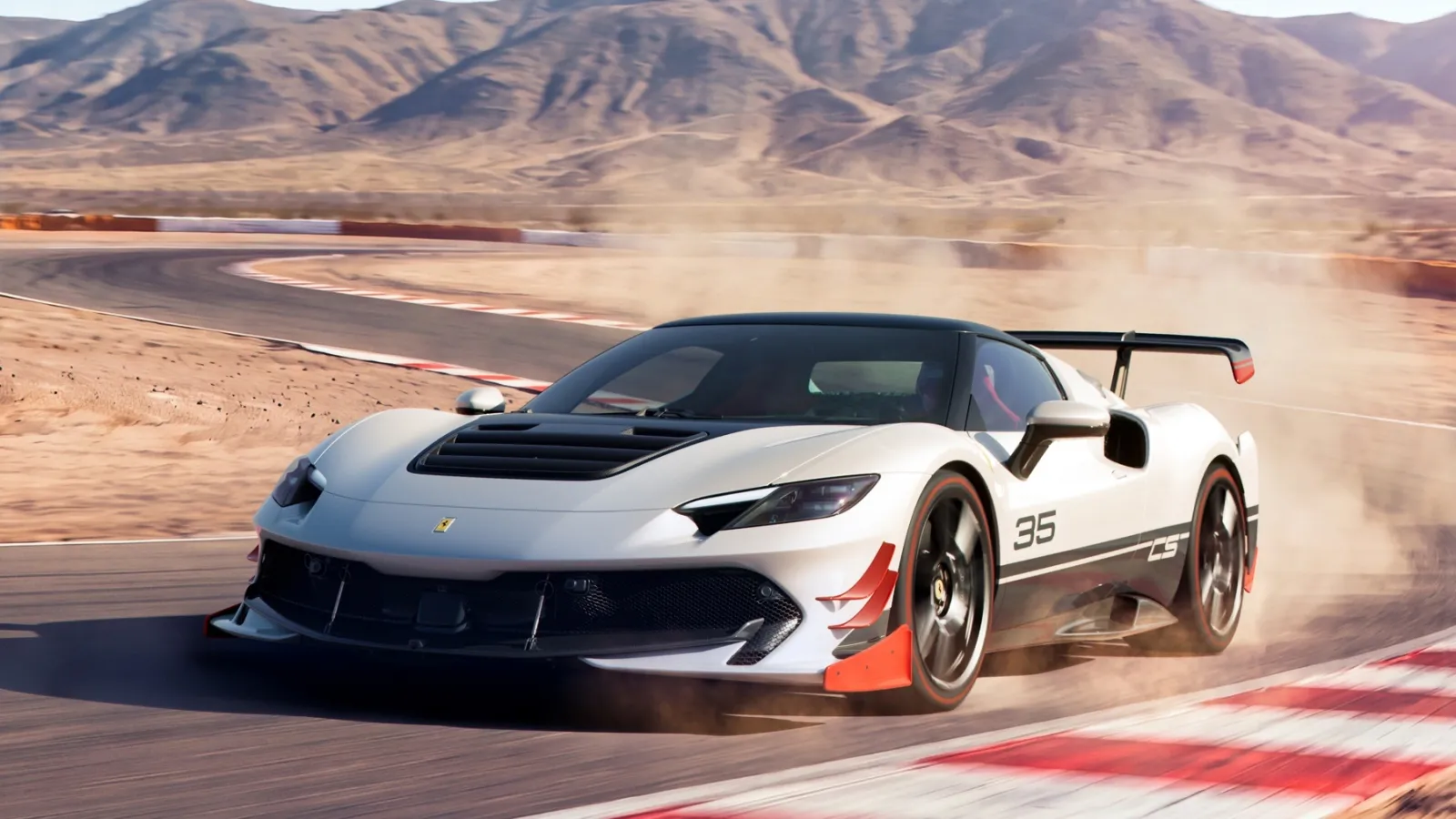
At a glance
- What? A road-legal, race-derived version of the 296, unveiled by Ferrari on 21 November 2026 at Montmeló, near Barcelona, during the Finali Mondiali.
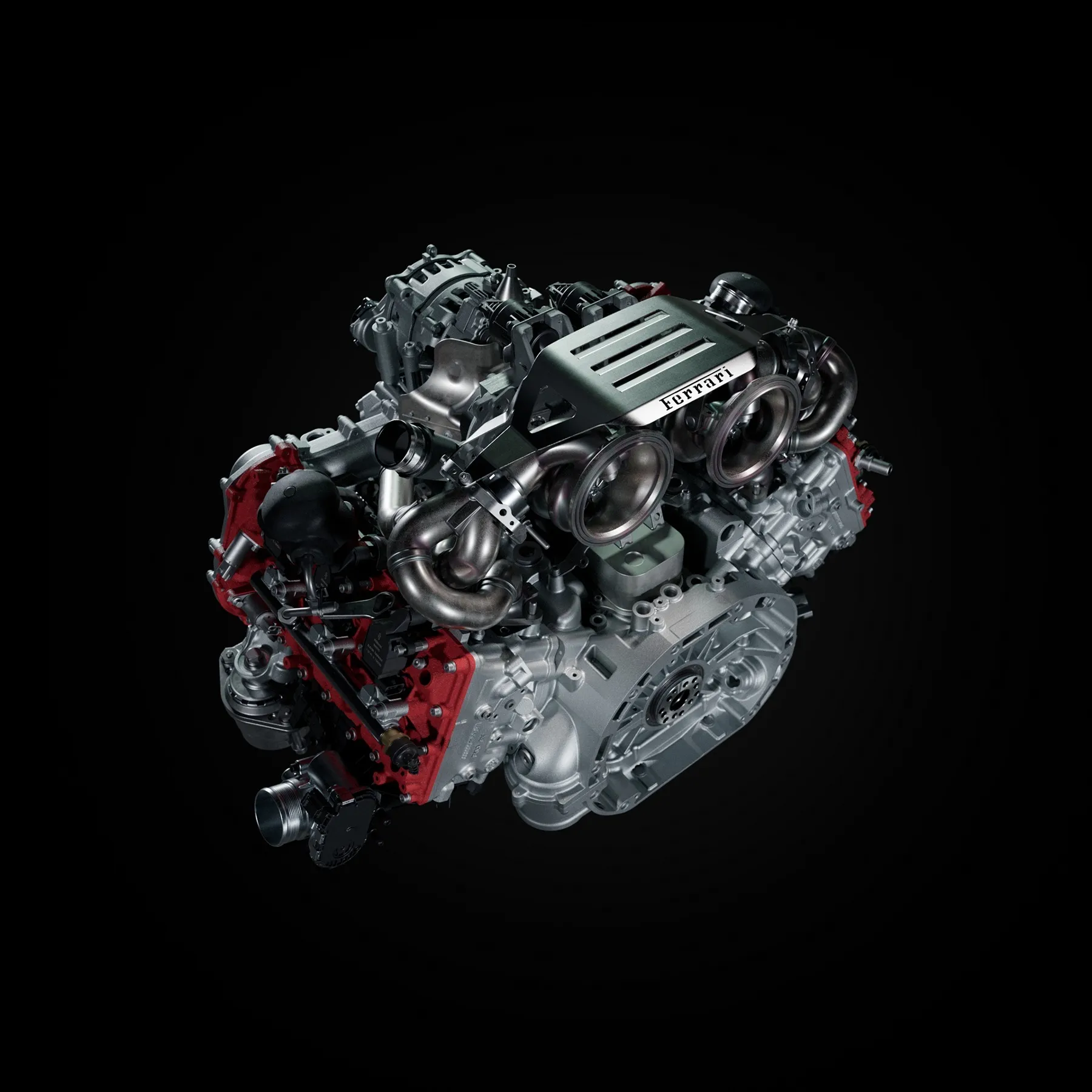
- Engine: 2,992 cc twin-turbo V6 with no electric assistance, 670 PS at 8,000 rpm and 740 Nm.
- Weight: 1,330 kg dry with options, 140 kg less than the 296 GTB.
- Performance: 0 to 100 km/h in 2.8 s, over 300 km/h, 617 kg of downforce at 250 km/h, a Fiorano lap in 1 min 18.5 s.
- Price: not disclosed by Ferrari, nor is the delivery date.
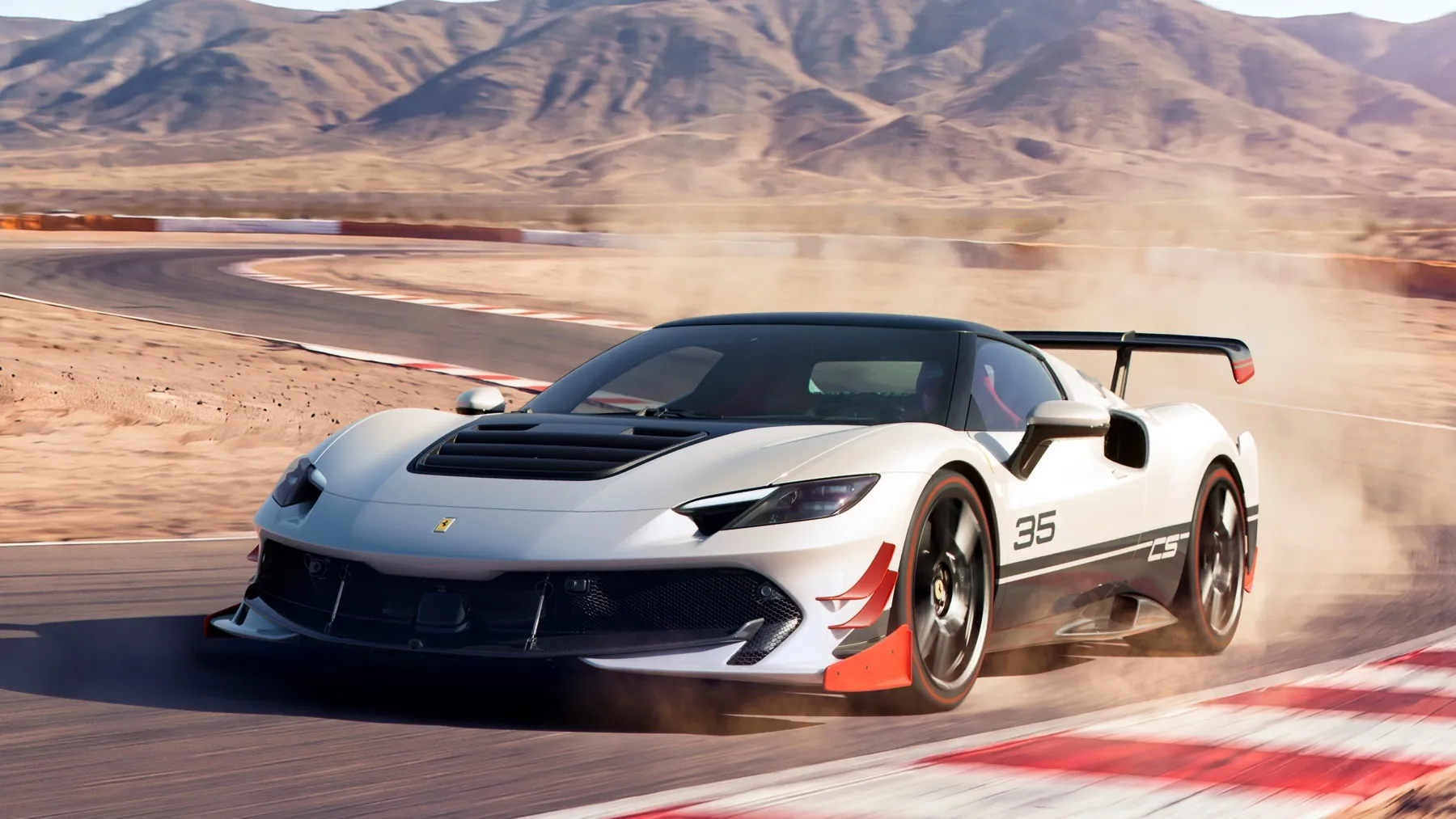
Ferrari removes the hybrid system from the 296 and homologates it for the road with the aerodynamics of its one-make race car. According to the brand, the 296 Challenge Stradale is the model in its current range with the most direct link to a race car. It is aimed at experienced drivers.
Unveiled at Montmeló with the 296 Challenge Evo
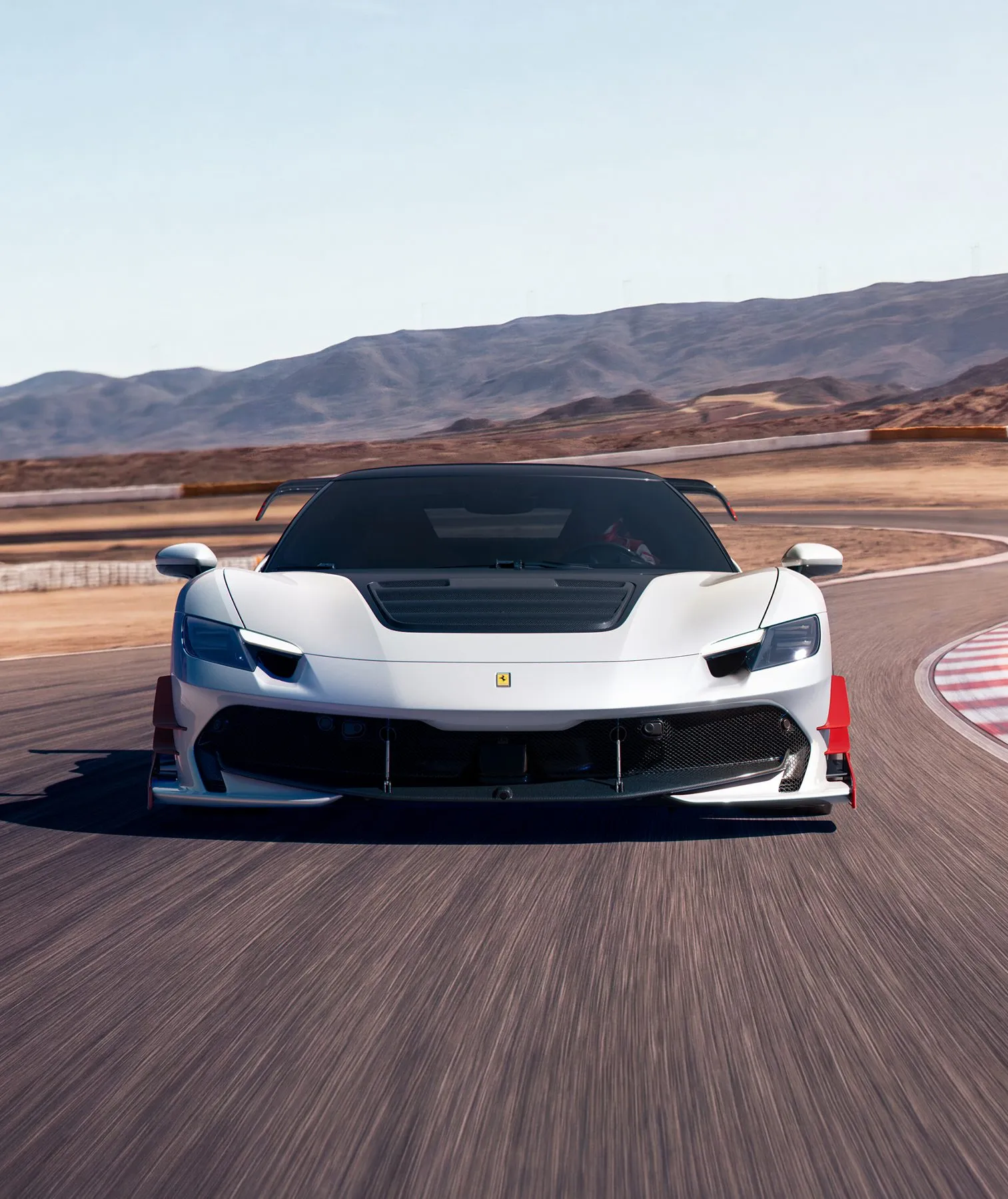
Ferrari’s statement of 21 November 2026 presents two cars developed side by side, unveiled at the Finali Mondiali, the season finale of the Corse Clienti department, at the Circuit de Barcelona-Catalunya. The 296 Challenge Evo is an evolution of the 296 Challenge, the car of the Ferrari Challenge one-make series since 2024. The 296 Challenge Stradale carries that spirit over to a road-registrable car. Flavio Manzoni’s Ferrari Design Studio kept the race car’s front-end layout.
A 670 PS V6, with no hybrid system
The 2,992 cc 120-degree twin-turbo V6 uses the combustion-only configuration of the 296 Speciale. It delivers 670 PS at 8,000 rpm and 740 Nm at 6,250 rpm, with a maximum engine speed of 8,500 rpm. For the same manoeuvre, dynamic torque is more than 32% higher than on the 296 GTB.
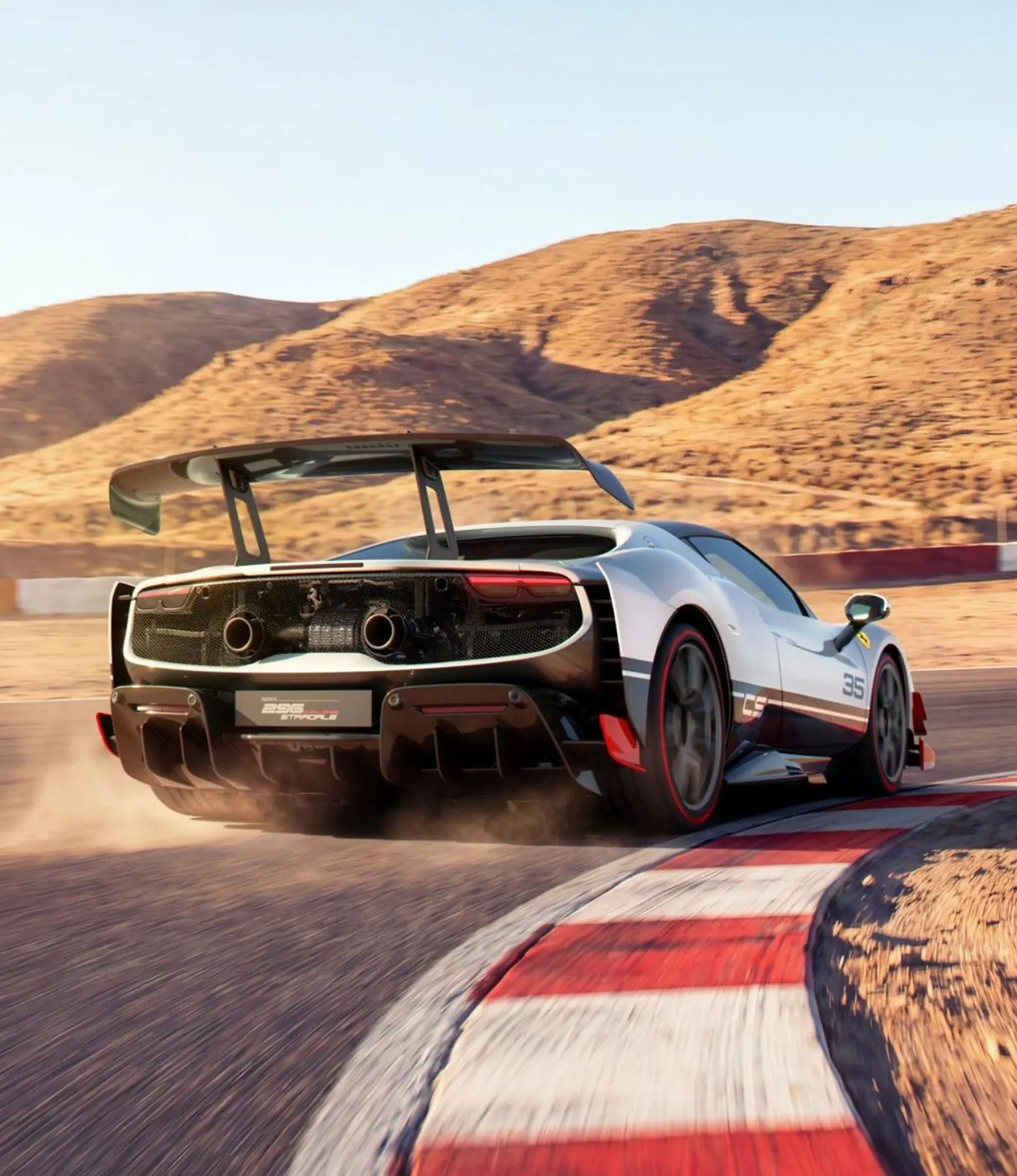
The eight-speed F1 dual-clutch gearbox shifts in around 170 ms under high load, using 296 Challenge logic, and in around 250 ms at low and medium revs, using SF90 XX Stradale logic. Without the hybrid system, Ferrari had to develop a belt starter generator, a first for a Ferrari road car, and a mechanical air-conditioning compressor. A track-only exhaust is available on request, fitted and removed by official dealers.
1,330 kg dry, 140 kg less than the GTB
The quoted dry weight of 1,330 kg applies with optional equipment fitted. The weight-to-power ratio stands at 1.98 kg per PS. The result: 0 to 100 km/h in 2.8 s, 0 to 200 km/h in 7.9 s, over 300 km/h and 101 m to stop from 200 km/h.
617 kg of downforce at 250 km/h
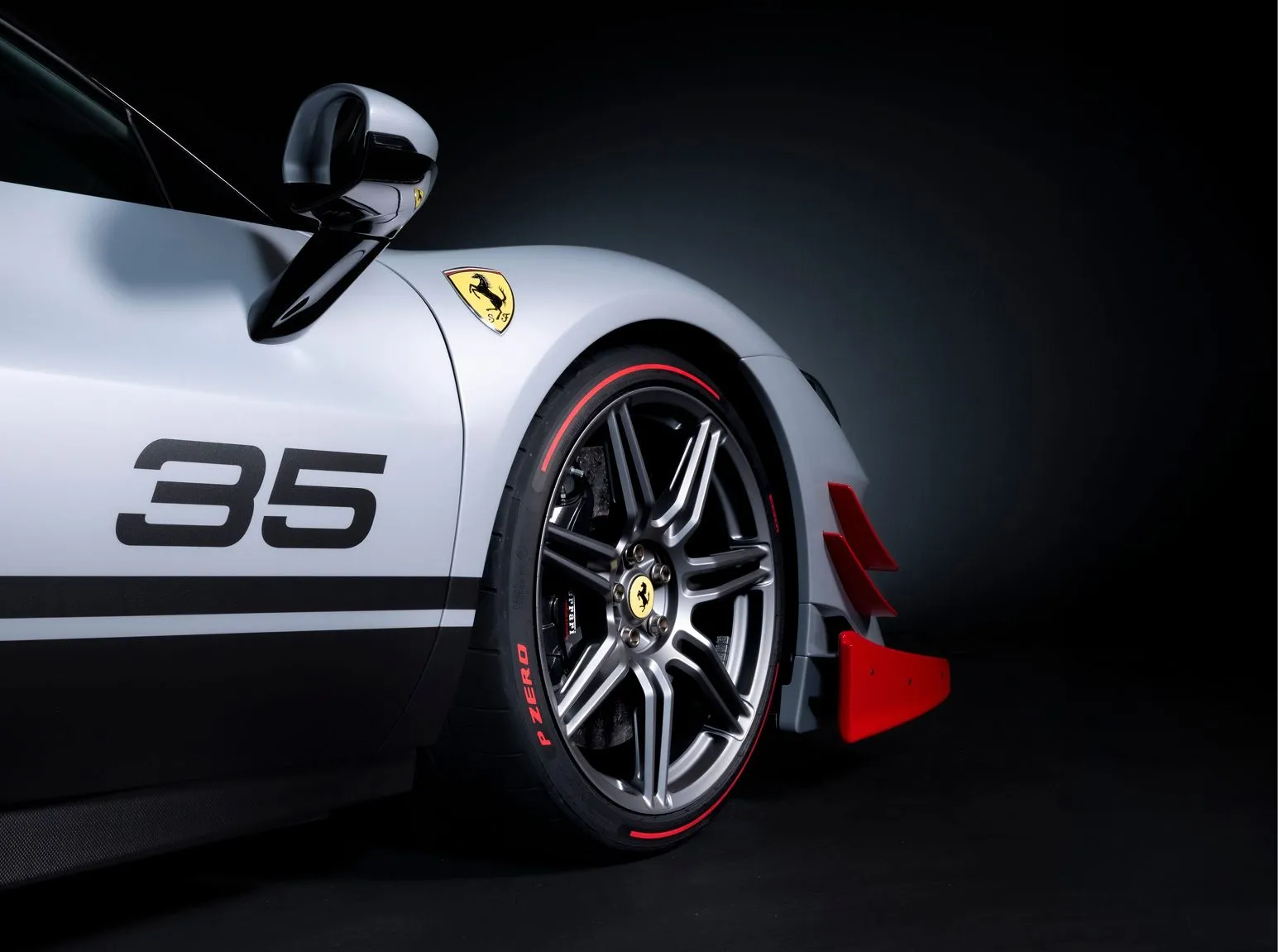
The car generates 617 kg of downforce at 250 km/h, 72% more than the 296 GTB. The fixed rear wing, taken from the 296 Challenge Evo, provides 270 kg on its own. A wider splitter, flicks, vortex generators, a fully enclosed underbody and side ducts known as aero dampers complete the package.
How does the chassis differ from the 296 GTB?
Compared with the 296 GTB, Ferrari quotes 7% more maximum lateral performance, 34% better stability and a roll gradient reduced by 68%. The springs are roughly twice as stiff, with a helper spring derived from the 296 Challenge Evo, and the semi-active dampers have their own calibration. ABS Evo works in all conditions and in every Manettino setting, and predictive slip control calibrated for the track is a first for a Ferrari road car.
The Pirelli P Zero R and P Zero Trofeo RS semi-slick tyres were developed specifically for it, and the carbon-ceramic discs measure 398 mm at the front and 380 mm at the rear.
A carbon-fibre cabin, stripped back
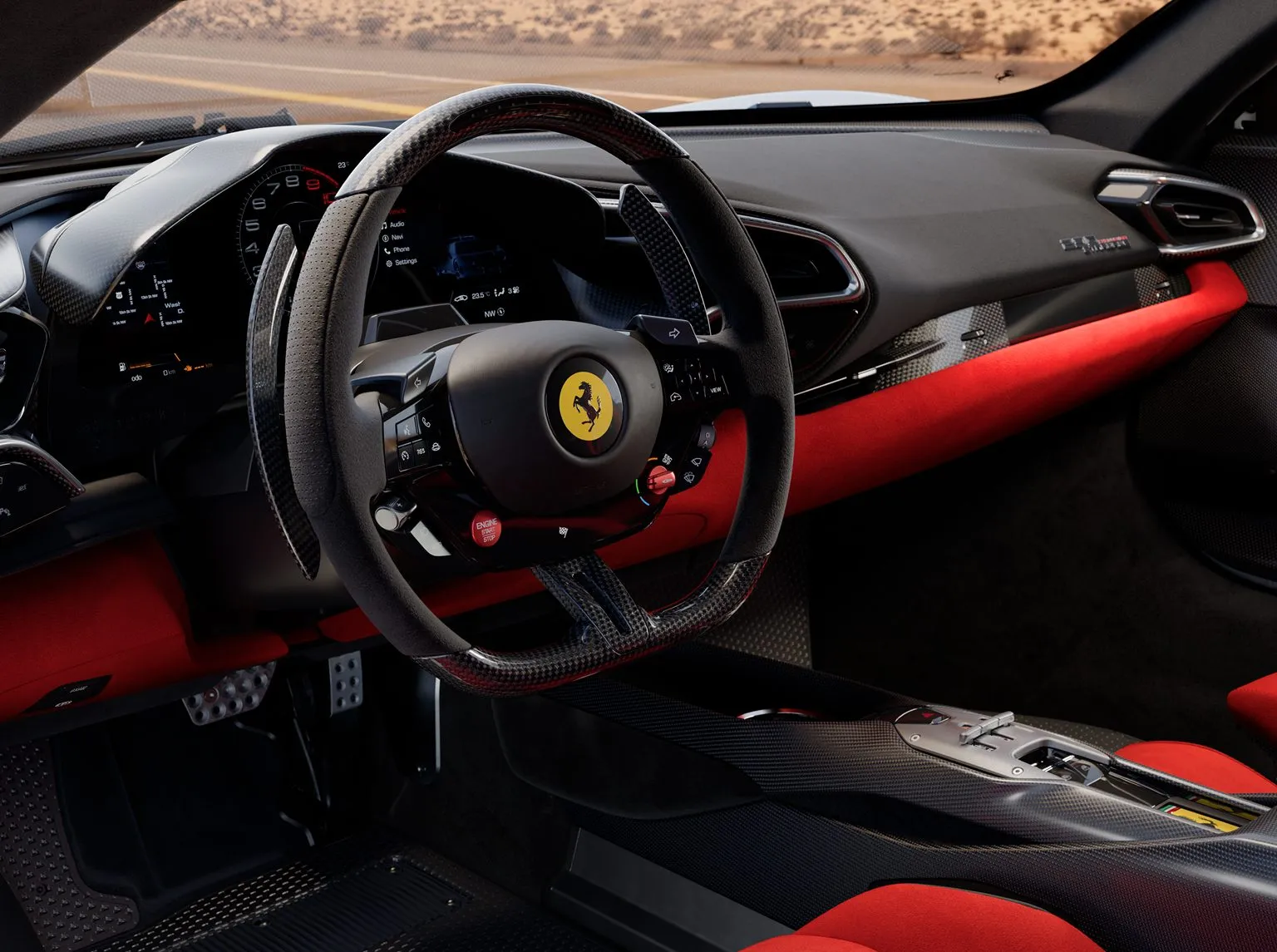
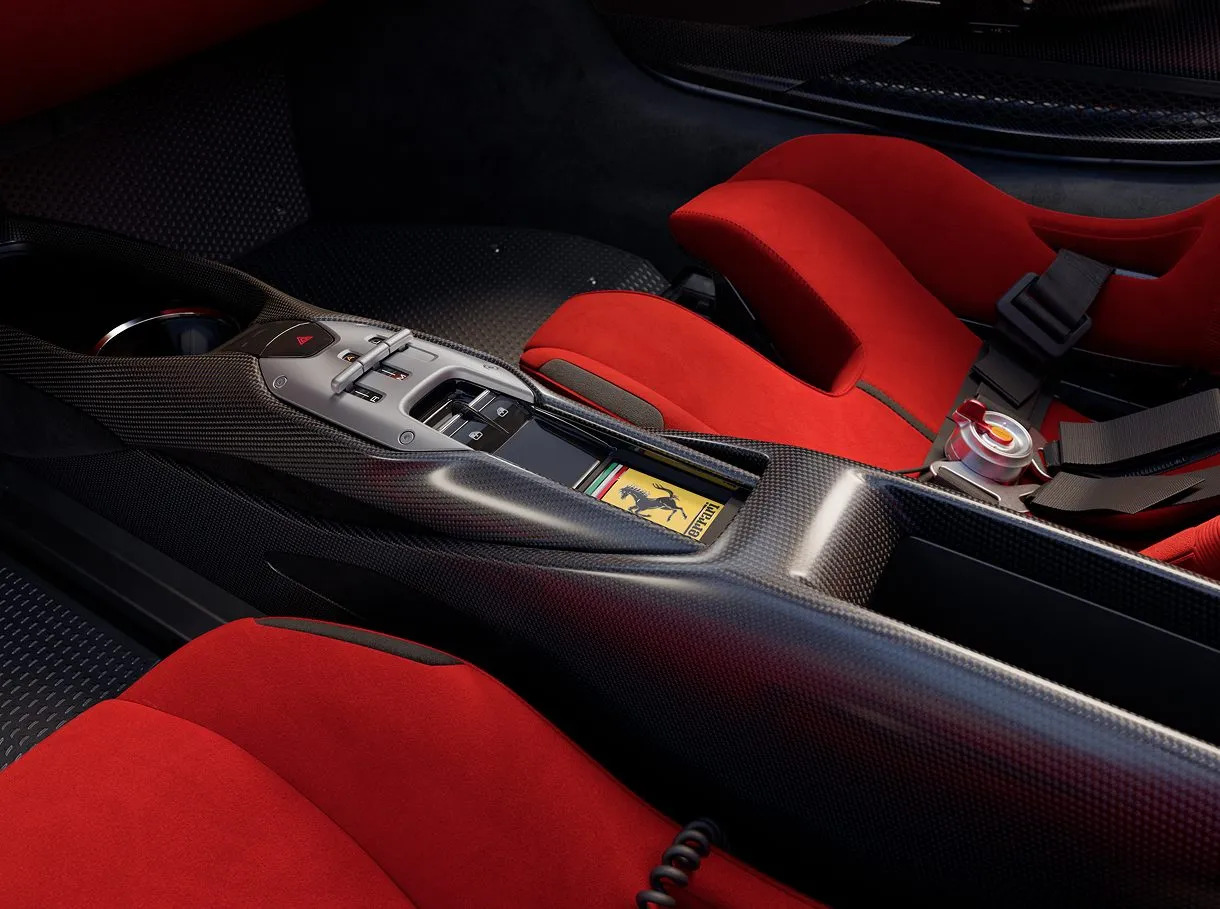
The cabin follows the layout of the 296 GTB, in a more radical form. The door panel is a single carbon-fibre piece, with no armrest or storage pocket. An option never before offered on a production car removes the trim beneath the seats and console, leaving the chassis partly exposed. The carbon-fibre tubular seats, from the SF90 XX Stradale, weigh 25% less than standard racing seats.
700 PS for the 296 Challenge Evo in 2027
The track-only race version goes up to 700 PS at 7,500 rpm with a seven-speed F1 gearbox. Its maximum downforce rises by 12%, or 100 kg more at 250 km/h than the 296 Challenge, and a Low Drag configuration cuts drag by 4%. It laps Mugello 0.8 s faster and will make its debut in 2027 in the Ferrari Challenge Trofeo Pirelli. The road version’s price and production volume have not been disclosed; for context on the brand, see Ferrari’s third-quarter 2026 results and the world’s most expensive cars.
| Manufacturer | Ferrari (Maranello, Italy) |
| Unveiling | 21 November 2026, Finali Mondiali, Montmeló |
| Engine | 120° twin-turbo V6, 2,992 cc, no hybrid |
| Power and torque | 670 PS at 8,000 rpm, 740 Nm at 6,250 rpm |
| Gearbox | F1 dual-clutch, 8 speeds |
| Dry weight | 1,330 kg with options, 1.98 kg/PS |
| 0 to 100 km/h | 2.8 s (0 to 200 km/h: 7.9 s) |
| Top speed | over 300 km/h |
| Downforce | 617 kg at 250 km/h |
| Fiorano lap | 1 min 18.5 s |
| Dimensions | 4,678 x 2,039 x 1,301 mm |
| Price | not disclosed |
Information verified on 27 November 2026. Sources: Ferrari statement and press kit of 21 November 2026, 296 Challenge Stradale technical specifications on ferrari.com.