

In brief
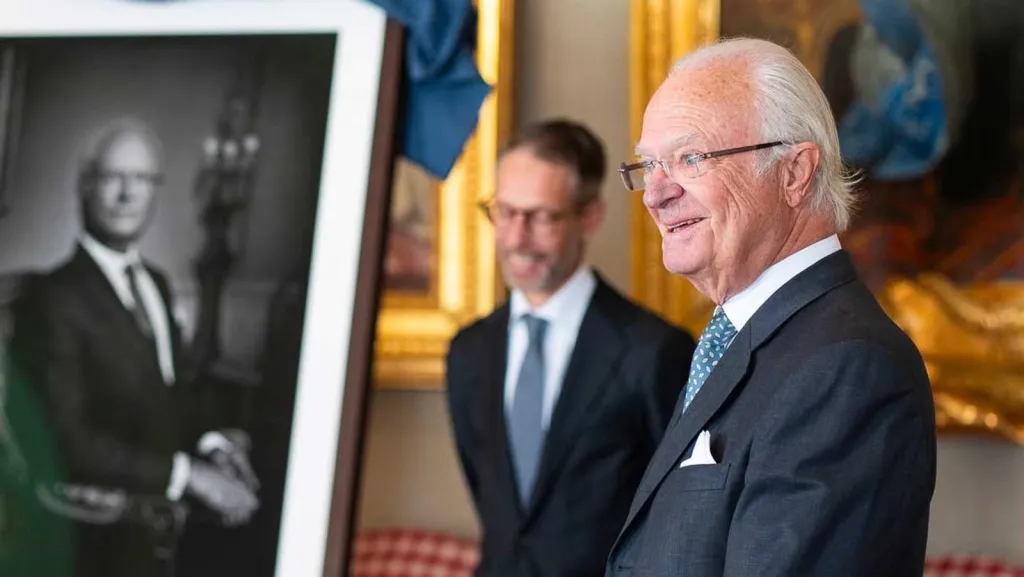
- On 11 September 2026, King Carl XVI Gustaf unveiled his new official portrait at Gripsholm Castle.
- This work joins the National State Portrait Collection of Sweden, which comprises over 5,300 works.
- The photograph was taken using a large-format analogue camera by renowned photographer Thron Ullberg.
- This portrait celebrates the 80th birthday of the Swedish sovereign, celebrated on 30 April 2026.
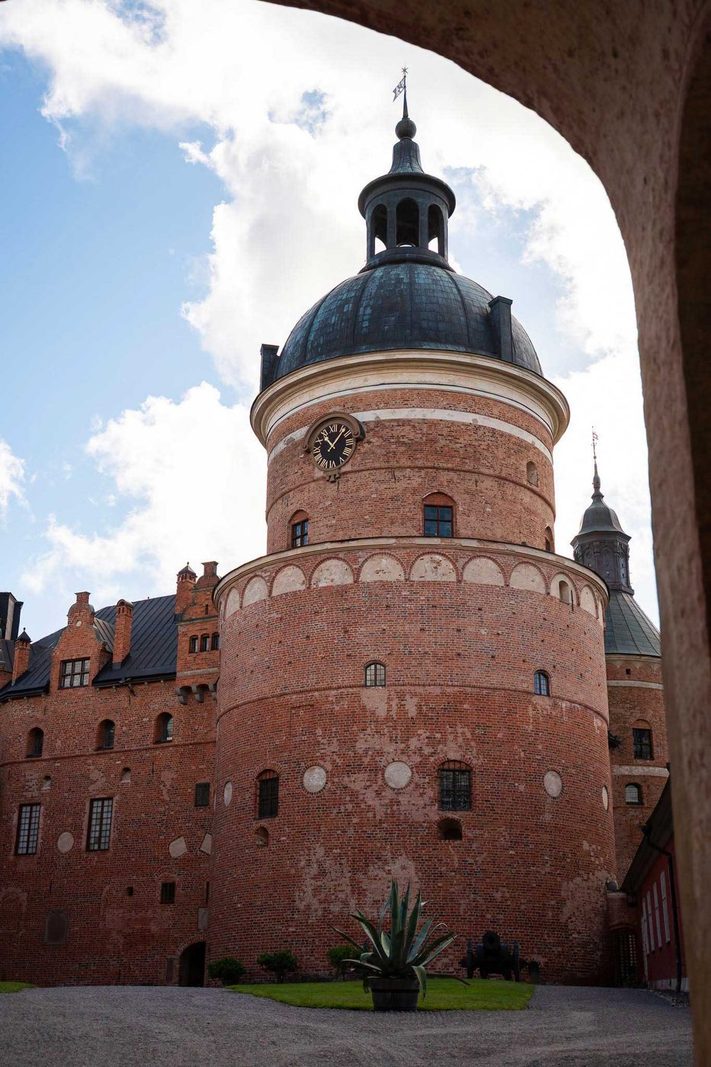
On 11 September 2026, King Carl XVI Gustaf of Sweden visited Gripsholm Castle to officially unveil his new State portrait, created to mark his 80th birthday. This understated black and white photograph joins the world’s oldest gallery of monarch portraits, thus perpetuating a centuries-old artistic tradition within the Swedish dynasty.
- Subject: His Majesty King Carl XVI Gustaf of Sweden
- Type of work: Official State portrait (black and white photograph)
- Photographer: Thron Ullberg
- Technique: Large-format photographic camera (Linhof Technika), 4×5 inch analogue film
- Location: Gripsholm Castle (National State Portrait Collection)

A tradition at Gripsholm Castle
A historic setting at Gripsholm Castle
Gripsholm Castle, located in Mariefred, provides the perfect backdrop for this historic event. Erected from 1526 by King Gustav I Vasa, the monument has housed the National State Portrait Collection since 1822. This prestigious gallery now comprises over 5,300 portraits of illustrious figures from Swedish history, offering a unique testament to the evolution of the representation of power throughout the centuries.
For this solemn occasion, the Swedish sovereign wished to follow in the footsteps of his predecessors while choosing a resolutely timeless aesthetic. The Friends of the National Museum of the National State Portrait Collection thus commissioned this work to mark the milestone of the monarch’s 80th birthday, celebrated on 30 April 2026.


The delicate art of analogue photography
The art of large-format analogue photography
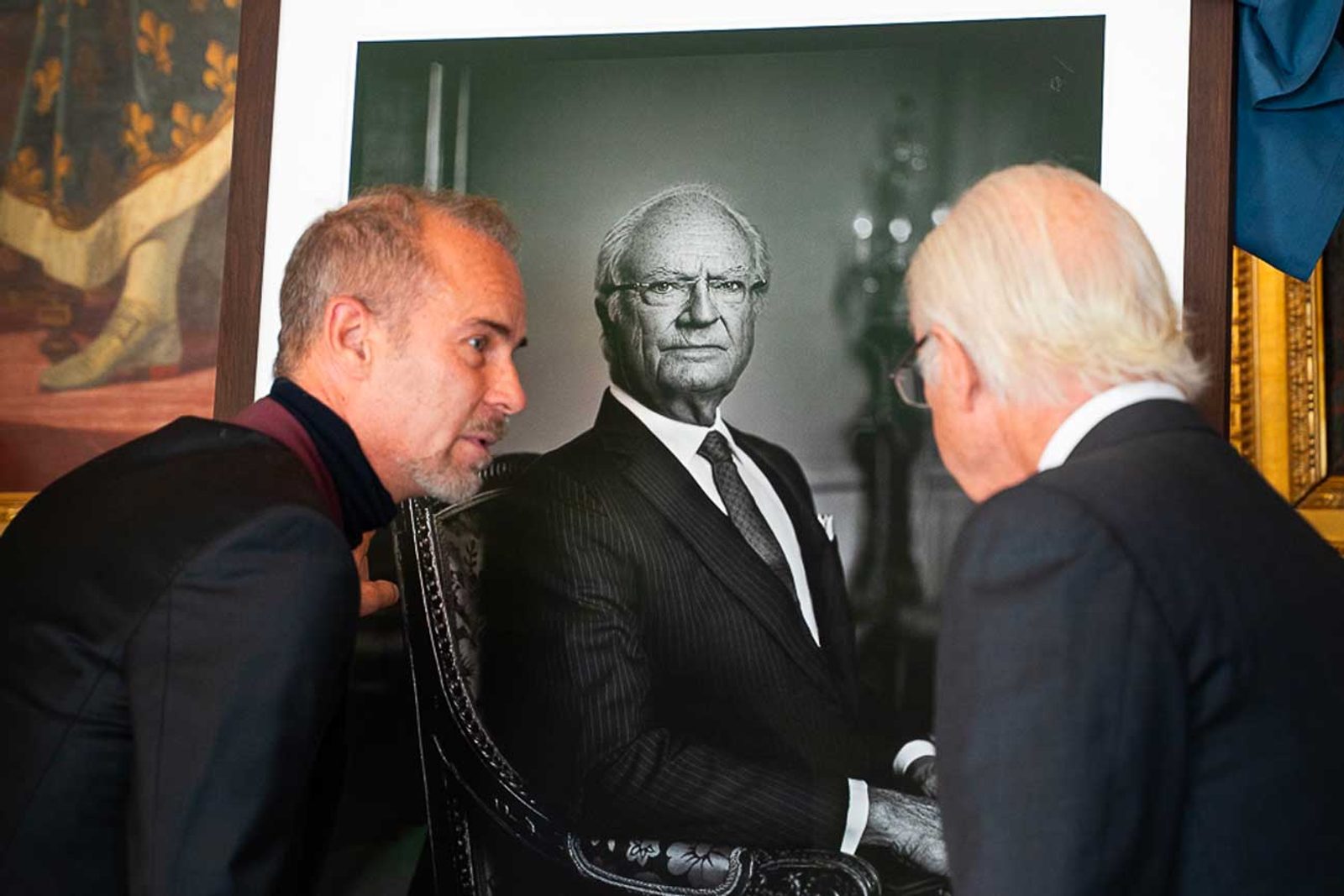
To immortalise the sovereign, the choice fell on Swedish photographer Thron Ullberg, renowned for his mastery of traditional techniques. He captured the king’s image in his daily working environment, at the Royal Palace in Stockholm. The work was created using a large-format Linhof Technika camera with 4×5 inch analogue film, a demanding process that gives the portrait exceptional sharpness and incomparable depth of tone.
This rigorous technical choice underlines the desire to favour the authenticity and longevity of the analogue medium. The result is an understated photograph, where the interplay of shadows and light reveals the features of a sovereign strong from half a century of reign.

An official unveiling in a restricted committee
A solemn ceremony for a historic reign
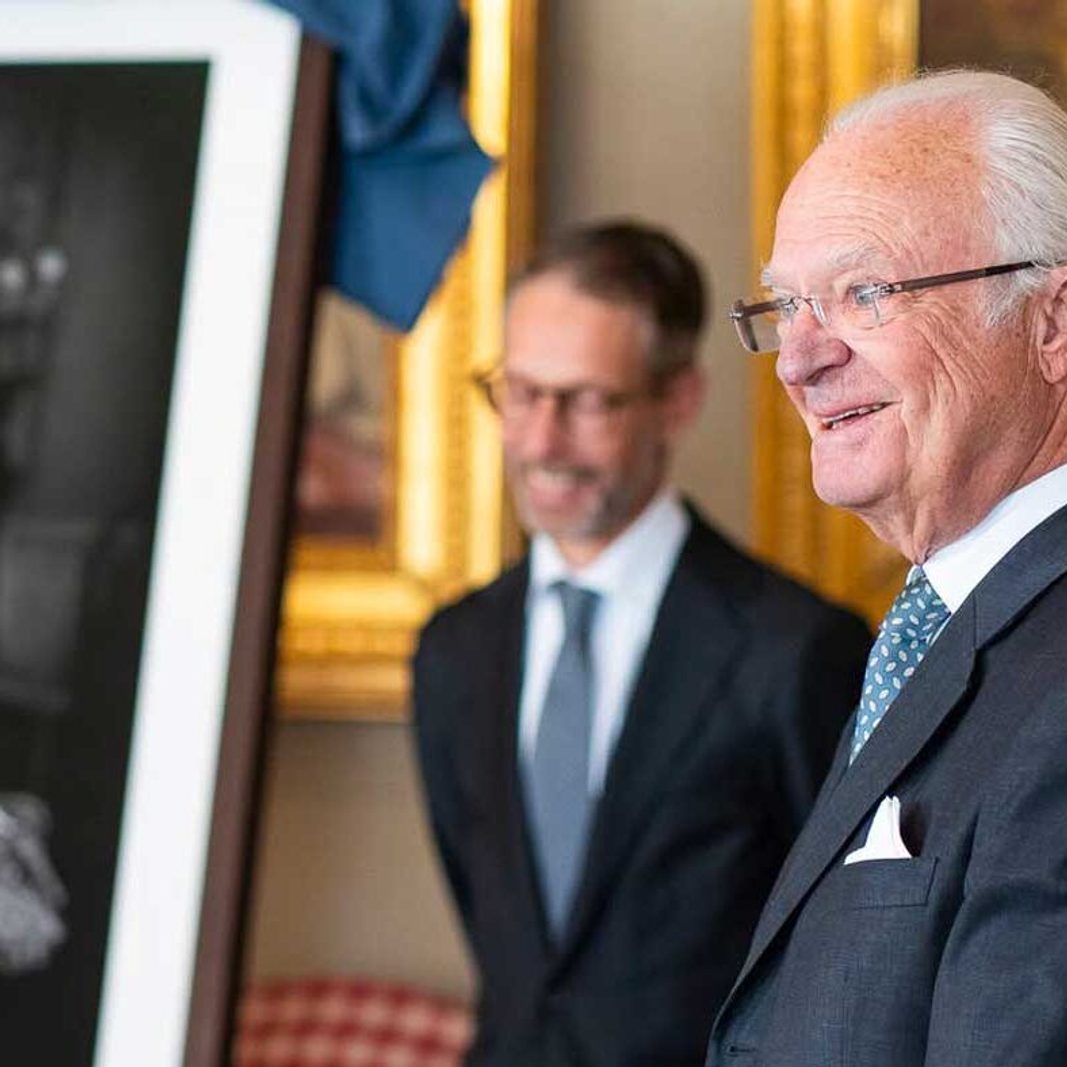
The unveiling ceremony took place in the presence of major figures from the Swedish cultural landscape. King Carl XVI Gustaf discovered the final version of his portrait alongside the Director of the National Museum, Patrick Amsellem, and photographer Thron Ullberg. The President of the Friends of the National Museum, Andreas Holqvist, was also present to celebrate this significant new heritage acquisition.
The group of assembled personalities also included Magnus Olausson, an emeritus member of the board of the patron association. This moment of sharing allowed for discussion on the technical challenges of this royal sitting and on the place of this contemporary work within an almost bicentennial collection.
The State portrait: mirror of a historic reign
This new State portrait does more than just document the passage of years: it stands as a reflection on time and the enduring nature of institutions. By choosing black and white and a traditional format, the King of Sweden asserts a classic aesthetic that resists fleeting trends. The sovereign’s gaze turns towards the future of the crown, while remaining rooted in the historical heritage of the Vasa dynasty.
The work is now on display at Gripsholm, inviting visitors to the castle-museum to contemplate the face of a monarch who continues to write the modern history of Sweden. This permanent dialogue between art, history, and sovereignty remains one of the pillars of the Nordic kingdom’s cultural identity.