

In brief
- The Renault 5 climbed to third place in European registrations in July with 8,334 units sold.
- The Tesla Model Y retains its crown as annual leader with over 115,000 registrations recorded over seven months.
- Chinese manufacturers dominate plug-in hybrids, led by the BYD Seal U DM-i at the top of sales with 68,500 units.
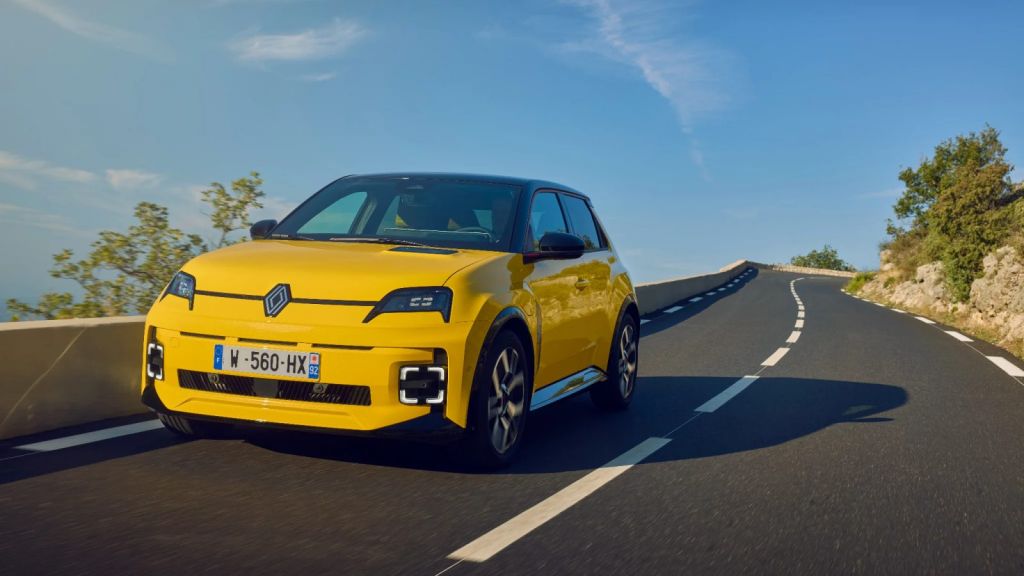
The luxury and mass-market mobility sector in Europe is undergoing a major transition phase. During July 2026, registrations of 100% electric vehicles reached a highly symbolic milestone by capturing more than 20% of the continent’s overall automotive market. This historic breakthrough is largely driven by the commercial momentum of the new Renault 5. The French city car delivered an impressive performance, securing third place on the monthly podium, right behind the industry giants in a rapidly accelerating continental market.
The impact of the Renault 5 on electric car sales
The introduction of the Renault 5 to the European market marks a turning point for the diamond brand, which was seeking to consolidate its presence in the urban electric vehicle segment. By reviving a historic nameplate paired with a meticulously crafted neo-retro design, the French carmaker has successfully won over customers who were still hesitating to make the shift to full electrification. This immediate enthusiasm validates the brand’s aesthetic and technical choices, while demonstrating that the electric city car segment retains considerable growth potential in Europe. The impact of this model goes beyond mere commercial success to become a true brand ambassador, proving that a heritage manufacturer can compete with new technology players by leveraging its heritage and strong local industrial integration.
The stellar success of the new Renault 5
With no fewer than 8,334 registrations recorded in July 2026 alone, the French city car confirms its upward trajectory and establishes itself as a key player in the market. However, this European success relies on a notable geographical asymmetry, with the French market acting as a powerful engine for the model. Out of a cumulative total volume of 54,000 units sold across Europe from January to July, France accounted for around 26,000 sales. This heavy reliance on the domestic market is not an isolated case in the French automotive industry. Direct competing models, such as the Peugeot e-208 or the Citroën ë-C3, show similar distribution patterns, generally generating between 35% and 45% of their total volumes in France, underlining the historic attachment of French drivers to their national brands.
- Manufacturer: Renault
- Segment: 100% electric city car
- Production: Douai plant (France)
- Europe YTD Volume: 54,000 units
The Tesla Model Y retains its annual hegemony
Tesla’s resilience in the face of competition
Although absent from the top 10 monthly sales in July, the Tesla Model Y clearly retains its position as the undisputed annual leader across the European continent. The American brand’s SUV is in remarkably rude health, with more than 115,000 registrations recorded over the first seven months of the year. Unlike the French city cars, which derive most of their strength from their home country, the Model Y demonstrates a remarkably even geographical distribution across Europe. Indeed, the French market accounts for only a modest share of its overall sales, hovering between 10% and 12%. This widespread geographical appeal reflects the strong pull of the brand led by Elon Musk, which manages to attract Northern, Central and Southern European markets alike, insulating itself from fluctuations in local subsidy policies.
The Tesla Model 3 confirms its solid consistency
In third place on the cumulative podium since the start of the year, the American electric saloon displays steadfast consistency. With more than 62,000 registrations recorded between January and July, it sits just ahead of the Renault 5 and its 54,000 units sold. This performance highlights the effectiveness of Tesla’s industrial strategy, characterised by well-oiled logistics. While the Model Y destined for the European continent is mostly assembled at the Berlin Gigafactory in Germany to maximise market responsiveness, the Model 3 comes directly from the production lines of the Shanghai Gigafactory in China, illustrating the brand’s mastery of its global supply chain.
The Skoda Elroq asserts itself as a formidable challenger
The Czech carmaker is making a major breakthrough in the electric market thanks to its new SUV. In July, the Skoda Elroq caused a surprise by topping European sales with 10,015 registrations recorded, ahead of benchmark models such as the Volkswagen ID.4 and the Renault 5. Over the first seven months of 2026, the Elroq holds a solid second place in the overall European standings with a total of 67,600 registrations. This resounding success validates the pragmatic electrification strategy of the Volkswagen Group, which manages to offer under the Skoda banner a particularly spacious vehicle with excellent range, meeting the exact expectations of European families seeking versatility.
The key role of infrastructure and purchasing incentive policies
Detailed analysis of electric vehicle sales in Europe highlights the decisive influence of national incentive policies and the rollout of charging infrastructure. The highly focused success of models like the Renault 5 or the Citroën ë-C3 in France is largely explained by the introduction of particularly advantageous purchasing incentive schemes, such as the eco-bonus and public financing programmes. Conversely, the absence of such direct support in certain Eastern or Southern European countries slows down the penetration of 100% electric models in favour of other technologies. Furthermore, the maturity of rapid charging networks at a national level creates stark disparities in usage. Heavily equipped Northern European countries favour the widespread adoption of large electric vehicles like the Tesla Model Y, while regions with less dense infrastructure encourage drivers to opt for intermediate solutions or city cars intended primarily for suburban commuting.
Logistical and industrial challenges of decentralised production
The layout of global automotive production plays a crucial role in monthly registration fluctuations in Europe. Renault’s strategy, which concentrates the manufacturing of its Renault 5 at the Douai industrial hub in northern France, guarantees a short, secure supply chain shielded from maritime geopolitical tensions. This geographical proximity enables the manufacturer to adapt quickly to changes in local demand. Conversely, models such as the Tesla Model 3 or vehicles produced by Chinese carmakers, shipped by sea from Shanghai port facilities, are structurally exposed to the vagaries of international transport. Mass arrivals of car carriers at European ports explain the cyclical registration spikes observed for these brands, in contrast to the steady pace of local European production.
China’s offensive in plug-in hybrids
The Chinese offensive in the hybrid segment
While Chinese carmakers face increased tariff barriers in the European market for their 100% electric models, they are deploying a particularly effective workaround strategy by investing heavily in the plug-in hybrid segment. The BYD Seal U DM-i perfectly illustrates this dynamic, taking top spot in the category with an impressive volume of 68,500 units registered between January and July. The offensive does not stop there, as the European top 10 also welcomes ambitious models like the Jaecoo 7 from the Chery Group or the MG HS from parent company SAIC. This remarkable breakthrough directly challenges traditional European players in the segment, forcing long-established models like the Volkswagen Tiguan eHybrid or the Volvo XC60 Recharge to reassess their technological and pricing positioning against Asian competitors offering excellent value for money.