

In brief
- The production of season 2 of Bugarach, the science-fiction series from France Télévisions, has moved into the basement of the Corum in Montpellier.
- A team of builders, painters, and technicians took on the challenge of transforming a car park into a futuristic bunker in less than 48 hours.
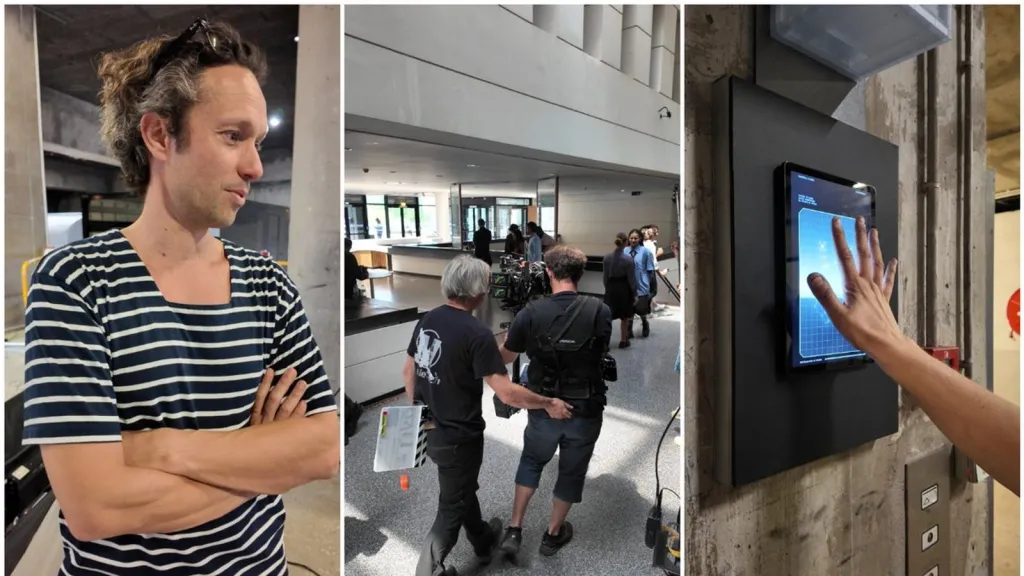
- The set includes a complex network of thirty animated screens displaying lines of code and fingerprint scans.
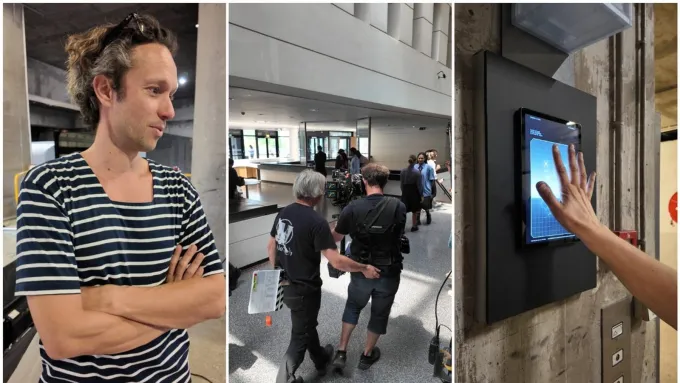
For the filming of the second season of the science-fiction series Bugarach in Montpellier, production teams have taken over the basement of the Corum to build an impressive futuristic set. Under the direction of Sète-based architect Thibault Pinto, around a dozen experienced technicians worked in the shadows to transform a simple logistics space into a high-tech control centre. After beginning initial filming at the Vendargues studios, the production team moved into this famous Montpellier cultural landmark to bring the new plotlines of the France Télévisions series to life. This strategic move to one of the most famous monuments in the Hérault metropolis reflects the production’s desire to blend real architectural structures with bold artistic designs, creating a unique atmosphere typical of the anticipation genre. This choice helps anchor the fantastic narrative in a strong geographical and visual context, highlighting local heritage while meeting the demanding aesthetic standards of the contemporary audiovisual landscape.

A car park transformed into a futuristic bunker
The transformation of a car park into a futuristic bunker
In the dim light and stifling heat of the Corum’s air vents, the usual atmosphere of the loading dock has completely disappeared, giving way to an endless line of control desks. Dozens of computers, notebooks, and keyboards have been rigorously arranged to recreate the ultra-realistic aesthetic of an anticipation-genre bunker. To perfect this illusion, the external production manager, Audrey Combes-Laget, personally oversaw the animation of the terminals. The precision work relies on the simultaneous animation of thirty screens displaying complex lines of code and fingerprint scans, details that give the space remarkable visual depth before the set dresser takes over. These meticulous additions of technological elements help transform a cold, utilitarian space into an administrative and scientific hive that is perfectly credible on camera. The accumulation of carefully selected accessories helps give substance to the actors’ performances, who find themselves immersed in a tangible universe where every button, technical sheet, and interactive screen seems to have a real purpose in the operation of this nerve centre.
The Corum: architecture suited to anticipation stories
The choice to set this science-fiction scene in the underground levels of the Corum highlights the architectural richness of the city of Montpellier, a territory that harmoniously reconciles medieval history and contemporary boldness. Designed by the famous architect Claude Vasconi, the Corum is primarily renowned for its opera house and world-class conference halls. Yet, its technical basements and delivery areas conceal massive raw concrete volumes and imposing metal structures that immediately evoke the sets of the great dystopian stories of world cinema. The use of these real industrial spaces allows the production to break free from the geometric limits of traditional film sets by exploiting monumental perspectives and an authentic materiality that only concrete architecture can offer to camera lenses, thus reinforcing the realism of the work without over-relying on digital effects.
A race against time before filming
A timed logistical and technical challenge
The schedule imposed on the artistic and technical teams proved to be extremely demanding, granting them only a tiny window to finalise the entire structure. The excitement reached its peak at the beginning of the week, on the eve of the first take set by the series producer, Olivier Compère. In a perfectly choreographed ballet where jigsaws and drills echoed, each craftsman went about their task, relying on the sketches and technical plans fixed to the partitions. The teams had less than 48 hours to completely transform this underground infrastructure and ensure the work schedule was met. This constant race against time requires flawless coordination between the different trades, from carpentry to electrical work, so that the set painters can apply the finishing touches as soon as the wooden structures are securely anchored to the floor. This exceptional responsiveness demonstrates the high level of technical skill of the teams working behind the scenes, who are capable of adjusting construction plans in real time to overcome the unforeseen challenges inherent in such an underground space.

The mystery of the set’s centrepiece
At the end of the loading dock, away from the main bustle, technician Marcello Urbina Alarcon set to work assembling an imposing wooden frame. While the details of this installation remain confidential to preserve the element of surprise during the broadcast, its stature suggests its crucial importance in the plot of this second season. This wooden structure constitutes the most important set element of this new production, a secret jealously guarded by the technical teams who refuse to reveal the inner workings of this major visual surprise. The art of cinema carpentry lies precisely in this ability to shape impressive volumes from light and modular materials, capable of being moved or modified according to the needs of the staging. This centrepiece fuels curiosity and promises to be one of the visual anchors of the plot, perfectly illustrating the unbreakable link between physical craftsmanship and dramatic storytelling.
The art of construction and patina for the big screen
To bring a science-fiction bunker to life, raw construction is only half the battle. The patina stage proves absolutely crucial for removing the new look from freshly sawn materials and giving them a realistic history. Set painters work with meticulous care to apply textures of rust, dust, premature wear, or stagnant moisture to the wooden walls and faux metals. This high-precision artisanal know-how ensures that, even under the unforgiving eye of modern high-definition cameras, the illusion remains complete for the viewer. Every simulated scratch on a work surface or every shade of grey applied to a plywood partition tells a silent story, actively participating in the construction of the universe without a single line of dialogue being necessary.
The visual ambition of the series Bugarach in Montpellier
A new visual ambition for French fiction
The aesthetic standards set by architect Thibault Pinto and producer Olivier Compère testify to the move upmarket of French science-fiction productions. By transforming a car park usually reserved for heavy goods vehicles and delivery vans into a striking futuristic laboratory, the series seeks to offer a true visual signature to its audience. This major project highlights the remarkable expertise of local technicians and the vitality of the audiovisual industry in Occitanie, a region that has become over the years a preferred destination for large-scale national and international filming. The public will have to wait until the beginning of 2027 to discover the final result of this transformation on France Télévisions screens and appreciate the Herculean work of these artisans working in the shadows, who shape the collective imagination with as much passion as technical rigour.
To go further
- Add to preferred sources on Google
- Thibault Pinto
- I subscribe to read the rest
- Log in
- Pay my outstanding balance (2 min)