
In brief
- Founded in Madrid in 1846, the house of Loewe celebrates nearly two centuries of fine leather craftsmanship.
- The Spanish label is reissuing its iconic it-bags, such as the Amazona 180, the Flamenco and the Puzzle.
- New creative directors Jack McCollough and Lazaro Hernandez reinterpret the brand’s heritage.
Founded in the mid-19th century by Madrilenian leather artisans, the Spanish luxury house Loewe reaches the milestone of its 180th anniversary. To mark the occasion, the label looks back on two centuries of savoir-faire, technical innovation and creative audacity. From its first workshop on Calle Lobo to international runways, the story of Loewe illustrates the successful metamorphosis of an artisanal workshop into a global fashion reference.
Through this remarkable anniversary, the Iberian house is not merely taking a nostalgic look back at its past. On the contrary, it is orchestrating a dynamic dialogue between its historical archives and contemporary creation. By entrusting the reinterpretation of its heritage to new creative directors Jack McCollough and Lazaro Hernandez, Loewe affirms its desire to project its centuries-old legacy into modernity. This journey through time highlights the constant excellence of its leather craftsmanship, the meticulousness of its assembly and the label’s ability to capture the spirit of every era without ever losing its fundamental identity.
From Madrilenian origins to royal recognition
From Madrilenian origins to international recognition
The story begins in 1846 in the heart of the Spanish capital. In their workshop on Calle Lobo, several leather artisans joined forces to design small leather accessories with an irreproachable finish. Cigarette cases, jewellery boxes, frames and purses quickly won over a clientele of connoisseurs. Twenty-five years later, German leather craftsman Enrique Loewe Roessberg joined the collective and gave his name to the brand, bringing innovative technical rigour and methodology. In 1892, the opening of the first manufacture with a shopfront cemented the label’s reputation among the European elite. When King Alfonso XIII granted it the title of official supplier to the Royal Court, Loewe’s fame crossed the borders of the Iberian Peninsula for good.
The initial location on Calle Lobo took place in a Madrid abuzz with artisanal activity, where trade guilds perpetuated traditional leatherworking techniques. The encounter between the great Spanish leather tradition and the methodical vision of Enrique Loewe Roessberg created a unique synergy. The Germanic contribution introduced strict standards regarding the choice of materials, cutting and seam precision, while elevating the craft of small fine woodwork and precision leather goods.
The establishment of the first manufacture-boutique in 1892 marked the emergence of an innovative concept for the era: bringing together under one roof the manufacturing workshops and the retail space dedicated to clients. This physical proximity between artisan and customer fostered bespoke service and reinforced the brand’s image of excellence. The recognition granted by King Alfonso XIII was not merely a prestigious distinction: it validated the granting of a royal warrant that propelled the house among Europe’s greatest luxury names, attracting an international aristocracy in search of refined, durable items.
The art of scenography and the rise of iconic window displays
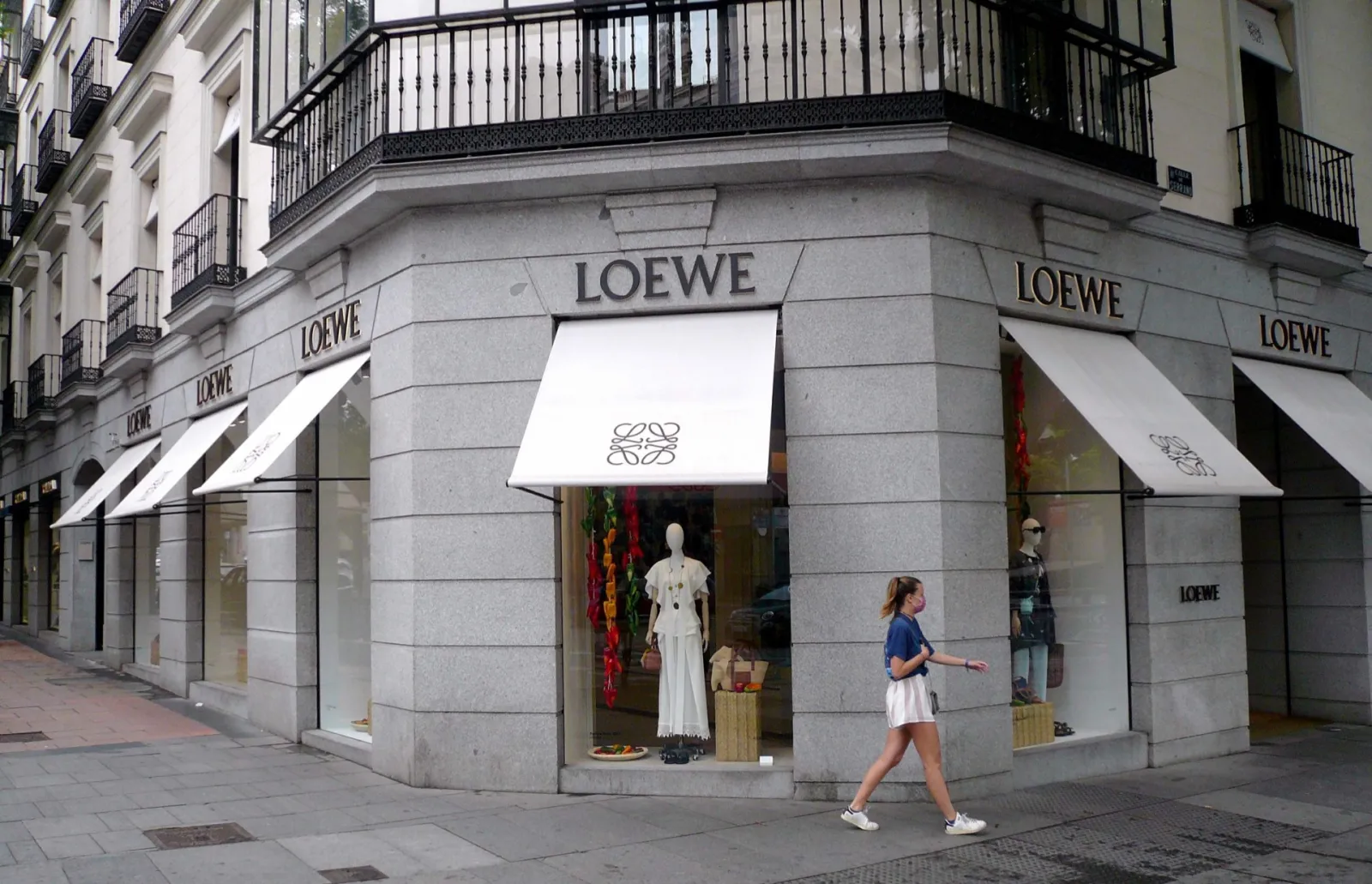
The rise of the house was accompanied by constant attention paid to presentation and visual experience. In 1939, Loewe inaugurated its flagship store on Madrid’s prestigious Gran Vía, marking a key milestone in its geographical expansion. Between 1945 and 1978, creative director José Pérez de Rozas infused a theatrical spirit into the label’s Madrid window displays. Eagerly awaited each season by locals and collectors alike, these staging arrangements transformed the brand’s retail locations into true cultural destinations.
The opening of the Gran Vía flagship in 1939 came at a time of major architectural assertion. This iconic thoroughfare in the Spanish capital became the stage for a new form of commercial expression where luxury was displayed with elegance. Under the artistic direction of José Pérez de Rozas from 1945 to 1978, the brand redefined the codes of retail presentation. Pérez de Rozas designed window displays like real theatrical sets or miniature art galleries, blending sculptural structures, carefully studied lighting and dramatic plays on texture.
These captivating visual installations did not merely showcase the latest leather creations; they established a cultural dialogue in the heart of the city. The Gran Vía windows became an essential gathering spot for design enthusiasts and the general public, permanently anchoring Loewe within Madrid’s artistic and urban landscape. This early mastery of retail scenography foreshadowed the importance the house would continue to place, throughout its history, on the close link between aesthetic creation, exhibition space and customer experience.
Three iconic bags at the heart of the celebrations
Iconic creations etched in fashion history
Alongside its architectural anchoring, the house has shaped the history of design through leather goods models that have achieved cult status. The anniversary campaign photographed by Talia Chetrit highlights this stylistic continuity by bringing together figures such as Julia Garner, GISELLE, Salma Abu Deif, Kara Wai, Sissy Spacek and Kara Walker. Beside them featured three iconic bags representing as many defining eras: the Flamenco clutch born in the 1980s, the Puzzle bag introduced in 2015, and the historic Amazona. The legendary Amazona 180 bag is revealed reinvented by Jack McCollough and Lazaro Hernandez in new sizes and colourways.
Each of these three models embodies a crucial milestone in the house’s aesthetic and technical exploration. The Amazona, originally created to offer women a bag that was at once supple, functional and refined, remains the cornerstone of Loewe leather craftsmanship. Its reinterpretation under the name Amazona 180 by duo Jack McCollough and Lazaro Hernandez brings a contemporary vision to its proportions, offering new chromatic palettes and reworked volumes while preserving its iconic leather framework.
The Flamenco bag, designed in the 1980s, is distinguished by its characteristic gathers and the extreme suppleness of its leather, evoking the movement and fluidity of the Spanish culture from which it takes its name. The Puzzle bag, launched in 2015, represents a feat of modern engineering: its geometric construction, composed of precisely cut pieces of leather, allows the bag to be folded flat or worn in multiple ways. The campaign captured by photographer Talia Chetrit brings these masterworks together around an eclectic cast including Julia Garner, GISELLE, Salma Abu Deif, Kara Wai, Sissy Spacek and Kara Walker, celebrating a timelessness that spans generations and artistic expressions.
The alliance of exceptional craftsmanship and stylistic innovation
Loewe’s longevity relies on the continuous transmission of complex technical gestures within its workshops. Transforming the finest leathers requires meticulous craftsmanship, from the rigorous selection of hides to the precise assembly of leather pieces. This artisanal mastery allows the label to combine lightweight structures with exceptional durability, ensuring the longevity of its creations down the ages.
The integration of new creative languages by successive artistic directors demonstrates a preserved balance between tradition and innovation. Whether deconstructing the structure of a classic bag or exploring new dyeing and tanning techniques, the house applies an approach where creative experimentation supports functional utility. This commitment to fine craftsmanship is evident in the making of every piece, turning leather into a medium for artistic expression in its own right.
A living heritage celebrated between culture and creation
A contemporary tribute to nearly two centuries of savoir-faire
To celebrate its 180th anniversary, the label is also unveiling a dedicated capsule collection in ready-to-wear and small leather goods. The wardrobe spotlights the figure of the lion—the literal translation of the German word ‘Loewe’—reworked as delicate embroidery, leather marquetry or charms. A fervent defender of artistic crafts, the brand is simultaneously devoting a feature titled ‘180 Years of Craft’ in the eleventh issue of its print magazine, revealing fascinating archives from the Madrid studio. Actor Antonio Banderas lends his voice to an animated film tracing the major milestones of this artisanal saga. This poetic narrative serves as a reminder that long before the advent of modern communication tools, Loewe was already striving to elevate leather craftsmanship to an art form.
The capsule collection designed for this anniversary highlights the lion, a heraldic symbol directly linked to the etymology of the German name introduced by Enrique Loewe Roessberg. The house’s artisans deploy all their virtuosic skill to translate this feline motif across ready-to-wear and small leather goods: high-precision embroidery on precious textiles, intricate marquetry applied directly to leather and sculpted metal charms enrich the season’s silhouettes.
In addition to these clothing creations, the house reaffirms its cultural commitment through the eleventh issue of its print magazine. The ‘180 Years of Craft’ feature offers a well-documented dive into the history of the Madrid workshops, revealing archival sketches, vintage manufacturing photographs and previously unpublished historical documents. Finally, the animated film narrated by actor Antonio Banderas brings a narrative and emotional dimension to these festivities. The actor’s iconic voice guides the viewer through the label’s founding moments, celebrating the manual dexterity and transmission of heritage that make Loewe an international benchmark for fine leather craftsmanship.