
In brief
- A strategic investment of 1.8 million euros has been officially committed to asbestos removal and selective deconstruction of the former Holophane brownfield site, located in Eure.
- The future establishment of the maison Hermès in this region will enable the creation of 260 direct jobs specialising in high-end leather goods by 2030, boosting the local employment area.
The industrial site will be sold to the luxury maison for a symbolic one euro
- The industrial site, a historical flagship of optical production, will be sold to the famous luxury maison for a symbolic one euro, a strong incentive designed to encourage reindustrialisation and the long-term sustainability of economic activity in Les Andelys.
The future of French luxury is now being written in Eure, at the heart of the Seine Valley, a region confirming its role as a hub of excellence for fine craftsmanship. Seine Normandie Agglomération has just taken a decisive step in the redevelopment of the Holophane brownfield, an iconic industrial site in Les Andelys whose historical operations permanently ceased in January 2024. This major project, estimated at 1.8 million euros excluding tax for its preparatory phase, aims to remediate and prepare the ground for the installation of a new leather goods manufacture signed Hermès. This shift symbolises the transition from traditional heavy industry to an economy of know-how and precision, permanently embedding the region in the global luxury value chain.
The stakes of this transformation go beyond mere property conversion. For public stakeholders, it is a matter of turning a derelict industrial zone into a true engine of growth. The Seine Valley, a major logistical and historical axis between Paris and Normandy, offers an ideal setting for luxury maisons seeking local roots and regional stability. By choosing Les Andelys, Hermès aligns with a production footprint already established in other Norman municipalities, thereby strengthening a network of leatherworking expertise unique in France.
Maison: Hermès
- Maison: Hermès
- Type: Leather goods manufacture
- Location: Les Andelys (Eure)
- Planned jobs: 260 positions by 2030
The transmission of know-how at the heart of the Normandy project
The maison Hermès, globally renowned for its integrated artisanal model, does not simply open factories but builds human ecosystems. Its arrival in Les Andelys is accompanied by a major social and educational component. The 260 jobs created by 2030 are not mere production roles, but careers founded on mastering ancestral gestures. The craft of leatherworking at Hermès requires rigorous training, often provided within the maison itself or in partnership with local organisations, thereby ensuring a significant upskilling for residents of the region.
This rollout is part of the maison’s strategy to structure its workshops into regional hubs. This approach allows for pooling resources in training and logistics, while offering artisans a human-scale working environment. By establishing itself in Eure, Hermès capitalises on a pre-existing industrial working culture, that of the Seine Valley, reorienting it towards the exacting standards of luxury. The impact will be felt far beyond the walls of the future manufacture, as every direct job created in the luxury sector typically generates several indirect jobs in services, local retail and transport infrastructure.
- Preparation budget: 1.8 million euros excl. VAT
- Delivery deadline: January 2028
A 1.8 million envelope for the transformation of the site
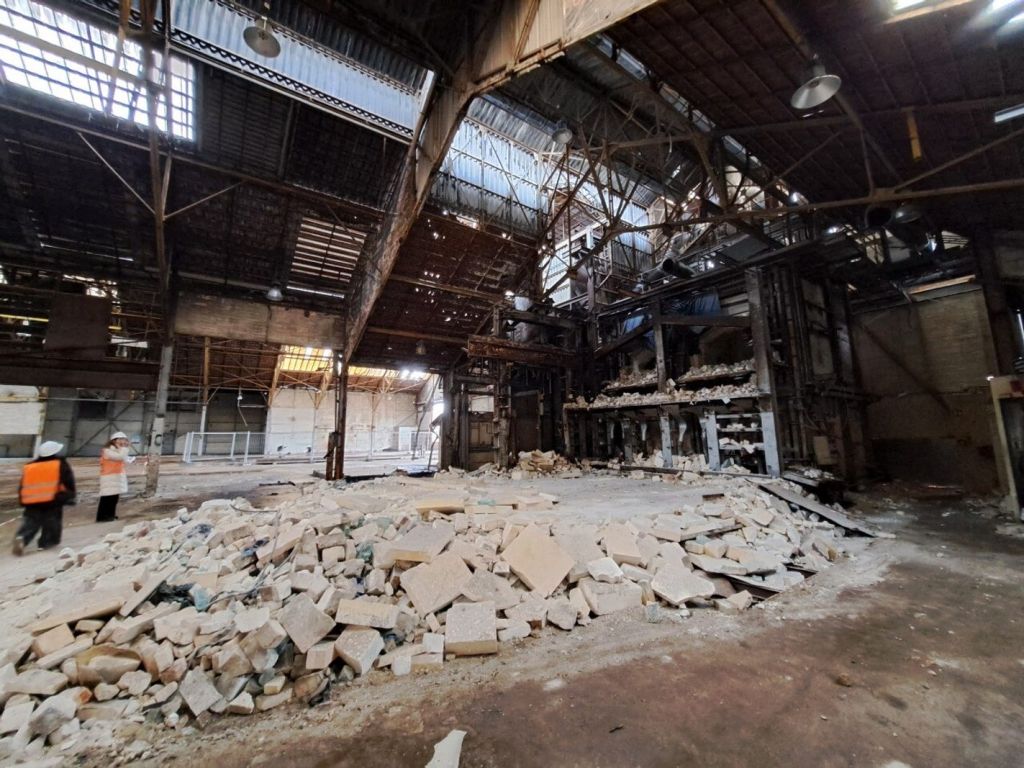
Preparing the Holophane site is a complex operation requiring specialised technical expertise. The funding envelope of 1.8 million euros excl. VAT is specifically dedicated to the crucial first phase: environmental and structural securing. The old industrial buildings, some dating from the beginning of the last century, contain materials such as asbestos that must be removed under strict protocols to guarantee the safety of future users and compliance with current environmental standards. The deconstruction will not be total, but selective, in order to free up the space needed for new construction while preserving the soul of the site.
This phase of work, scheduled to begin in autumn 2026, is an essential prerequisite for the final signing of the sale. It demonstrates the local authority’s determination to fulfil its responsibilities in managing industrial land. By delivering a “ready-to-build” site in January 2028, Seine Normandie Agglomération removes the main risks associated with brownfield redevelopment, a traditional obstacle for private investors. It is this public effort that partly justifies the subsequent sale for a symbolic one euro, with the public interest served by the site’s decontamination and the massive creation of sustainable jobs.
Funding a major industrial redevelopment
The financing of this first operational phase relies on close cooperation between local and regional public stakeholders, illustrating strong regional solidarity. During the session on 29 June 2026, the intercommunal authority approved an essential budget amendment to launch the deconstruction and asbestos removal work on the superstructures. This major project benefits from valuable co-funding from the Normandy Region and the Établissement Public Foncier de Normandie (EPFN), whose role is specifically to assist local authorities in recycling complex industrial land. This financial synergy reflects the strategic importance of this project for the entire regional economy.
The involvement of EPFN ensures rigour in addressing potential pollution and managing land. The Normandy Region, for its part, sees this project as an opportunity to enhance its appeal to advanced industries and the luxury sector, which serve as vectors of economic stability. The financial structure adopted smooths the budgetary impact for the town of Les Andelys and the intercommunal authority, while guaranteeing that the Holophane site does not remain an industrial eyesore in the middle of the Seine Valley. This proactive approach to regional planning is exemplary of the new reindustrialisation methods in France.
Preserving remarkable heritage elements
The arrival of Hermès does not mean the erasure of this historic location’s identity. The former factory, which produced world-renowned automotive and industrial optics from 1921 to 2024, possesses architectural charm that authorities, local associations, and the luxury maison wish to preserve. Respect for built heritage is a core value for Hermès, which often seeks to integrate its manufactures into meaningful architectural settings. The redevelopment specifications explicitly include preserving the manor house, the former school associated with the site, and the monumental chimney, a true industrial beacon in the landscape of Les Andelys.
Integrating the future leather goods workshop into a setting respectful of Norman industrial heritage, the project spans over 42,000 sq m. This generous footprint will allow bright workspaces to be designed, meeting the high standards of comfort and ergonomics of the maison Hermès, while retaining traces of the site’s glassmaking past. The chimney, in particular, will remain a symbol of productive continuity in Les Andelys, serving as a reminder that while the nature of production changes, the excellence of local craftsmanship remains constant. This alliance between modernity and industrial memory contributes to the project’s social acceptance and aesthetic success.
Environmental challenges and the redevelopment of industrial brownfields
The Holophane brownfield project aligns fully with national ecological transition goals, particularly the fight against soil artificialisation. By choosing to redevelop an existing site rather than build on agricultural land, Hermès and local authorities are choosing sustainability. Decontamination and asbestos removal are costly and complex stages, but they make it possible to breathe new life into strategic land without degrading the surrounding natural environment. This type of “rebuilding the city on the city” project has become a model for responsible economic development.
Furthermore, the design of the new manufacture is expected to incorporate high environmental standards in line with the commitments of the maison Hermès. Optimising energy consumption, water management and using sustainable materials for new extensions will complement the renovation of old buildings. The goal is to create an exemplary site capable of enduring through the coming century, just as the Holophane factory marked the previous one. Transforming a former glassworks into a high-end leather goods workshop perfectly illustrates the concept of a circular economy applied to industrial planning.
A major economic lever for the Seine Valley
A major socio-economic impact for the region
For the municipality of Les Andelys and its surroundings, the arrival of the saddler and leather craftsman is a strong signal of resilience following the difficult period marked by the loss of 208 jobs when the former optical production site permanently closed. The announced creation of 260 new positions by Hermès not only compensates for these losses, but also sustainably re-energises the local employment basin with long-term prospects. Unlike certain industries subject to sharp market fluctuations, the luxury sector stands out for its stability and steady growth, offering valuable security for local families.
Beyond leatherworking roles, the entire ecosystem of the Seine Valley hopes to benefit from the prestige generated by this manufacture of excellence. The influence of a brand like Hermès will inevitably attract new services and local business activity to meet the needs of new employees and visitors. Town-centre shops, public services and urban development projects will benefit from this renewal. A truly positive chain reaction is expected, strengthening the standing of Les Andelys as a vibrant town capable of attracting prestigious investment while caring for its heritage and residents.
The schedule for a managed industrial transition
The process follows a rigorous schedule to ensure delivery of a ready-to-build site by early 2028. Although this timeline may seem far off, it is necessary to complete all required technical studies, environmental assessments, and decontamination operations. A preliminary sales agreement will be officially signed with the maison Hermès before the end of 2026, legally confirming the transfer of land and setting mutual commitments. This agreement will seal the sale for a symbolic one euro, a strong gesture from the intercommunal authority in exchange for the luxury maison’s firm commitment to job numbers and high-quality sustainable redevelopment.
Once the land is delivered in 2028, the construction phase proper will begin, integrating preserved historic structures and modern new workshops. The first artisans are expected to take possession of their new work tools and workbenches by 2030, marking the culmination of an exemplary industrial metamorphosis lasting nearly a decade between the closure of the Holophane factory and the inauguration of the manufacture. This long timeframe guarantees a solid, well-considered project perfectly integrated into its social and geographical environment, ensuring a fruitful partnership for the maison Hermès and the town of Les Andelys for decades to come.