

In brief
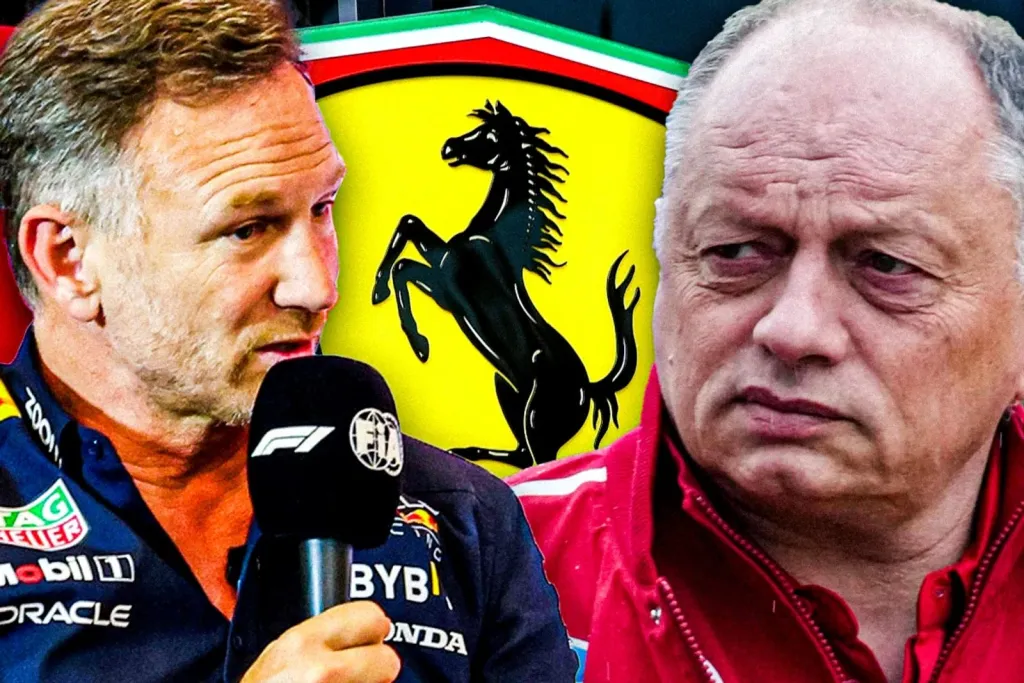
- Christian Horner expresses his regrets following the controversy linked to his comments on Scuderia Ferrari, highlighting how the publication schedule distorted the interpretation of his thoughts in an ultra-sensitive paddock.
- The interview given to The Times was conducted a month before its publication, creating an unfortunate media collision at the worst possible time for the internal management of the Italian structure.
- These statements, initially intended to salute the historical prestige of the Maranello manufacturer, caused significant media agitation and destabilised the hushed landscape of British and Italian team management.
- To extinguish the fire and protect the balance of its sporting governance, Ferrari management had to intervene publicly to reaffirm its official position.
- Ferrari had to organise an emergency press exchange to confirm its confidence in Frédéric Vasseur and extinguish rumours of managerial destabilisation. This exceptional clarification aims to preserve the serenity of the technical and strategic staff at a pivotal moment in the Formula 1 World Championship.
- Faced with the proliferation of speculation in international specialised media, the Prancing Horse manufacturer deemed it imperative to lock down its institutional communication to avoid any doubt among its partners, sponsors, and team members.
An unexpected media storm
The world of Formula 1 is accustomed to media storms, but certain statements take on an unexpected scale depending on particularly intense sporting news. Christian Horner recently found himself at the heart of a heated controversy after comments made regarding Scuderia Ferrari. By describing the Italian team as a dream destination in motorsport, the former Red Bull team principal unintentionally fuelled speculation about the future of Frédéric Vasseur at the head of Maranello’s sporting management. In this discipline where every word spoken by a major manager is dissected by international press observers, the impact of these remarks exceeded the author’s expectations.
The environment of the Formula 1 World Championship relies on a permanent balance between technical rivalry on the track and psychological warfare in the paddocks. Team principals are omnipresent figures, regularly called upon by global media to comment on the performance of their drivers, regulations, or personnel movements. Red Bull Racing and Scuderia Ferrari embody two giants with radically opposed cultures: on one side, a structure built on the modern Anglo-Saxon culture of efficiency with the energy drink brand; on the other, the mythical cradle of Italian motorsport based in Emilia-Romagna, driven by the passion of an entire nation. When a leading figure from the Austrian team comments on the functioning or attractiveness of the Italian institution, the resonance in the F1 ecosystem is immediate and multiplied.
These rumours reached such proportions that Ferrari had to urgently organise an exchange with the media to publicly reaffirm its confidence in the French leader. Speaking to clarify the situation, Christian Horner admits that the publication schedule of his remarks was particularly unfortunate, while ensuring that he never sought to destabilise his counterpart. This proactive reaction from Maranello officials testifies to the extreme nervousness that governs the Formula 1 media ecosystem as soon as it concerns the top of the Italian hierarchy.
In Maranello, the pressure from the Italian press is unique in the world. La Gazzetta dello Sport, Tuttosport, or Il Corriere dello Sport daily analyse the actions and gestures of the members of the Gestione Sportiva. Any perceived hesitation at the top of Ferrari’s managerial pyramid is seen as an institutional weakness. The urgency of the press conference organised by the Scuderia therefore responded to a need for internal protection: to reassure the group’s management in Turin, guarantee the stability of the engineering group, and cut short any attempt at external interference in the roadmap established by the French management.
The genesis of a media misunderstanding
To understand how a statement of courtesy could turn into a political controversy, it is necessary to analyse the workings of modern sports journalism. Long-form interviews granted to the national daily press obey very strict scheduling constraints. The timing of a recording rarely corresponds to the timing of its broadcast, which sometimes creates dangerous anachronisms when news evolves rapidly in the meantime.
The genesis of a misunderstanding
The origin of this controversy dates back to an interview given to The Times newspaper as part of the promotion for his autobiography. Conducted nearly a month before its publication, this interview took place simply with a passionate journalist. Christian Horner simply wanted to express the respect that the world of motorsport holds for Ferrari. It was a long-term exchange, designed to trace an entire prolific career at the head of Red Bull Racing and to deliver a philosophical vision of the great figures of world motorsport.
The British leader then highlighted the privilege of working for such a mythical institution, particularly for a professional of Italian origin. However, the delayed publication of the article occurred at the exact moment when tensions surrounded the team during the Monza and Madrid events, transforming a remark of esteem into a media spark. The sequence of European races constitutes a pivotal moment in the calendar, where every technical result on the track is scrutinised and where rumours of the transfer market or executive personnel intensify drastically.
When an interview recorded four weeks earlier surfaces during a Grand Prix weekend at the height of sporting tension, the original contextual filter completely disappears. Phrases spoken philosophically about the greatness of Maranello are read through the prism of the most immediate present, namely that of the results of the last race weekend, the Scuderia’s crisis meetings, and debates on the performance of the technical project. It is precisely this time-lag phenomenon that trapped the British director.
Catchy headlines and unnecessary pressure
The distortion of the initial message materialised in press headlines claiming that joining Ferrari was the leader’s personal dream. Christian Horner categorically denies having stated that Ferrari was his personal dream. The association of these journalistic shortcuts with the internal context of the Italian team immediately created a shockwave in the paddock, from the specialised English press to Italian radio stations.
In the digital and social media era, the wording of article headlines often follows a logic of audience seeking. By isolating a sentence from its overall development and removing the nuances relating to Italian professionals in the sector, reports presented these comments as a direct overture from the Englishman to the Italian firm, or even as an underlying criticism of the work provided by Maranello’s current management. This media ready-to-think spread at lightning speed in all the languages of Formula 1.
Having led a top team subject to a permanent obligation of results allows Christian Horner to measure the burden that weighs on the shoulders of a team boss. He thus expresses real empathy towards Frédéric Vasseur, regretting that a temporal coincidence could have added extra pressure on the Frenchman’s shoulders. The task of turning around a giant like the Scuderia requires absolute concentration and unwavering support from its hierarchy, far from any unsolicited external distraction.
The workings of communication in Formula 1
This episode highlights the extreme complexities of modern communication within the pinnacle of motorsport. Team principals are no longer just technicians or sporting directors; they act as permanent ambassadors for billion-dollar brands and global commercial partnerships. The slightest imprecision in a public interview can alter the perception of sponsors, investors, and fans across the world.
To clarify his remarks and restore the factual truth of events, the choice of distribution channels proves crucial. Highly renowned specialised podcasts now offer a longer and more nuanced speaking space than traditional post-race press conferences. By choosing respected specialised media to provide his corrections, the British manager ensured that his explanations would be transcribed with the required precision without risking further journalistic distortion.
Key points of the case
- Team concerned: Scuderia Ferrari
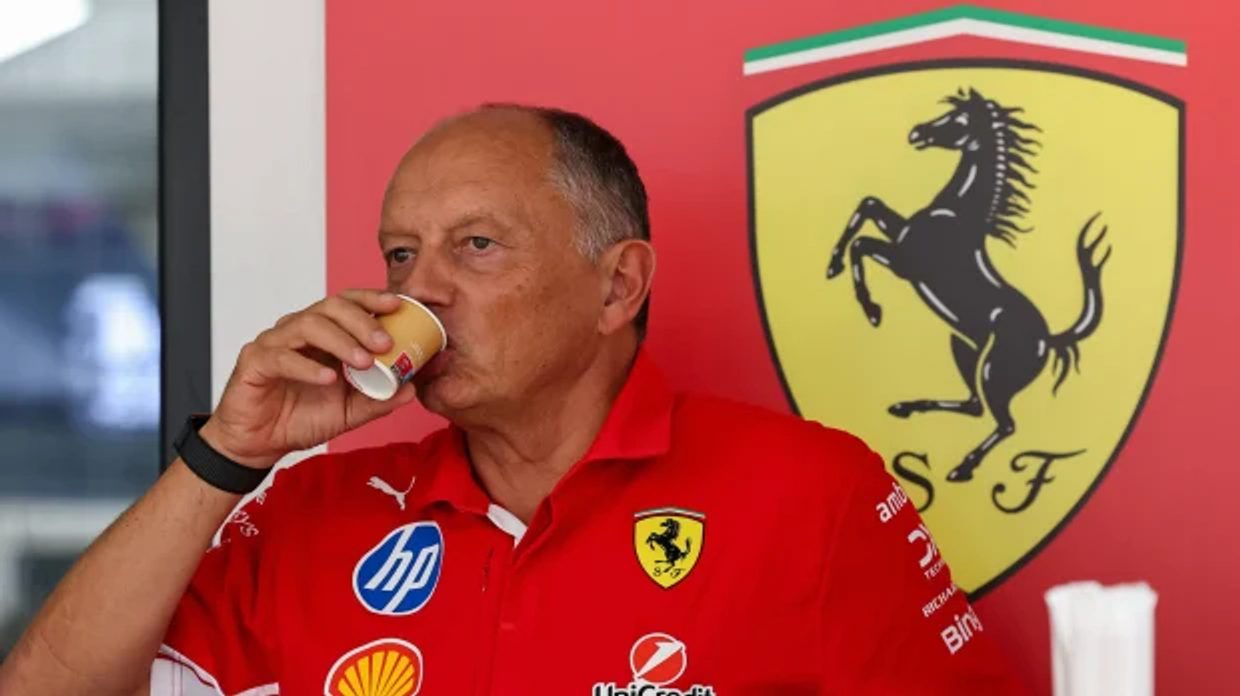
- Leader targeted by rumours: Frédéric Vasseur
- Author of the statements: Christian Horner
- Initial medium: Interview given to The Times (promotion for the book ‘Drive’)
- Clarification channel: The Race Podcast
A context of tension at Ferrari
A tense climate at Scuderia Ferrari
This sequence occurs in an already electric climate around the Prancing Horse team, marked by rumours of internal influence struggles and discussions about the future integration of Lewis Hamilton. In this highly competitive environment, the slightest sentence from a prominent personality can be reinterpreted and amplify existing tensions. The announced arrival of the seven-time world champion British driver represents an organisational and media earthquake for Maranello, forcing the structure to review its internal balances and working methods for the coming seasons.
The integration of such a figure in world motorsport requires total managerial stability. The mission entrusted to Frédéric Vasseur consists of building a technical and human framework capable of providing the team with the necessary tools to fight regularly again for the drivers’ and constructors’ world titles. Any doubt instilled about his legitimacy or the sustainability of his mandate risks weakening the recruitment of key engineers from other teams in the paddock, a sector where confidence in governance is paramount.
For Christian Horner, this episode illustrates how benevolent or general remarks can be disconnected from their initial context. By reaffirming his respect for the Maranello institution and its current boss, the Briton intends to close an unfortunate media chapter. The relationship between team principals, although marked by fierce rivalries on the track to win championships, also relies on mutual respect in the face of the extraordinary demands of their respective roles.
As the Formula 1 season moves towards its decisive stages, teams seek to eliminate any source of peripheral distraction. For Ferrari as for Red Bull Racing, attention must refocus exclusively on car optimisation, tyre wear management, race strategies, and aerodynamic development. This communication episode will undoubtedly serve as a case study for press relations management in Formula 1, reminding us that in this sport where gaps are measured in thousandths of a second, words travel even faster than cars on the track.