
In brief
- On 28 April 2026, Chanel presented its cruise collection at the Casino municipal in Biarritz, marking Matthieu Blazy’s first show for the maison.
- The family-owned company controlled by the Wertheimer family achieved $19.3 billion in revenue in 2025, generating an operating profit of $4.7 billion.
- The strategic acquisition of the Villa Larralde illustrates the shift from storytelling to ‘storyproving’ to consolidate the brand’s symbolic capital.
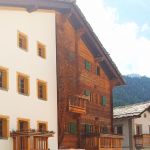
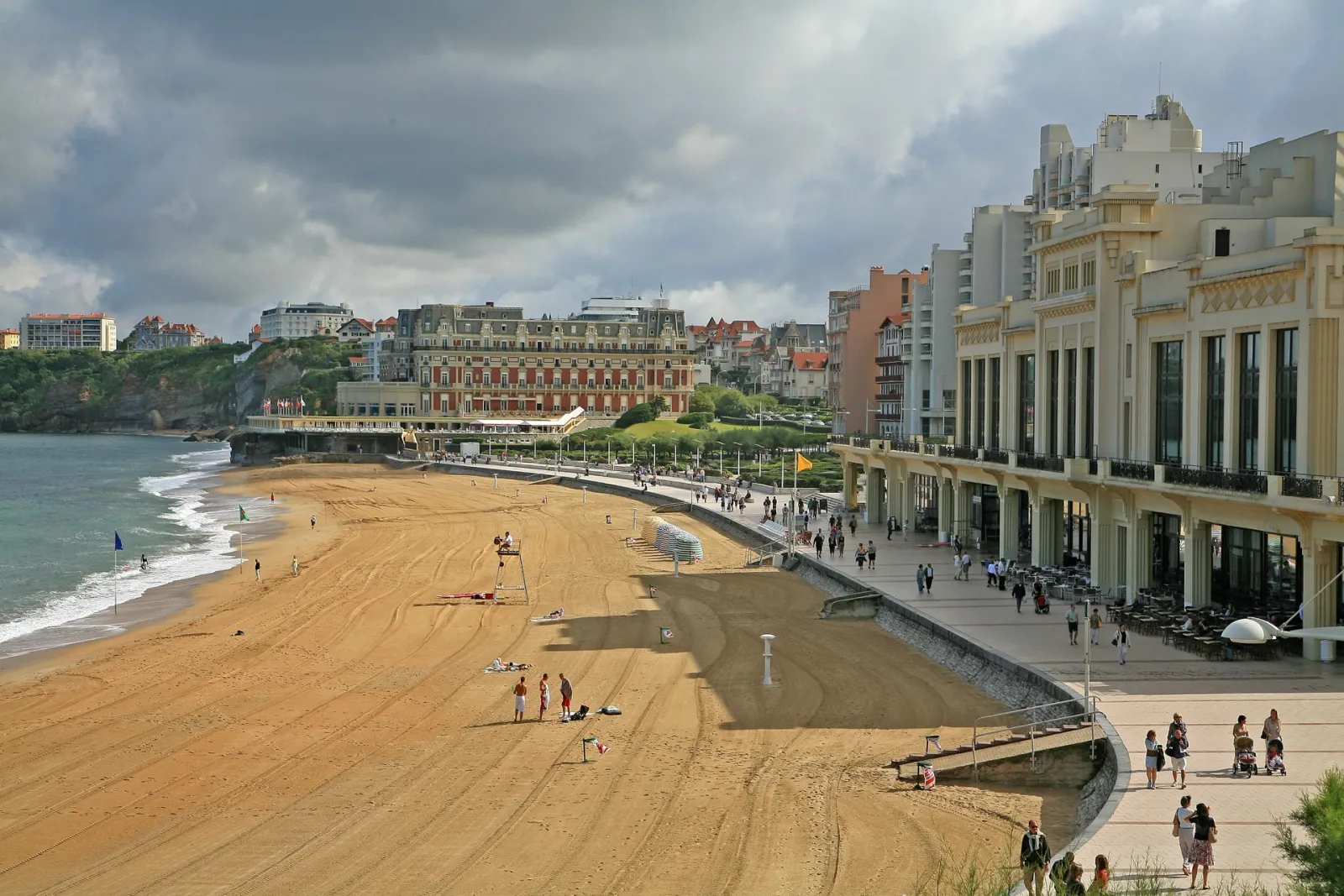
By presenting its 2026-2027 cruise collection at the Casino municipal in Biarritz on 28 April 2026, the maison Chanel orchestrated far more than a simple fashion event marking the debut of its new artistic director, Matthieu Blazy. This return to the Basque coast, where Gabrielle Chanel had established her first couture house in 1915 within the Villa Larralde, is part of a major strategic move. By reinvesting in this founding location and progressively acquiring the historic building, the family business demonstrates how the maison Chanel transforms its historical past into an economic, symbolic and strategic resource to legitimise its positioning in contemporary luxury.
Family independence serving the long term
An economic model anchored in the long term
Unlisted on the stock exchange and under the exclusive control of the Wertheimer family, the maison Chanel benefits from a unique shareholding structure. This independence allows the brand’s trajectory to be mapped out over the long term, far from the tyranny of quarterly results imposed on large listed groups. The 2025 financial results illustrate the strength of this model, with revenue of $19.3 billion (approximately €16.7 billion), up 2% at constant exchange rates, and an operating profit reaching $4.7 billion.
However, the pursuit of financial profit alone does not explain the trade-offs made by such a company. Academic management literature, particularly research on socio-emotional wealth, shows that owning families seek above all to preserve the socio-emotional wealth and strategic autonomy of their group. At Chanel, this attachment to independence directly echoes the founding story of Gabrielle Chanel, who placed freedom of decision at the heart of her creative and personal approach.
The metamorphosis of heritage into symbolic capital
The second lever mobilised by the maison lies in the conversion of its history into symbolic capital. According to the theory conceptualised by Pierre Bourdieu, symbolic capital corresponds to the prestige and legitimacy conferred on an actor when their cultural and historical resources are recognised as legitimate by the public. In the luxury sector, the act of purchase is not limited to acquiring a product: it confirms an allegiance to an origin, a rarity and a piece of cultural history.
The territorial anchoring in Biarritz offers a material manifestation of the brand narrative. Reintegrating the Villa Larralde into the company’s real estate and commercial portfolio allows the brand to be anchored in the tangible materiality of a highly meaningful territory. An archive, a date or a referenced location prove infinitely more persuasive than a simple billboard campaign celebrating a brand’s longevity. The free and non-conformist path of Mademoiselle Chanel thus continues to nurture the prestige of the maison.
The strategic selection of the historical narrative
Any company that exploits its past carries out a methodical sorting of the events, figures and places in its history. The return to Biarritz perfectly illustrates this selective reactivation of memory. The aim is to build a natural bridge between the vision of the new artistic director, Matthieu Blazy, and the founder’s heritage, in order to produce a sense of continuity around the new artistic director through creative successions.
This mechanism recalls the concept of ‘invented tradition’ formulated by Eric Hobsbawm and Terence Ranger. It is not a matter of inventing a fictional story, but of selecting and ordering real facts to generate an impression of permanence. Gabrielle Chanel had herself shaped her own legend by carefully choosing the episodes of her life she wished to highlight. The maison perpetuates this memory engineering by adapting its narrative to current strategic challenges.
The decisive shift from storytelling to storyproving
From storytelling to storyproving
For several decades, storytelling has been the pillar of communication for luxury houses. However, at a time when all players claim a heritage, narrative alone is no longer enough. The sector is witnessing a shift towards ‘storyproving’, an approach that requires providing concrete elements to support the brand discourse.
In Biarritz, the Villa Larralde embodies this evolution: it brings together on a single site an attested historical origin, a commercial activity with the opening of a pop-up boutique, and a space dedicated to promoting artistic craftsmanship. The workshops, archives and places of memory become tangible arguments, providing indisputable material proof of its authenticity to a demanding public.
The new challenges of luxury legitimacy
The new challenges of legitimacy
The transformation of heritage into proof addresses a major concern: making luxury acceptable in a world marked by socio-economic tensions and increased demands for transparency. Founded on exclusivity and distinction, luxury must continually justify its cultural and societal value. Highlighting heritage allows the focus to shift from ostentation to the preservation of artistic crafts, the transmission of skills and the sustainability of excellence.
Nevertheless, invoking the past alone cannot resolve contemporary issues of traceability, environmental impact or working conditions. To maintain its legitimacy, the maison Chanel must demonstrate the consistency of current practices with a heritage of excellence, proving that its overall approach meets the environmental and ethical standards of its time.