

In brief
- The request for a public consultation submitted by four Spa citizens regarding the retention of the municipal administration has been declared inadmissible by the municipality of Spa.
- The mayor of Spa, Nicolas Tefnin, favours a global public information phase scheduled for the end of September 2026.
- This redevelopment includes the acquisition of iconic buildings such as the Villa Royale, the Vaux-Hall or the Britannique to preserve local heritage.
- The political opposition, led by Frank Gazzard (Alternative Plus), strongly contests this rejection of the public consultation.
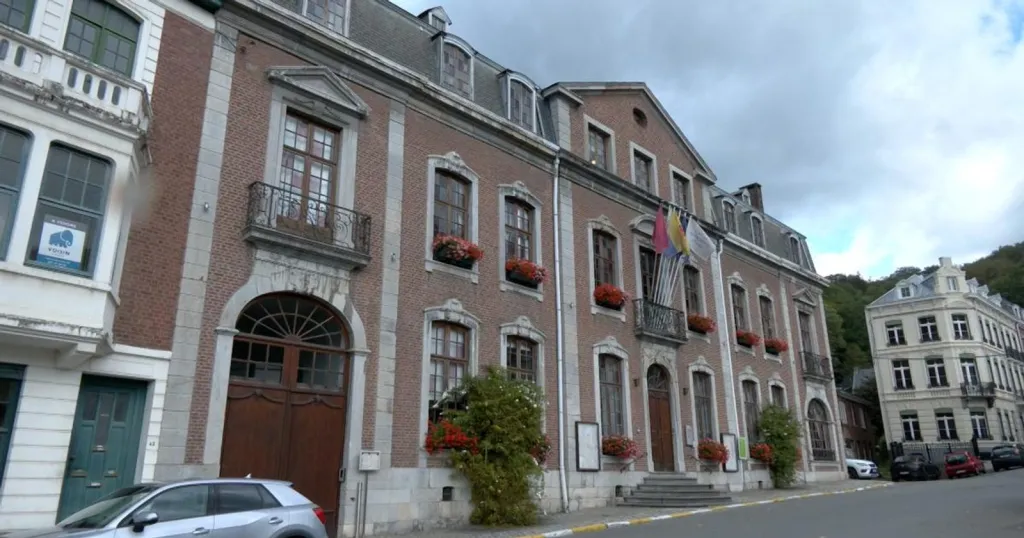
The question of the future of Spa Town Hall will not be the subject of a local referendum, as the request for a public consultation initiated by a citizens’ collective was officially rejected by the municipal authorities in early September 2026. In Spa, the preservation of historical heritage is accompanied by a deep reflection on the development of the spa town, contrasting the desire for direct participation by residents with the vision of global redevelopment put forward by the municipality. This confrontation highlights the tensions inherent in the modernisation of historic urban centres, where the sentimental and heritage value of an iconic building must be reconciled with the requirements of rational and modern administrative management. The fate of the town hall thus crystallises passions within this famous spa resort, renowned for its architectural wealth.

A citizens’ initiative deemed too restrictive
The wording of the citizens’ question was deemed too binary by the municipal majority to accurately reflect the complexity and nuances of an urban redevelopment project of this scale. For the authorities, answering yes or no to such an issue obscured the major development challenges arising from it. The administration of a historic town involves many parameters that go beyond the simple physical location of its administrative offices. Financial, logistical, environmental and energy aspects must indeed be addressed in a coordinated manner, which a yes-or-no vote does not allow to be reflected with the precision required for public decision-making.
A citizens’ initiative rejected by the municipality
Four Spa citizens had submitted a formal proposal to directly consult the population on whether or not to keep the municipal services in their historic setting. The question, which was particularly direct, aimed to determine whether residents approved of keeping the administration at its current address. Although the initiative gathered the required signatures to be examined, the municipal council decided to reject the admissibility of this direct approach.
This rejection is based on the analysis of the decision-making structure required for the long-term development of the town. The authorities believe that structural urban planning cannot be conceived in a piecemeal or isolated manner. Maintaining old infrastructure requires increasingly heavy maintenance budgets, which are often incompatible with the thermal insulation and universal accessibility constraints required for public services in the twenty-first century. In fact, the municipal council considers that democratic responsibility implies making global, reasoned choices rather than delegating an isolated decision lacking a clearly defined overall plan.
The global vision for Spa Town Hall
For the town’s mayor, Nicolas Tefnin, the issue is not simply about moving offices, but is part of a global restructuring of the Spa territory. Rather than a polarising vote, the municipality is favouring a detailed educational explanation phase. The relocation of the elegant building will thus be accompanied by a transparent presentation of future developments.
Mayor Nicolas Tefnin announced that a public information session will be held at the end of September 2026 to detail the future prospects for citizens and explain the viability of the urban redevelopment project. This communication approach is intended as a constructive alternative to the rejected public consultation process. It will offer an opportunity to present all the technical studies carried out, clarify the energy costs of the current town hall, and outline the expected benefits of centralising services in more functional premises better suited to the requirements of today’s public service.
The heritage challenges of a historic spa town
The case of Spa is set in a heritage context of exceptional richness. The town, famous for its healing thermal springs and remarkable architecture, attracts visitors from all over the world. This international renown, while an indisputable tourist and economic asset, also imposes heavy responsibilities on local authorities in terms of historical preservation. Restoring and maintaining century-old buildings requires specific expertise and represents a colossal financial investment for a municipal administration.
Adapting old buildings to contemporary safety, digital connectivity and energy performance standards is often complex and costly. In this context, the use of historic monuments as purely administrative office spaces is regularly called into question. Transferring services to modern infrastructure ensures optimal working conditions for staff while freeing up heritage spaces for activities that showcase their history and make them more accessible to the public.
The redevelopment of an architectural heritage
A global strategy for Spa’s heritage
Behind this controversial move lies an ambitious acquisition strategy aimed at safeguarding local architectural landmarks. The City of Spa aims to regain control of several iconic buildings left vacant or threatened with decay, in order to breathe new life into them for public, cultural and commercial interest.
The City of Spa is thus considering the acquisition of prestigious monuments such as the Villa Royale, the Vaux-Hall or the Britannique to give them a sustainable purpose.
These structures, which marked the golden age of Spa’s history, represent unique opportunities for urban regeneration. The Villa Royale, for example, evokes the town’s aristocratic past and the stays of prominent historical figures. The Vaux-Hall, an eighteenth-century architectural masterpiece, and the Britannique, a former luxury hotel, are privileged witnesses to the resort’s prestige. Their preservation by the community prevents these masterpieces from falling into neglect or becoming the subject of property speculation contrary to the interests of the residents.
According to the first alderman Alda Greoli, this reorganisation will structure the town into distinct thematic hubs: a cultural hub, a youth and sports hub, a modern administrative hub ensuring the well-being of the town’s employees, and a vast commercial hub in the town centre. The objective is to offer a different urban interpretation, focused on enhancing heritage for the benefit of the daily lives of Spa’s residents.
The creation of these different hubs aims to breathe new life into local proximity and efficiency. By grouping services by competence and theme, the municipality hopes to make daily life easier for residents while making the town more attractive to visitors and investors. The future modern administrative hub will allow currently scattered services to be grouped together, improving synergy between departments and thereby reducing energy and travel costs. At the same time, the cultural and commercial refocusing will bring life back to key historic areas of the town.
Democratic dialogue and local consultation
The rejection of the request for a public consultation raises the question of dialogue tools between elected officials and citizens in the management of large-scale projects. While many residents express a growing need for direct participation in local decisions, municipalities must ensure they maintain the coherence of complex development policies. The information session scheduled for the end of September 2026 is part of this desire for dialogue, offering a direct platform for exchange where everyone can express themselves and obtain precise answers from technicians and political decision-makers.
The success of such a transition depends on the authorities’ ability to reassure the population about the future of the vacated buildings. Maintaining urban activity in the town centre and ensuring the long-term accessibility of historic buildings are absolute priorities for many Spa residents. Transparency regarding the municipality’s future intentions will therefore be a determining factor in allaying the legitimate fears raised by the project to move municipal services.
Strong political opposition in the municipal council
Strong opposition within the municipal council
This decision to reject the public consultation did not fail to spark strong reactions within the municipal chamber. The opposition, led by the Alternative Plus group, expresses its dissatisfaction at what it considers a missed opportunity to directly involve citizens in the municipality’s structural choices. Led by Frank Gazzard, the minority reaffirms its desire to keep the municipal institution where it has historically flourished.
For the Alternative Plus opposition, led by Frank Gazzard, the rejection of this public consultation remains incomprehensible given the historical attachment of Spa’s residents to their town hall. The debate over the transfer of administrative services promises to continue to fuel local political discussions in the weeks to come.
The political debate in Spa around municipal heritage perfectly illustrates the divergent visions for the future of the municipality. On one hand, the majority defends a global territorial restructuring plan that it considers essential to ensure the economic viability and modernisation of the town’s services. On the other, the opposition fears a devitalisation of the historic centre and pleads for respect for the city’s identity symbols. Discussions promise to be passionate during the next municipal council sessions, with each political group preparing its arguments in anticipation of the major public explanation session scheduled for autumn 2026.