
At a glance
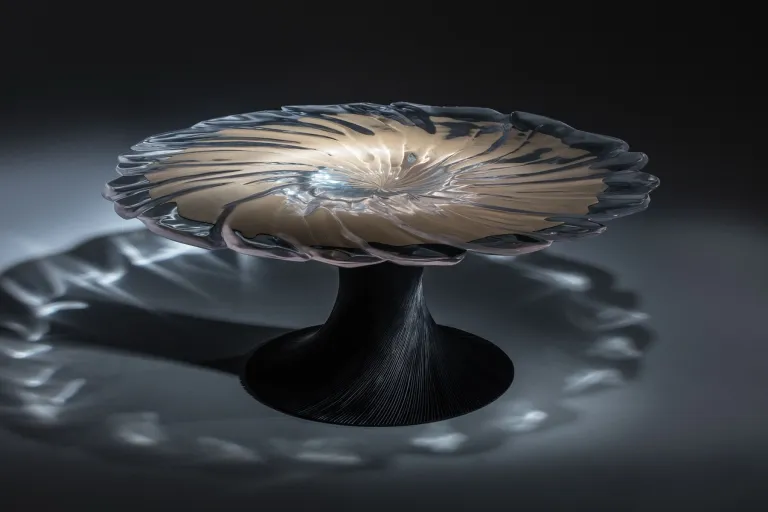
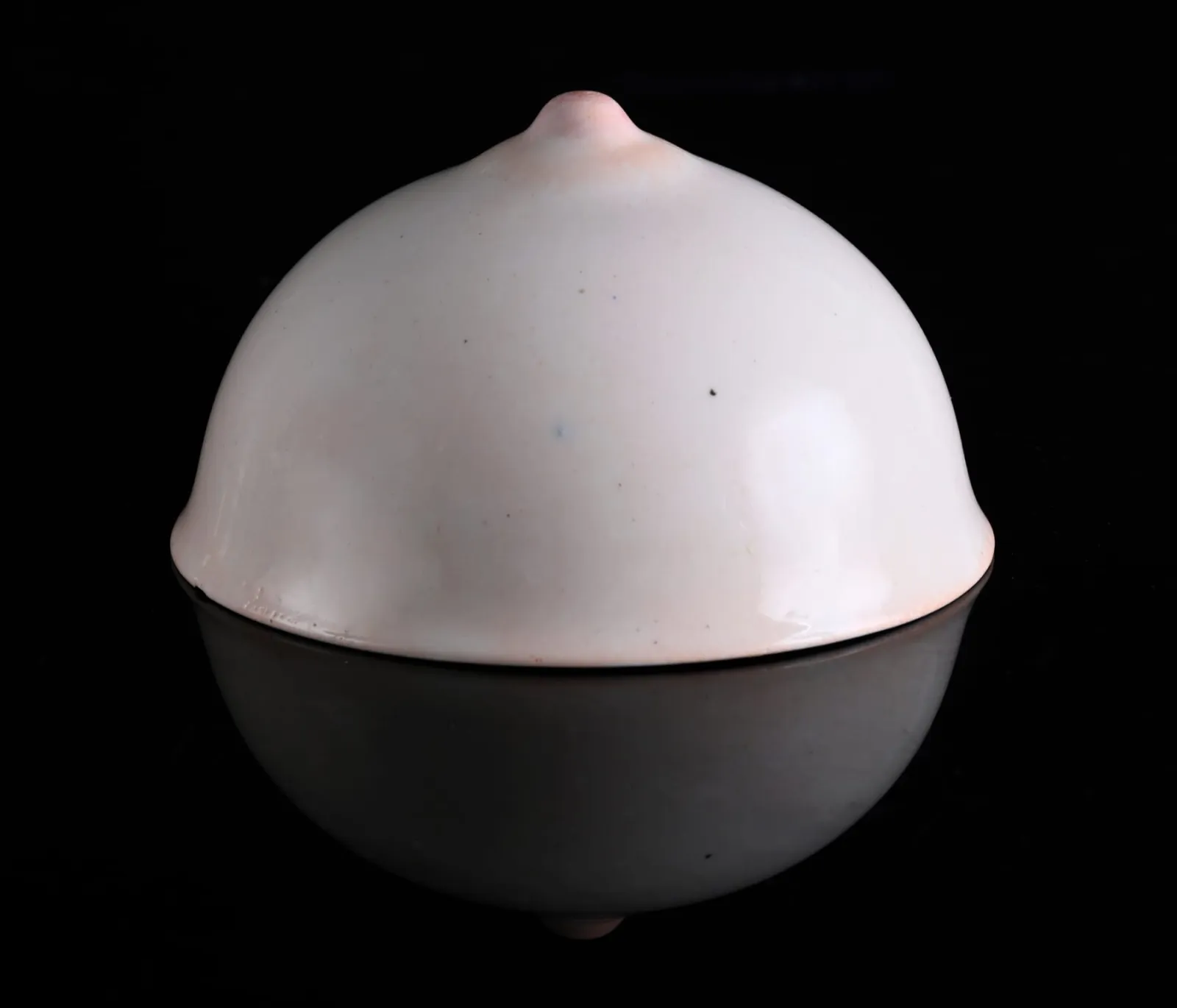
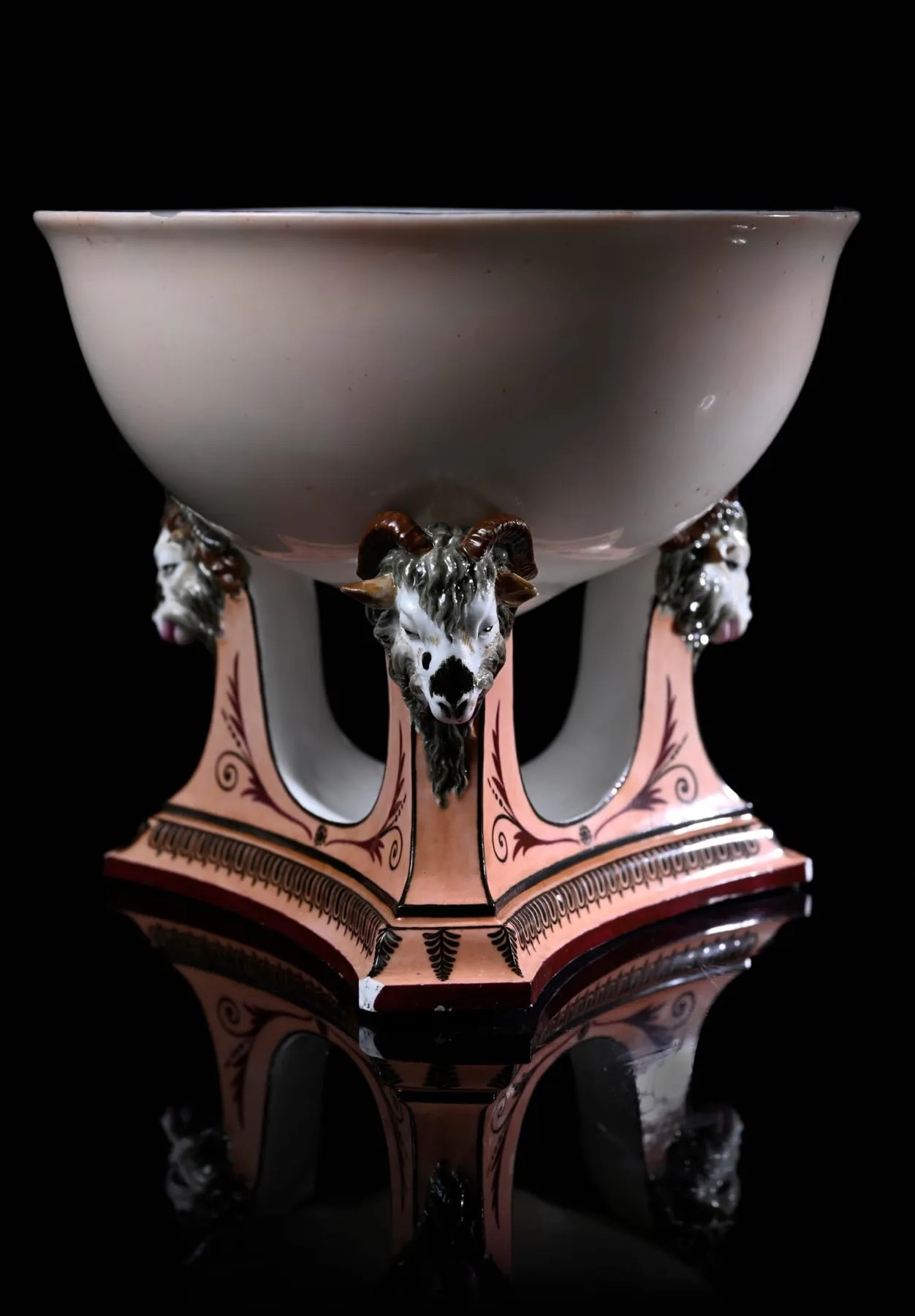
- The object: the jatte téton from Marie Antoinette’s dairy at Rambouillet, a breast-shaped Sèvres porcelain bowl resting on a tripod, dated 1787.
- Estimate: 1 to 2 million euros, excluding fees; the buyer will pay a further 30% in sale fees.
- The sale: Thursday 26 November 2026 at 6 pm, Hôtel Drouot, Paris, lot 8 of Coutau-Bégarie’s “Collection Galerie Meyer” sale.
- Rarity: the last of the four breast bowls delivered to Rambouillet, and the only one still in private hands.
- Discovery: found by chance at the bottom of a crate of porcelain from the Galerie Meyer collection.
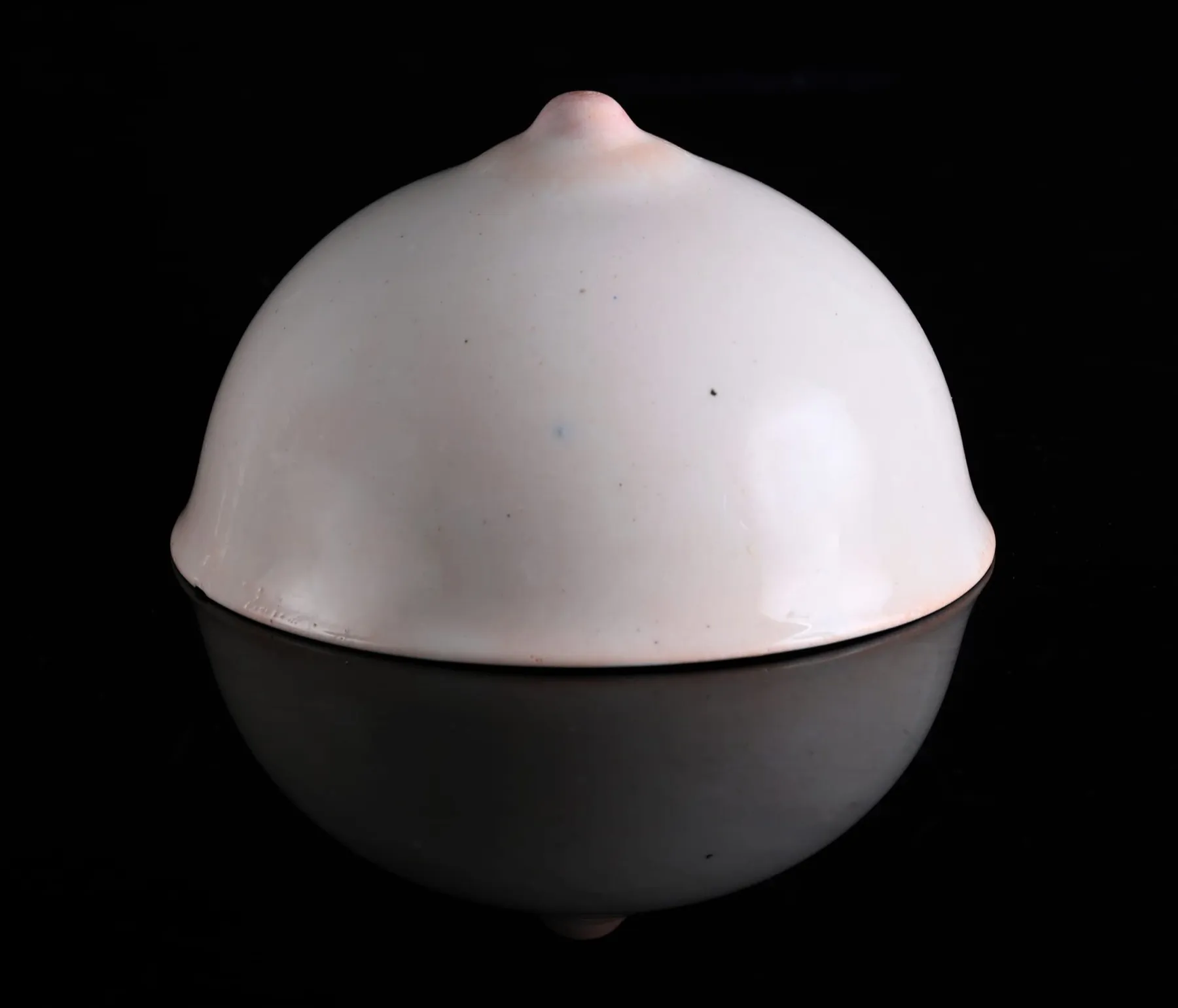
On Thursday 26 November 2026, Coutau-Bégarie will offer at Hôtel Drouot the last known jatte téton from Marie Antoinette’s dairy at Rambouillet, a breast-shaped Sèvres bowl estimated at 1 to 2 million euros. The object, its history and its legend.
What is Marie Antoinette’s breast bowl worth?
Coutau-Bégarie & Associés estimates the jatte téton at between 1 and 2 million euros, excluding fees; the successful bidder will also pay 30% in sale fees, VAT included. Lot 8 will be offered on Thursday 26 November 2026 at 6 pm in room 4 of Hôtel Drouot, under the hammer of Alexandre de La Forest Divonne. The public viewing will be open on Wednesday 25 November from 11 am to 6 pm and on Thursday 26 November from 11 am to 4 pm. According to the catalogue, part of the proceeds will go to Ruban Rose, a breast cancer charity.
Found at the bottom of a crate of porcelain
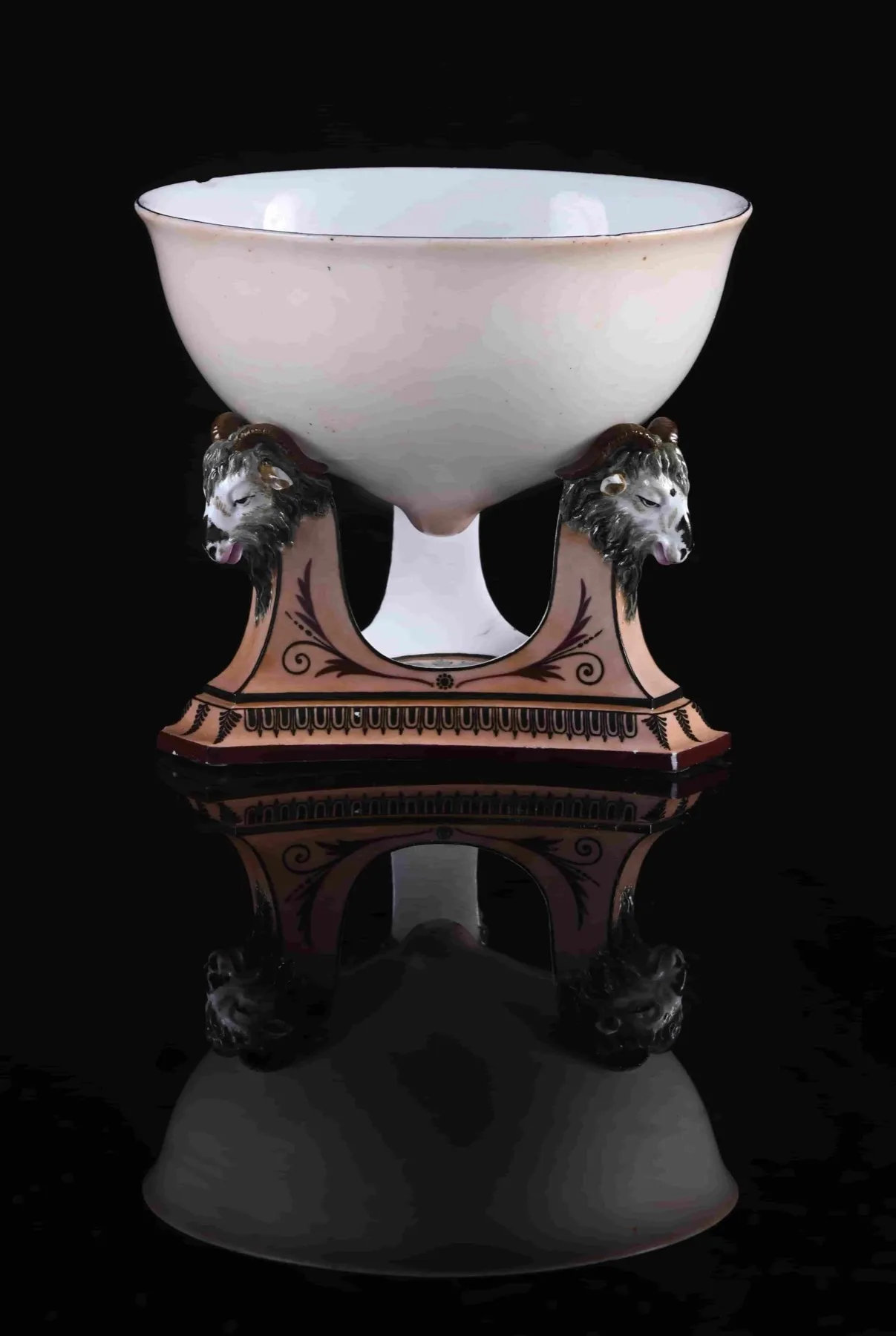
The piece was discovered by chance during the inventory of the Galerie Meyer collection, assembled by three generations of Paris dealers, wrapped in bubble wrap at the bottom of a crate: first the tripod, then the bowl. The experts and the auctioneer recognised the fourth and last known example of the Rambouillet jatte téton.
A 13 cm bowl on three goat heads
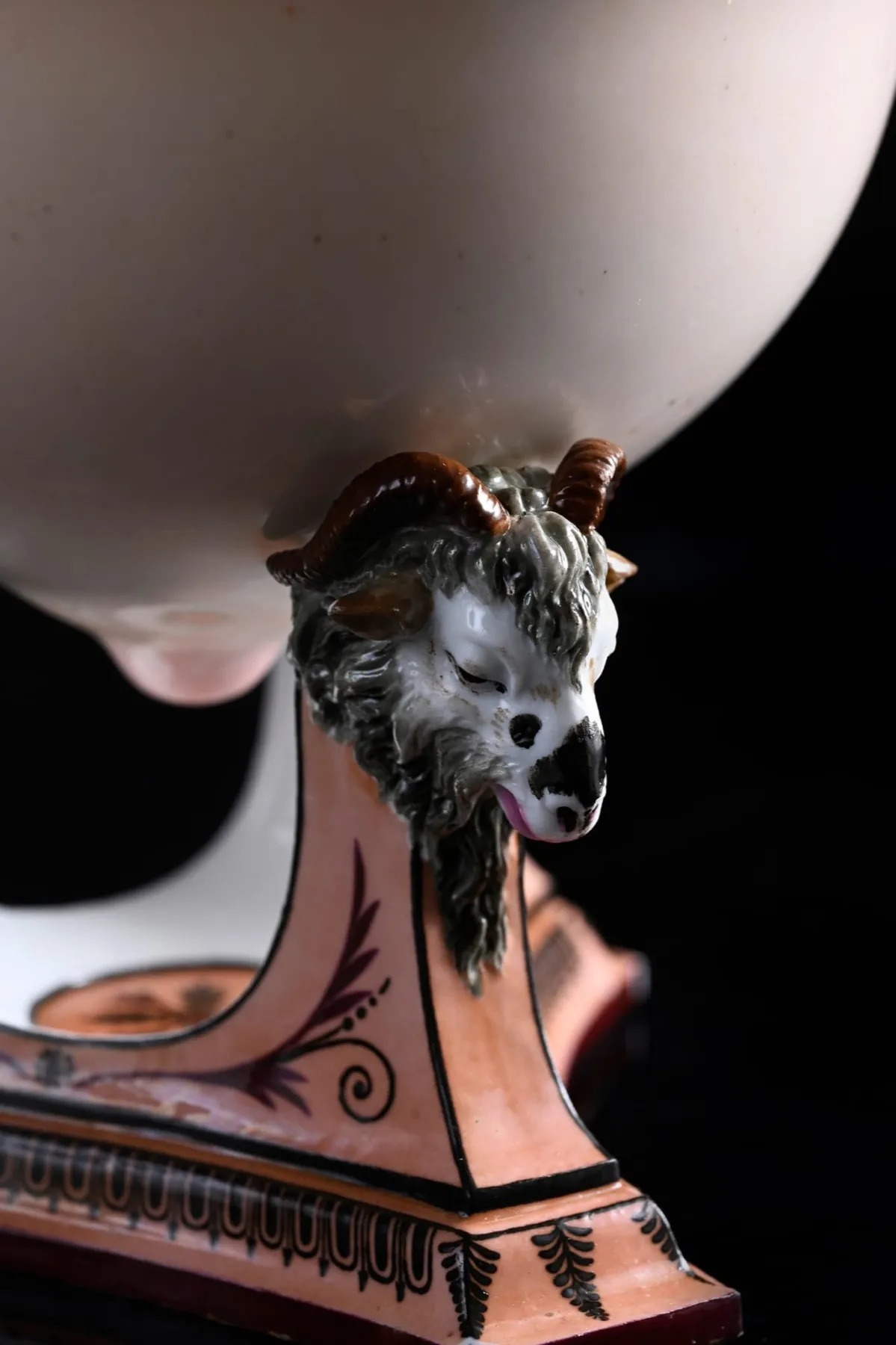
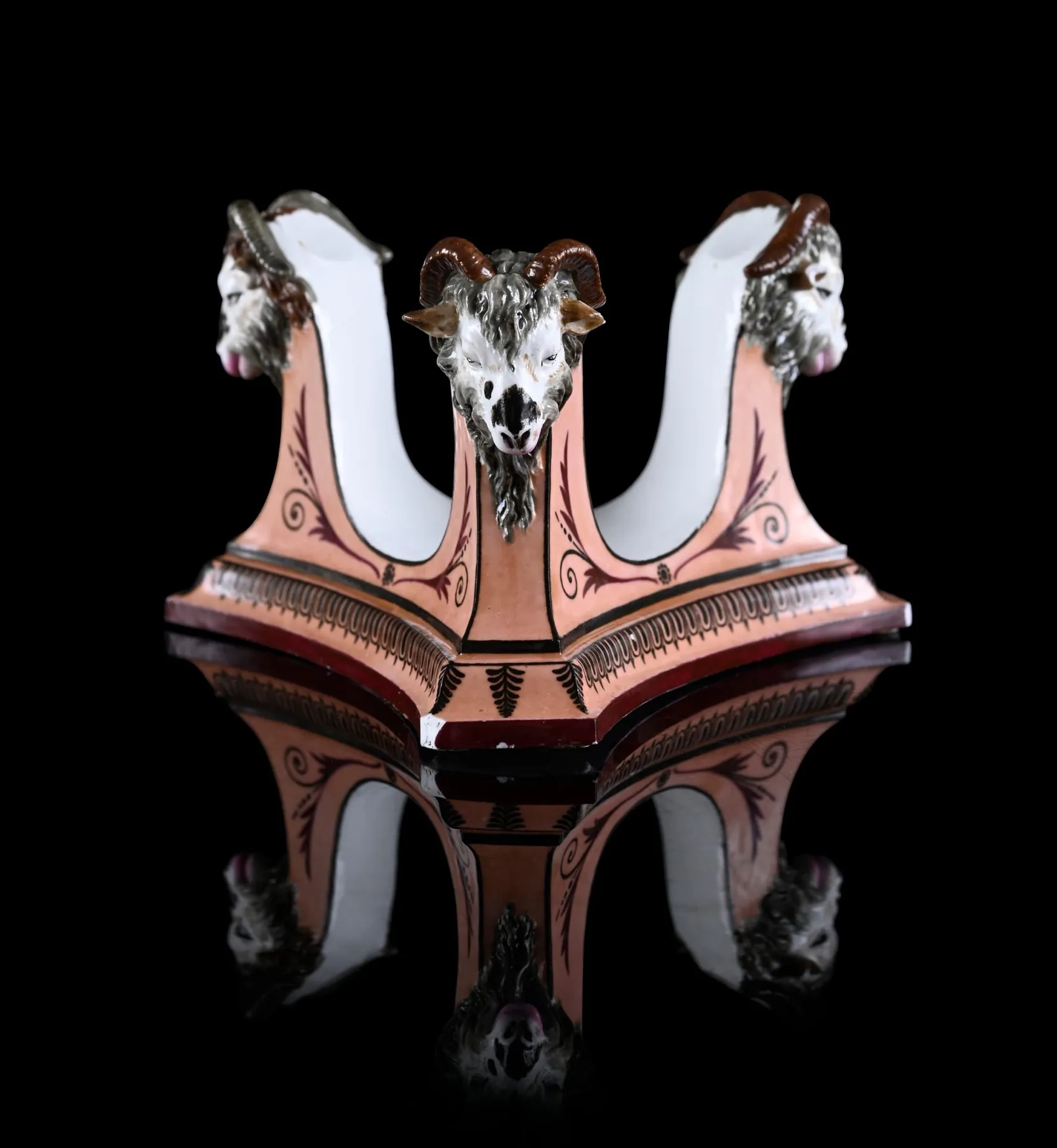
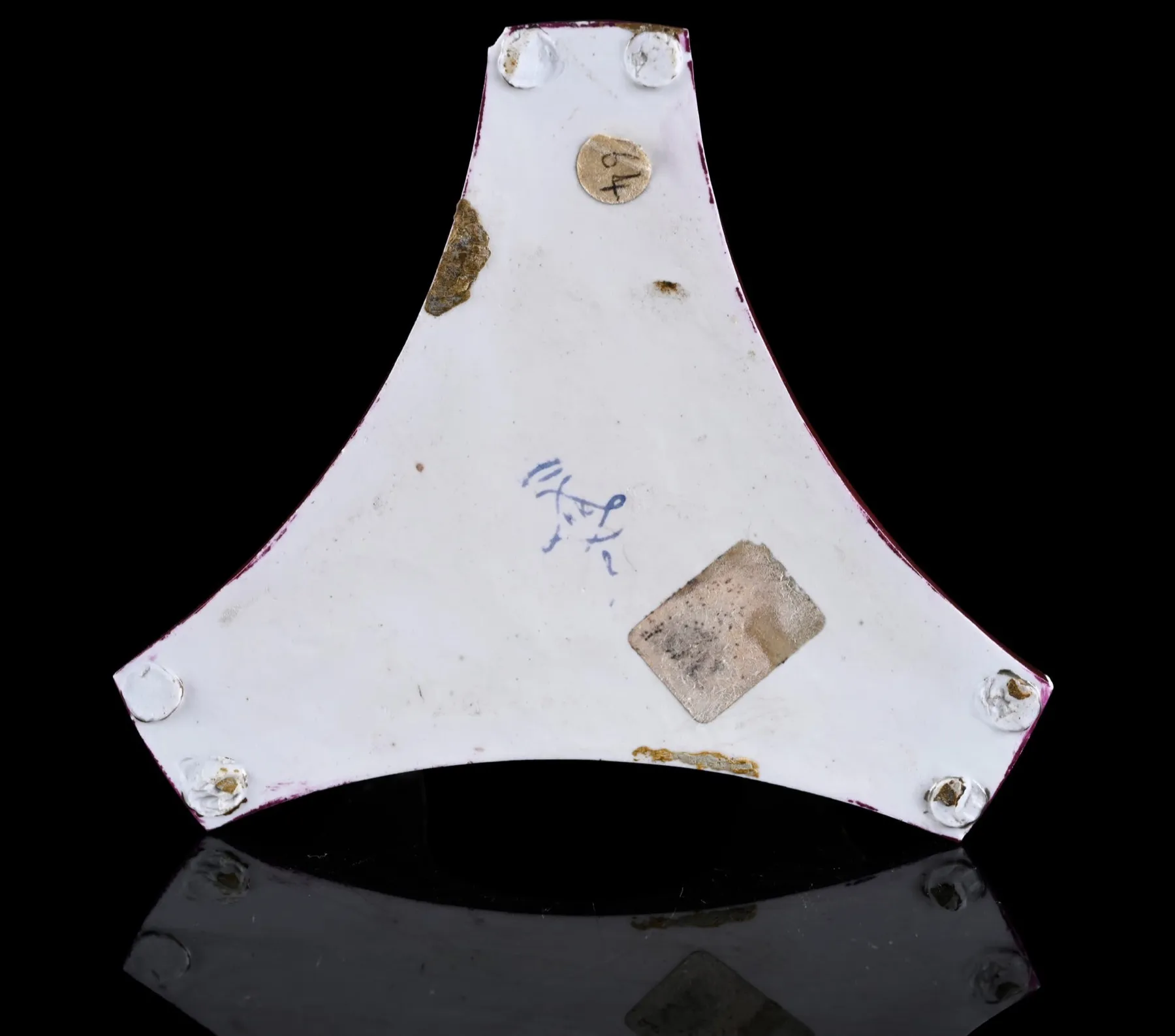
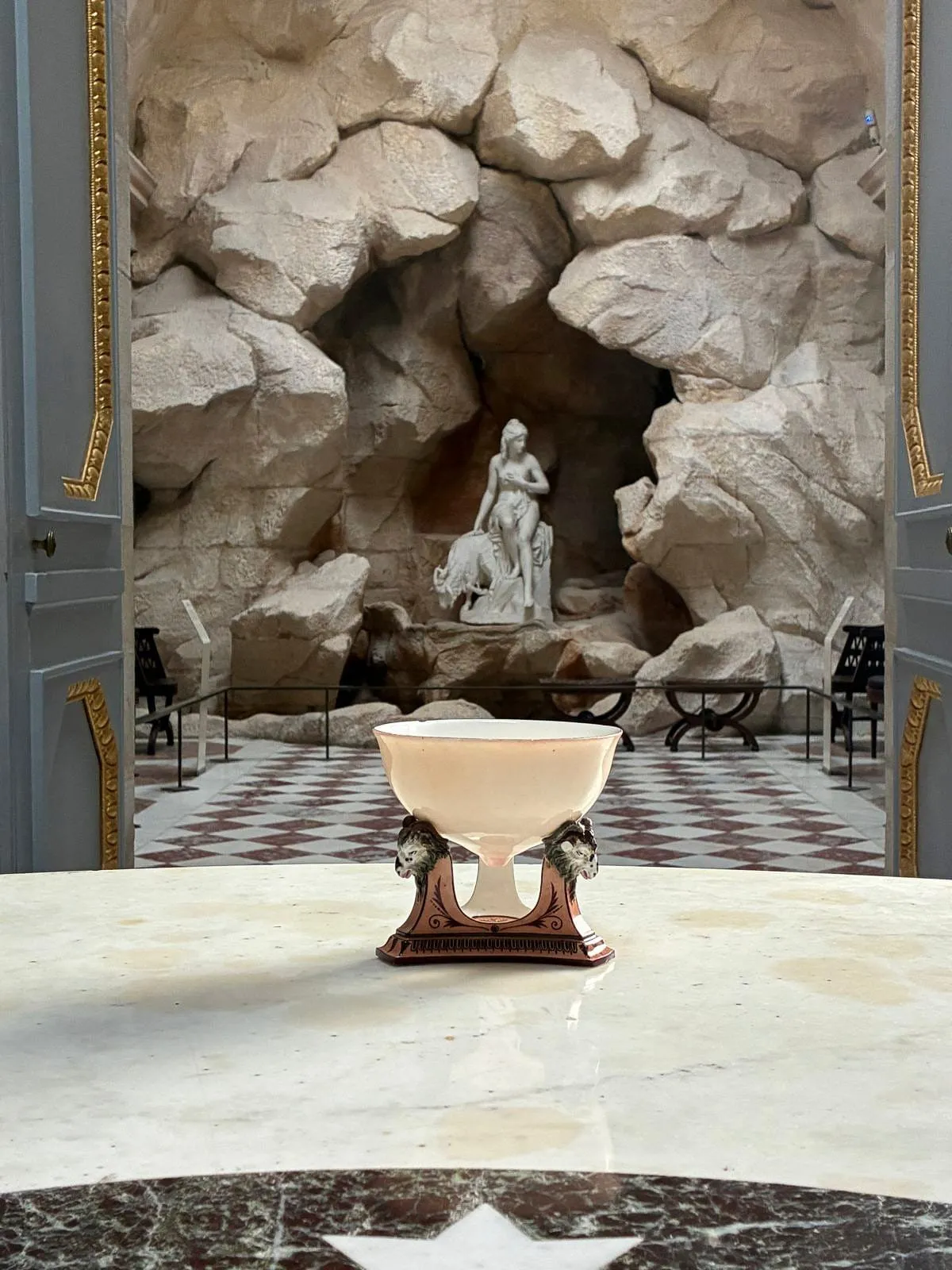
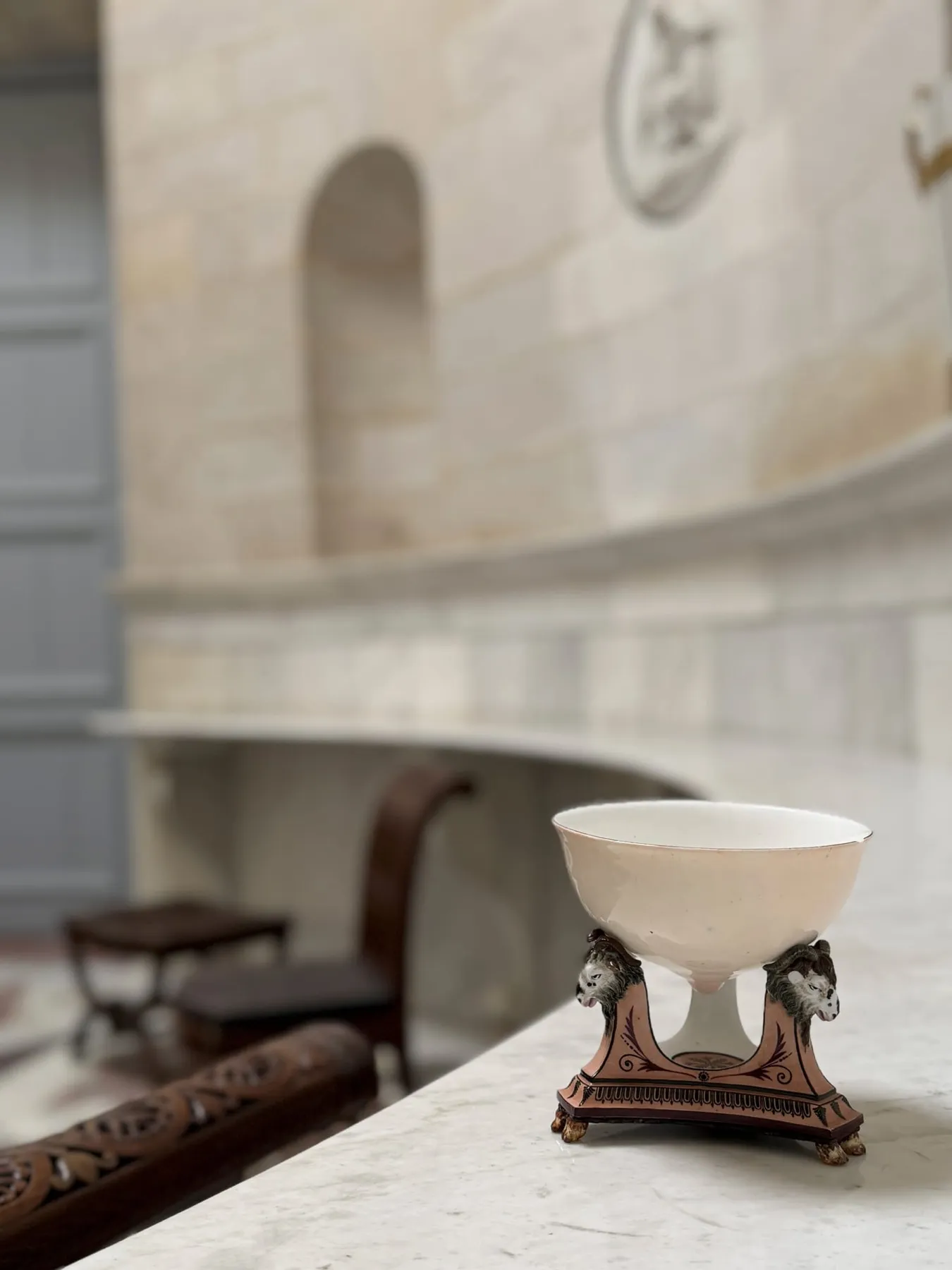
The bowl, in soft-paste porcelain painted in natural colours, imitates a woman’s breast, with the nipple as its lowest point; it measures 13 cm in diameter. It rests on a triangular hard-paste porcelain tripod decorated in black and purple with scrolls and friezes in the Etruscan taste, on an orange ground that the Sèvres archives call fond grès. The three uprights end in sculpted, painted goat heads. Standing 12 cm high, the piece bears under the tripod the crowned interlaced Ls of Sèvres and the date letter KK for 1787. The lot notes mention missing hooves and a few chips.
The Rambouillet dairy, commissioned by Louis XVI
Louis XVI bought Rambouillet in December 1783 and had an ornamental dairy built there for Marie Antoinette; Hubert Robert appears to have overseen its artistic coordination, and Georges Jacob supplied the furniture. The Comte d’Angiviller, Director General of the King’s Buildings, ordered from Sèvres an entirely new kind of service, inspired by the antique vases of the Denon collection, which reached the manufactory in June 1786. The service has no gilding at all, a radical choice for Sèvres. Delivered on 25 May 1787 and 15 May 1788, it comprises 65 pieces, of which only about twenty have been identified today.
Four bowls delivered, one in private hands
The Sèvres firing register mentions twenty bowls in soft-paste porcelain, the only pieces of the service in that material, and five tripods in hard-paste porcelain. According to the catalogue, the tripod offered for sale is the “porte téton à trois têtes de chèvres fond grès” listed in the delivery of 25 May 1787. Two other bowls are in the Musée national de céramique in Sèvres and a third is in the Museo Duca di Martina in Naples. In 2025, the Sèvres museum also acquired a milk jug and a sugar bowl from the service, designated national treasures in 2022.
Moulded on the queen’s breast, really?
The shape follows the mastos, a breast-shaped Greek drinking cup. The legend that the bowl was moulded on Marie Antoinette’s breast appears in no written source earlier than the 20th century; Sèvres specialists call it a myth. The catalogue points out that the bowl was thrown on the wheel and is perfectly circular, and that the queen’s bust measured 109 cm around 1787: a cast would have produced a salad bowl, not a cup. The queen also inspires fashion, as shown by the runway shows that quote her (in French).
From the Marquise de Chanaleilles to Galerie Meyer
According to an accompanying handwritten document, the bowl belonged to the Marquise de Chanaleilles (1784-1867), sister of the Comtesse de Bouillé, lady companion to the Duchesse de Berry, the subject of the “Princesse rebelle” exhibition (in French). The marquise gave it to her grandson, General Ferdinand de Salles (1831-1925), before it entered the Galerie Claude Meyer in Paris.
| Object | jatte téton and its tripod, Rambouillet dairy |
| Manufactory | Royal Sèvres Porcelain Manufactory, 1787 |
| Dimensions | 12 cm high, bowl 13 cm in diameter |
| Provenance | Marquise de Chanaleilles, General de Salles, Galerie Claude Meyer |
| Sale | Collection Galerie Meyer, lot 8 |
| Auction house and date | Coutau-Bégarie, Hôtel Drouot, Thursday 26 November 2026 at 6 pm |
| Viewing | 25 November from 11 am to 6 pm, 26 November from 11 am to 4 pm |
| Estimate | 1 to 2 million euros, excluding fees |
| Fees | 30% VAT included, on top |
Information checked on 24 November 2026. Sources: lot 8 page, Coutau-Bégarie, Coutau-Bégarie press release of 15 October 2026, Collection Galerie Meyer sale catalogue, conditions of sale, Coutau-Bégarie.